

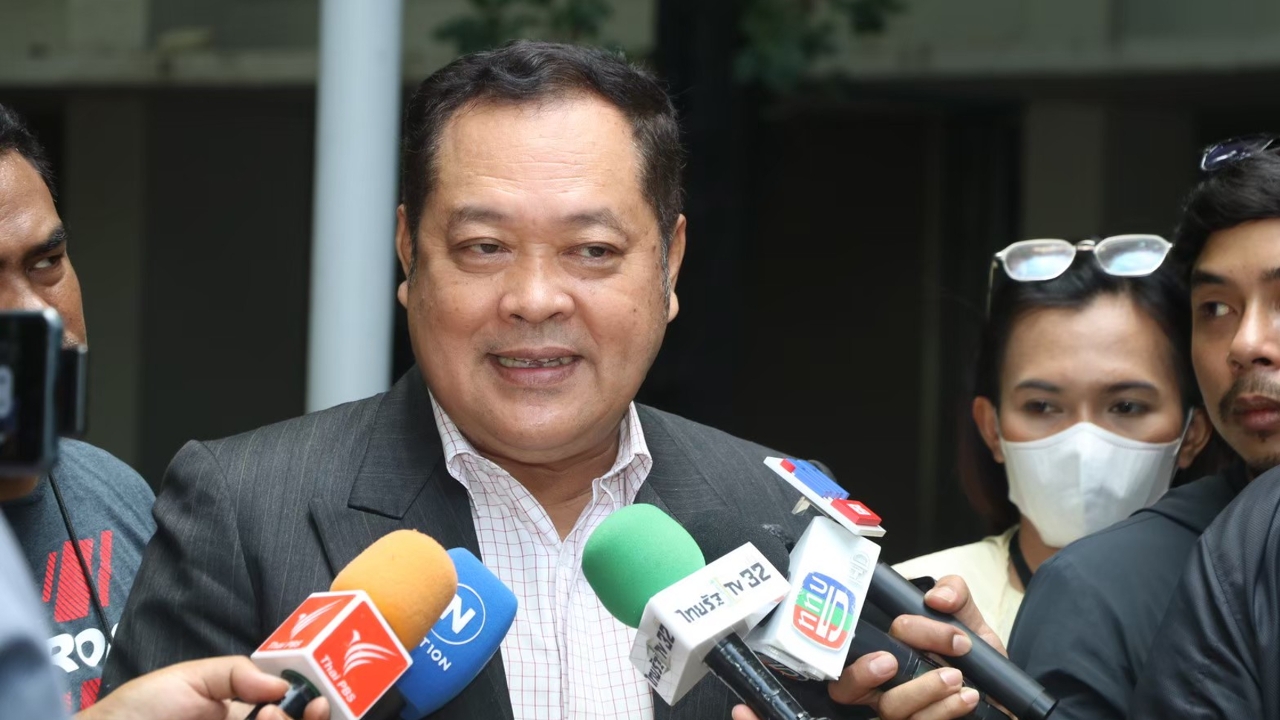
Tawee calls for dismantling the centralized state water system, proposes abolishing the National Water Resources Committee and Office to unlock budgets, and return power to local authorities to address flooding.
On 12 Oct 2026 GMT+7, Police Colonel Tawee Sodson, leader of the Prachachart Party, urged urgent reform of the country's water management. He pointed out that the suffering caused by floods—property damage and lost income borne by the people—stems from a slow, centralized state system that concentrates power at the central level.
He also noted that despite huge spending, effectiveness remains lacking. The integrated water budget plan from 2017 to 2027 totals 660 billion baht (an average of 60 billion baht per year), yet society questions its value and the lack of results reaching local areas. The roles of the National Water Resources Committee (NWRC) and the Office of National Water Resources (ONWR) have become bottlenecks, adding bureaucratic steps that prolong command chains, leaving localities short of budget, equipment, and personnel.
He therefore proposed abolishing the centralized structure by amending the 2018 Water Resources Act and dissolving or canceling the NWRC and ONWR in their current forms. Instead, he suggested leveraging the capabilities of existing specialized agencies (Royal Irrigation Department, Department of Water Resources, Meteorological Department, Department of Fisheries, etc.) to provide direct support to local areas.
1. Local administrative organizations and Bangkok Metropolitan Administration should have authority to resolve local issues, while the central government oversees standards and large-scale projects.
2. Transfer budgets and engineering expertise comprehensively to localities.
3. Establish a single command chain and clear, pre-defined compensation mechanisms.
Police Colonel Tawee said this concept could also be reviewed for other mechanisms, such as the National Land Policy Committee, to reduce bureaucratic redundancies.
“It is time to break the chains of water management and equip elected representatives with real tools to solve problems. Every baht of budget must demonstrate how it improves public safety,” he said.