

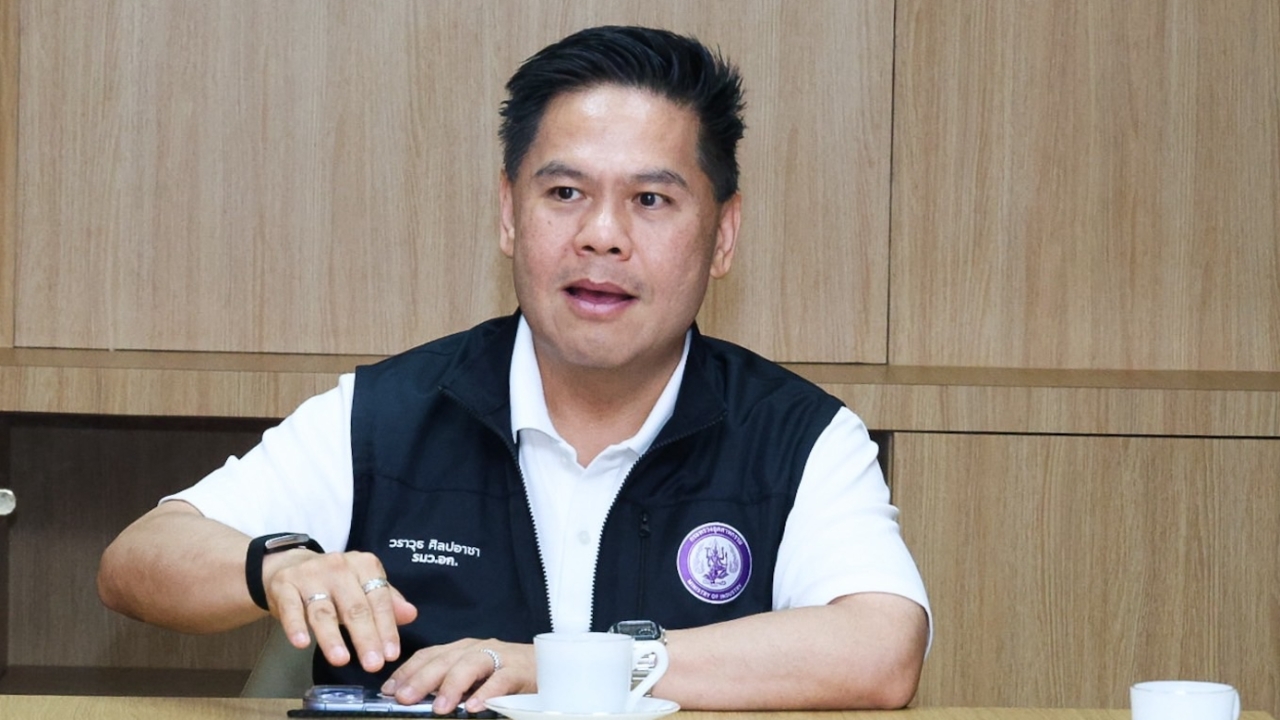
Warawut chaired the Tha Chin River Basin meeting, urging rapid installation of water pumps to push water flow, reinforcing embankments, emphasizing quick public warnings, caring for vulnerable groups, ordering a comprehensive damage survey, and preparing a big cleaning plan.
At 09:00 on 15 Oct 2026 GMT+7, at the Nakhon Pathom provincial hall, Warawut Silpa-archa, Minister of Industry and Chairman of the Subcommittee on Flood and Drought Prevention for the Tha Chin River Basin, presided over a meeting to monitor water management and flood mitigation in the Tha Chin basin. Attendees included Supachok Srisukjor, MP for Nakhon Pathom District 1; Panuwat Sasomsap, MP District 3; Col. Sukchat Sasomsap, MP District 4; Anucha Sasomsap, MP District 5; Phedimchai Sasomsap, MP of the Bhumjaithai Party and former Labour Minister; the deputy governor of Nakhon Pathom; provincial officials; and related agencies.
Warawut stated at the meeting that to ensure effective, comprehensive water management and flood preparedness in the Tha Chin basin and to minimize impacts on residents, he ordered all relevant agencies to expedite water drainage, reinforce embankments, accelerate water pump installations, and continuously check and strengthen the Tha Chin River embankments—especially in key economic zones, urban communities, and healthcare facilities. The Royal Irrigation Department was instructed to consider reducing water intake through the Plathep water gate due to the declining water levels in the Chao Phraya basin. They were also told to control water releases to match river capacity, reducing flood overflow impacts in Chai Nat, Suphan Buri, Nakhon Pathom, and Samut Sakhon provinces.
Warawut added that for monitoring, early warning, and communication, the Department of Disaster Prevention and Mitigation (DDPM) should act as the central hub for integrating water situation data and weather forecasts—especially during heavy rainfall periods—and communicate information concisely and clearly while preventing fake news that could cause panic. They should continuously inform residents living along both banks of the Tha Chin River, urging them to closely follow official announcements.
The Minister of Industry said that in response operations, the provincial command centers should be elevated and prepared to serve as integrated command hubs coordinating local agencies and mobilizing resources for assistance.
They should focus on incident reporting, early warnings, evacuations, and the establishment and management of temporary shelters, prioritizing vulnerable groups first.
Regarding recovery, compensation, and post-flood preparedness, the Minister instructed to survey damage comprehensively—including houses, agricultural areas, and public utilities—and to expedite transparent, verifiable compensation payments. He also ordered big cleaning plans to clean public areas, accelerate waste removal, and monitor and prevent public health issues and disease outbreaks common after floodwaters recede. All agencies were directed to integrate and closely coordinate these orders and to immediately report any problems to the subcommittee.