

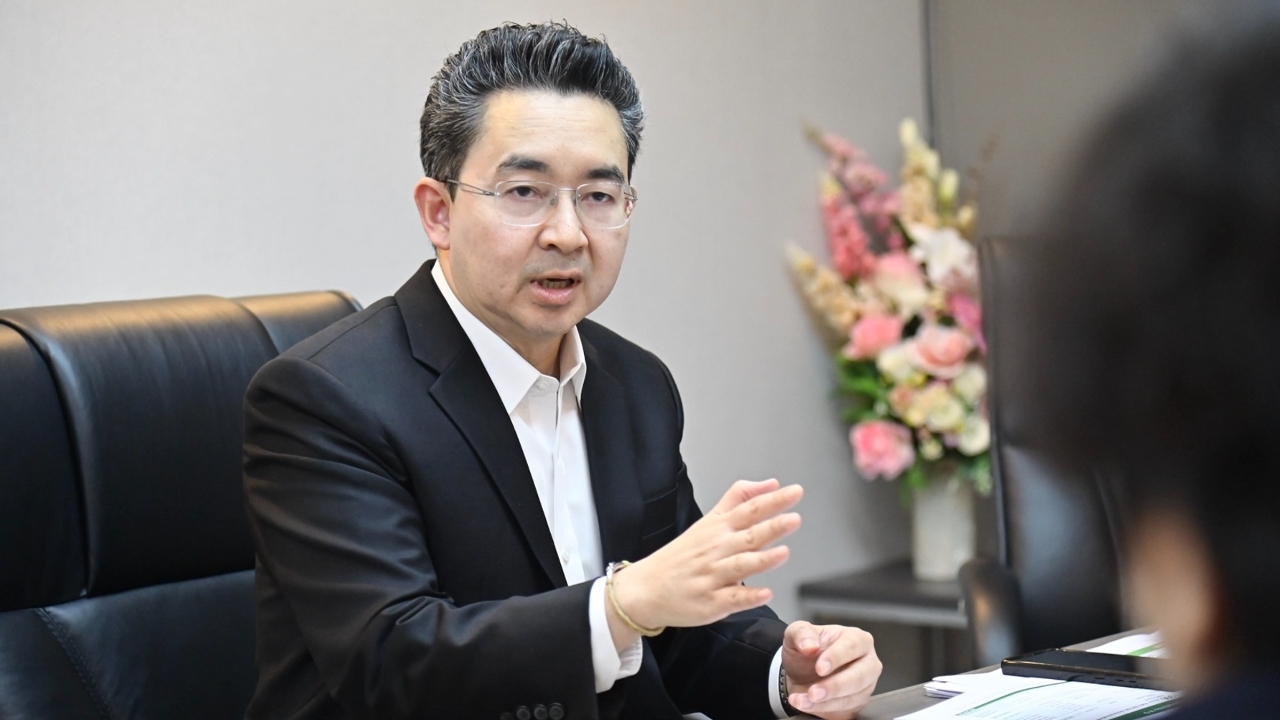
The Director-General of the Rice Department confirmed that the claim of tractors costing 16 million baht each is not true. He believes the misunderstanding arose due to misinterpretation. He emphasized the project is still in the study phase, with all steps overseen by a committee. If prices were excessively high, they would have been rejected at the department level already.
On 15 October, Mr. Anon Nontree, Director-General of the Rice Department, addressed the issue regarding the purchase of EV rice harvesters priced at 16 million baht each. He explained that the Rice Department’s policy aims to drive a one-million-rai low-carbon rice project, which includes reducing fossil fuel energy use by switching to clean energy sources like solar power and biomass. This approach helps lower production costs, thereby increasing farmers’ incomes, aligning with the Minister’s policy to reduce costs, improve production efficiency, and raise farmers’ earnings.
The Rice Department has set policies aligned with the government’s goals, and EV machinery is part of the effort to reduce energy use in low-carbon rice farming. Foreign markets are willing to pay higher prices for such products. Naturally, electric machinery or other renewable energy-powered equipment—such as solar panels, solar rooftops, or electric machines—must be included. It is acknowledged that in today’s aging society, few farmers manually till the soil; most use machinery. Those without agricultural machines must hire services, which currently rely entirely on oil-powered equipment. Therefore, the department has proposed various electric options, including electric tractors, solar-powered water pumps, electric rice dryers, solar rooftops, and other electric tools.
Mr. Anon said the 16 million baht tractor figure likely resulted from a misunderstanding of the project's overall budget. The department is still discussing details such as how many projects will be included, how many pilot sites to start with, and whether to begin with 500 community rice centers. These details might have caused the Minister to recall 500 sites or 500 units and mention a large total budget of 8,000 to 10,000 million baht. When dividing that total budget by the number of units, it mistakenly came out as 16 million baht per machine.
“The Minister never said 16 million baht per unit. The Ministry has not finalized any figures. The Rice Department has not drafted a final project proposal yet. This matter is still being discussed internally about which machinery aligns with government policy and how much budget is appropriate. We have not concluded any numbers because we must base them on each area's suitability and the real needs of farmers, which vary by region and rice cultivation practices. The department still has much homework to specify the required equipment. There are many details yet to be worked out, and the project must pass several stages: from the Rice Department to the Ministry, then screening before going to the National Economic and Social Development Council or parliamentary committees for further review,” he explained.
“It is impossible for the figures to jump that high. If they were that high, the project would have been rejected by the Rice Department’s committee and by the Ministry’s committee already. Any project must follow government procurement regulations, adhering to median or market prices only. No one can arbitrarily set strange prices like hundreds of millions or billions for any single item; that is impossible,” Mr. Anon said.
Mr. Anon added that the Minister is also focusing on other initiatives to support farmers, such as water pumps, electric water pumping machines, and rice dryers—items that farmers want. Many areas lack drying facilities, forcing farmers to dry rice on roads, causing accidents, or to sell rice directly to mills at low prices due to high moisture content. The Ministry of Agriculture wants to provide moisture-reducing dryers—whether diesel, electric, or biomass-powered—to each rice center. This will prevent farmers from losing at least 2,000 baht per ton due to moisture-related price cuts. This is something farmers greatly need, and there are many other measures the Minister wants to implement to help farmers, with preparations ongoing.