

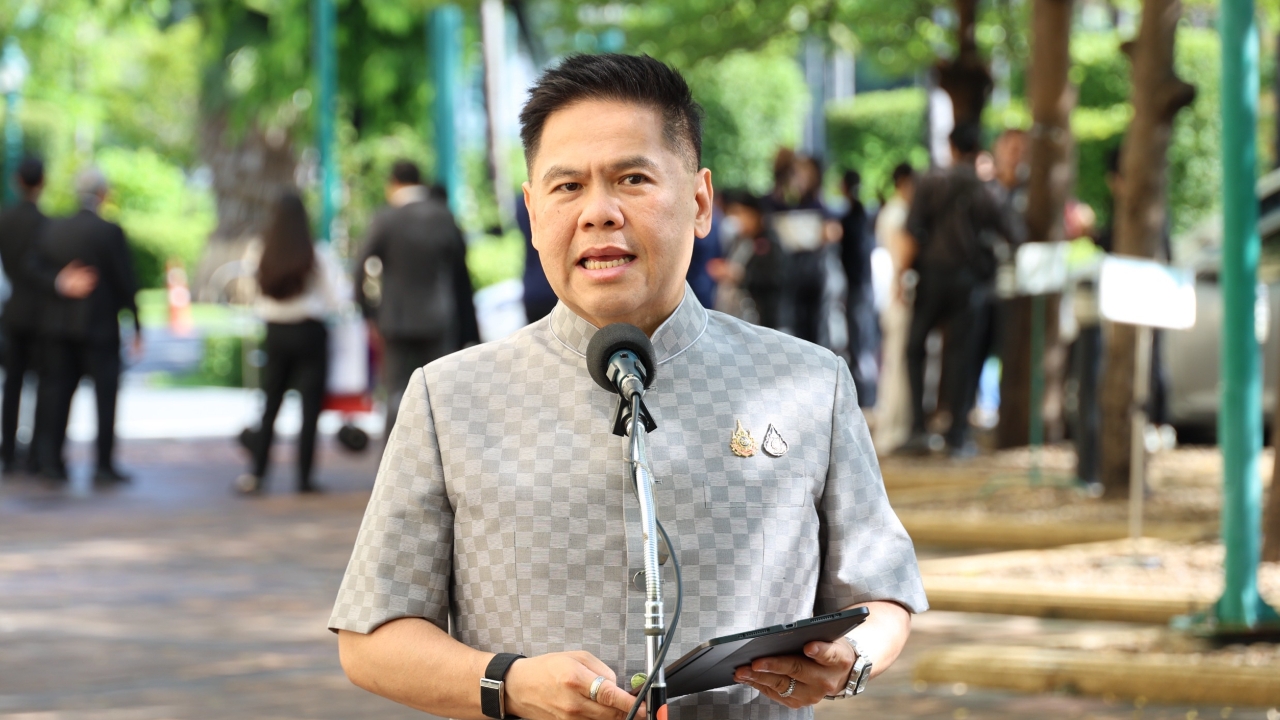
Warawut, Minister of Industry, emphasized that developing Thailand's potash mines will reduce fertilizer imports by 14 billion baht annually, open the path for 30 billion baht in exports, and benefit communities and farmers by increasing security of agricultural raw materials.
On 20 October 2026 at the Government House, Warawut Silpa-archa, Minister of Industry, stated that developing potash mineral resources in Thailand is a crucial opportunity to secure raw materials for agriculture and industry, reduce dependence on imported fertilizers, and add economic value from domestic mineral resources, especially in the Northeast region where large potash deposits are found in the Khorat and Sakon Nakhon basins.
Currently, Thailand imports about 5 million tons of chemical fertilizers annually, valued at around 65 billion baht. Of this, potash fertilizers account for about 1 million tons, worth 14 billion baht per year. Developing domestic potash mines and fertilizer factories can reduce reliance on imported raw materials and enhance production input security for Thai farmers.
The direct benefits to the public include increased fertilizer options and reduced pressure on agricultural production costs, as potassium is a key nutrient for plants. Having domestic sources and production capacity will improve access to potash fertilizers, such as the 0-0-60 fertilizer formula.
At the same time, maximizing benefits from potash mining must be balanced with controls on impacts to people and the environment. Measures include mixing tailings and soil waste with concentrated brine and re-injecting them into underground mines, starting in the fifth year of mining and continuing until project completion. This is coupled with preventing brine leakage to protect soil, water sources, and local communities, alongside safeguarding public health. For the Udon Thani project, measures include water recycling, leakage prevention, and damage insurance of at least 500 million baht.
“Economically, if the projects meet their targets, Thailand will have a total potash production capacity of about 3.2 million tons annually. After meeting domestic demand estimates, approximately 2.2 million tons will be surplus for export, expected to generate over 30 billion baht in export revenue per year and position Thailand as a regional hub for potash and chemical fertilizer production and export in ASEAN.”
Regarding progress on three key projects: Thai Kali Co., Ltd. in Nakhon Ratchasima plans to produce 100,000 tons annually. Currently, ventilation tunnels have reached the ore layer at 280 meters depth, with potash fertilizer production expected to start in the second half of 2027.
The Asia Pacific Potash Corporation in Udon Thani targets production of 2 million tons per year. It is currently seeking Cabinet approval to increase registered capital from 100 million baht to 12,240 million baht and expects to begin production by 2030.
The Potash ASEAN Chaiyaphum Public Company Limited project in Chaiyaphum aims for 1.1 million tons per year and has received investment promotion from the Board of Investment valued over 31,422 million baht. However, there is an ongoing dispute over a special state compensation of about 8 billion baht, which is under litigation in the Central Administrative Court.
Warawut added that beyond national benefits, mining offers local job creation opportunities from surveying and tunnel construction to long-term production. A fund will be established under mining concession conditions to support local infrastructure, education, and health development, along with compensation payments to landowners as stipulated.
Potash is also a raw material for downstream industries such as soap, detergents, pharmaceuticals, and ceramics, creating opportunities to increase domestic value-added rather than relying solely on exporting raw minerals.
The key challenge is not only extracting underground resources for value but ensuring economic benefits reach farmers, workers, and communities concretely, alongside effective environmental protection and enforcement, so that mineral resources become a long-term national asset.