

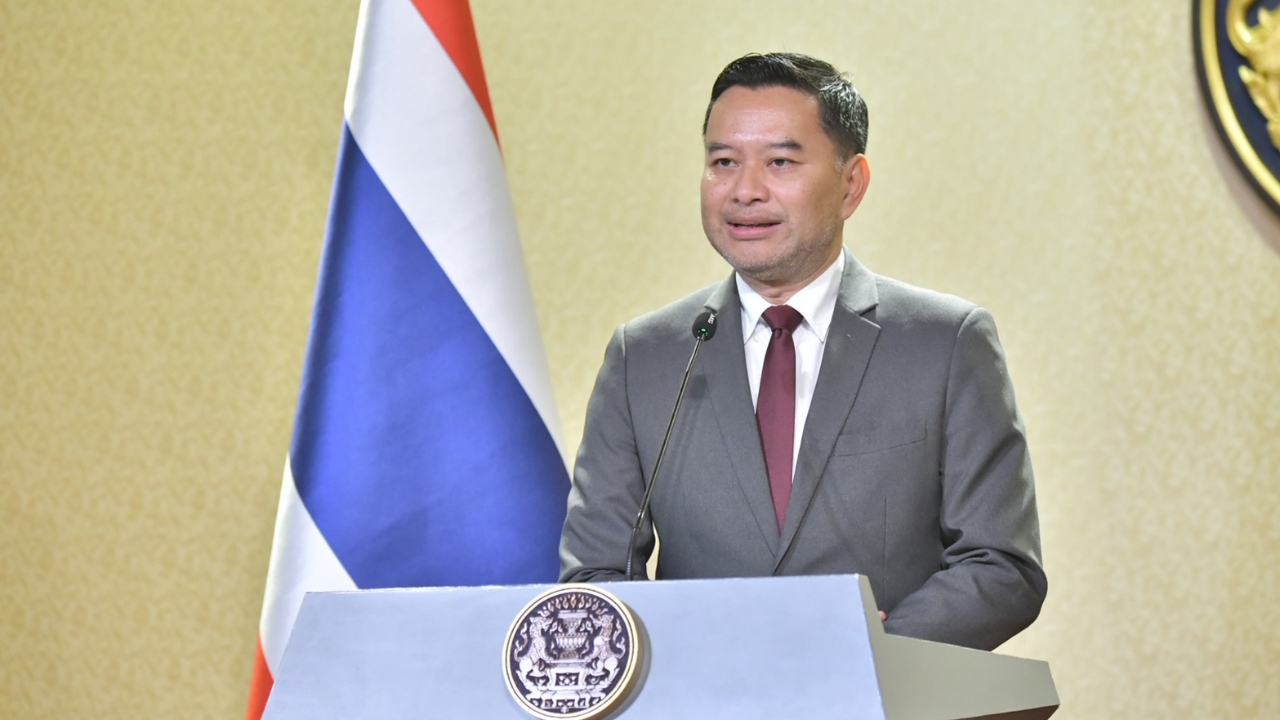
The government is advancing the success of the 2026 IMF–World Bank meeting by highlighting three achievements: being "an impressive host to the world, a thought leader, and a trusted economic partner," transforming the country's image into economic opportunities that benefit the nation.
At 12:30 p.m. on 20 Oct 2026 GMT+7, at the Government News Center, Nareesamorn Building, Government House, Mr. Ekaphop Piansit, spokesperson for the Prime Minister's Office, and Dr. Santithan Sathienthai, Assistant Minister of Finance, jointly announced the successful outcomes of the 2026 annual meeting of the World Bank Group and International Monetary Fund, hosted by Thailand last week, and outlined plans to build on this success for tangible long-term benefits to the Thai people and economy.
The government spokesperson said that following Thailand's successful hosting of the meeting, the Prime Minister emphasized the importance of leveraging this achievement so that the opportunities and cooperation generated translate into real benefits for the people. The government is coordinating among relevant agencies to ensure that Thailand's strengths and identity, showcased internationally, continue to add value to the grassroots economy, Thai entrepreneurs, and the country's service sector.
On this occasion, Dr. Santithan Sathienthai, Assistant Minister of Finance, congratulated all Thai sectors involved for the outstanding success of the meeting, which earned praise from leaders and high-level representatives worldwide. This success was the result of collaboration among government agencies, the private sector, and volunteers, demonstrating Thailand's capability to host a world-class event.
If the meeting were likened to an Olympic competition, Thailand won three gold medals: as an impressive host to the world, a thought leader acknowledged globally, and a trusted economic partner. The achievements can be summarized as follows.
1) Success as an impressive host: Thailand registered over 19,000 participants, a record high for any IMF–World Bank meeting. Approximately 60% were high-level representatives and attendees from affluent groups. This generated significant spending in hotels, restaurants, and services, while promoting Thailand's tourism potential and the MICE industry.
The image and impressions Thailand conveyed globally—including popular Thai cuisine, fruits and ice cream, traditional local textile patterns, and products made from the white cotton fabric reflecting Thai wisdom and identity—helped raise international awareness of Thai goods and services. This opened opportunities to further tourism, exports, and long-term income generation for Thai entrepreneurs.
2) Success as a thought leader recognized worldwide: The meeting provided Thailand a platform to present ideas and solutions addressing global economic challenges, demonstrating that Thailand, as a middle-income country, can play a significant role in shaping and solving world issues.
A key highlight was the Royal Pavilion exhibition honoring the royal initiatives, royal philosophy of sufficiency economy, and the working principles of King Rama IX, as well as continuing his legacy under the current reign for the people's well-being. IMF Managing Director Kristalina Georgieva quoted King Rama IX’s royal speech in her address to the plenary session attended by representatives from about 190 countries, expressing her intention to use these ideas as inspiration in her work.
Additionally, Thailand presented approaches to four major global challenges: 1) AI application by promoting accessible and appropriate technology to support small businesses and micro-entrepreneurs; 2) combating financial crime in the digital world through the Bangkok Blueprint to prevent financial fraud and cross-border crime, enhancing transaction security for citizens; 3) transitioning to a green economy via low-carbon city projects such as installing solar power in government buildings, improving energy efficiency, and compiling carbon reduction results to develop carbon credits; and 4) fostering cooperation amid global divisions by positioning Thailand as a Trusted Connector—a country that builds international partnerships based on trust, leveraging its status as a middle-income economy to bridge countries and regions.
3) Success as a trusted economic partner: Building external confidence alongside enhancing domestic capabilities. Hosting the meeting enabled discussions with government leaders, international organizations, investors, businesses, and credit rating agencies to clarify Thailand’s economic direction and policies, seek new collaborations to tackle global economic challenges, and maintain fiscal discipline while investing in the future.
Moreover, partnerships were strengthened regionally and internationally, including talks with central banks and the Islamic Development Bank to expand Islamic finance opportunities and support investment in Thailand. A forum was also organized to connect leading businesspeople from various regions with Thai businesses ahead of the World Economic Forum in Davos next January, opening doors for ongoing trade and investment negotiations and cooperation development.
Simultaneously, the government prioritizes implementing recommendations from international organizations and investors to improve domestic operations, including regulations, business procedures, and Thai workforce skill development. The inter-ministerial National Competitiveness Committee (NCC) plays a key role coordinating cooperation between ministries and between the public and private sectors to drive economic growth above 3% within four years and elevate Thailand's competitiveness into the global top 20.
Dr. Santithan added that attracting investment should not focus solely on bringing in foreign capital but must link investments to Thai entrepreneurs, especially SMEs, component manufacturers, suppliers, and Thai labor. This linkage facilitates knowledge transfer, skill development, quality job creation, and broad economic benefit distribution, aligning with strategies to boost competitiveness and sustainable development.
Efforts to improve regulations, government efficiency, and transparency are essential parts of preparing Thailand for membership in the Organisation for Economic Co-operation and Development (OECD), with a target to achieve this by 2028 as set by the government.
Dr. Santithan emphasized that the meeting's success marks just the beginning of the next phase. Thailand has built a stronger international image and opened doors to new partnerships. The critical task now is to convert the interest and confidence gained into real investments, business opportunities, and increased incomes for the people. The government aims to leverage the one-week meeting’s benefits for decades to come, highlighting that this success was a collective effort of all Thai people.
In closing, the government spokesperson stressed that the benefits of hosting extend beyond the public sector or large businesses. They can also reach the people and grassroots economy through coordination among relevant agencies, such as the Ministry of Finance and Ministry of Commerce, to promote Thai products, local wisdom, intellectual property, and national identity internationally, while supporting entrepreneur development and inclusive economic value creation.