

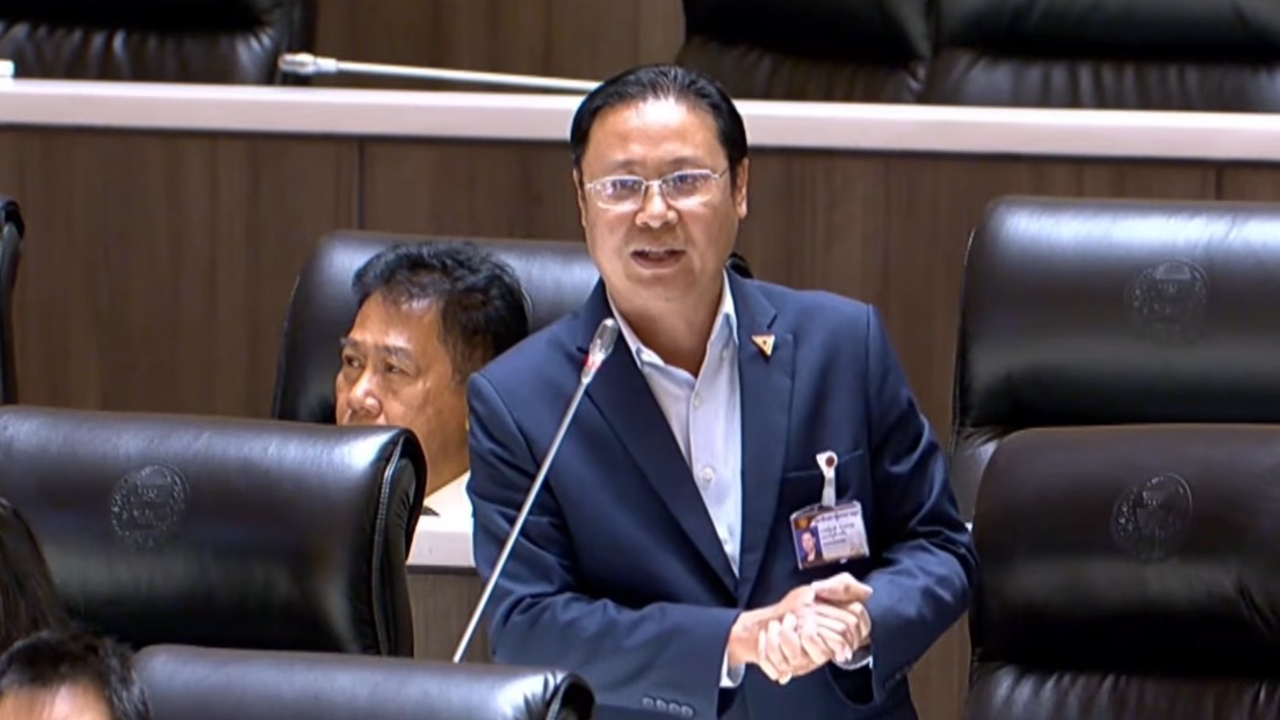
Nattawut, a party-list MP from the People’s Party, raised three observations regarding the draft amendment to the Labour Court Act, noting contradictions in expanding the court's criminal jurisdiction while increasing burdens on citizens and affecting their rights to legal defense. Tags: [Labour Court, Legal Reform, Criminal Jurisdiction, Citizens' Rights]
On 21 October 2026, Nattawut Buapradum, party-list MP from the People’s Party, participated in the first reading debate on the draft Labour Court Establishment Act and the Labour Case Procedure Act (draft versions), and the draft Trafficking in Persons Procedure Act, both proposed by the Cabinet. A key principle is granting the Labour Court additional authority to hear criminal cases. Tags: [Labour Court, Legislation, Parliamentary Debate, Criminal Cases]
Nattawut explained that he understands the current trend of establishing specialized courts, such as the Central Intellectual Property Court and the Central Tax Court, similar to the Labour Court which consists of professional judges alongside supplementary judges representing employers and employees. However, he has three important observations to present to the parliament. Tags: [Specialized Courts, Labour Court, Judicial Structure, Parliamentary Observations]
First, expanding the Labour Court’s powers could increase burdens on litigants because Labour Courts are not established in every province like provincial or district courts. There are only about a dozen Labour Courts nationwide. Previously, offenders under labour law could be tried in district or provincial courts locally, such as in Chiang Rai with two courts or Nakhon Ratchasima with three courts, minimizing travel burdens. But if the draft law grants Labour Courts authority over more criminal cases, litigants will have to travel across areas to reach Labour Courts, clearly increasing burdens on citizens. Tags: [Labour Court, Jurisdiction Expansion, Access to Justice, Travel Burden]
Moreover, although the draft law allows exceptions where Labour Courts can delegate proceedings to other first-instance courts, this is contradictory in principle. If the intention is for the specialized Labour Court to handle cases but the burden is ultimately passed to local first-instance courts to conduct investigations, this approach is strongly opposed. Tags: [Delegation, Judicial Process, Labour Court, Contradictions]
Second, there is ambiguity regarding royal decrees defining the court’s powers. While Nattawut agrees with allowing royal decrees to designate other offences to accommodate future labour laws, he would prefer comprehensive codification similar to tax law codes. The concern is that the draft also permits royal decrees to exempt certain offences from the Labour Court’s jurisdiction. Such back-and-forth expansion and revocation of powers contradict principles and do not serve justice system development. Tags: [Royal Decrees, Jurisdiction, Legal Clarity, Justice Reform]
Finally, he raised concerns about the impact on citizens’ rights to legal defense. Case burdens involve not only travel but also the right to fully defend themselves. With changes to the specialized court structure, appellate courts, or Supreme Court divisions, he is uncertain whether citizens’ rights to appeal or cassation—whether employees, employers, or others charged with criminal offences—may be limited or affected by the new structure. Tags: [Legal Rights, Appeal, Cassation, Court Restructuring]
Nattawut concluded by saying that if the parliament votes to approve the principles of both bills at the first reading, he requests that the special committee carefully consider these three observations for review and amendment at the second reading to protect the rights of litigants. Tags: [Parliament, Legislative Process, Rights Protection, Labour Law]