

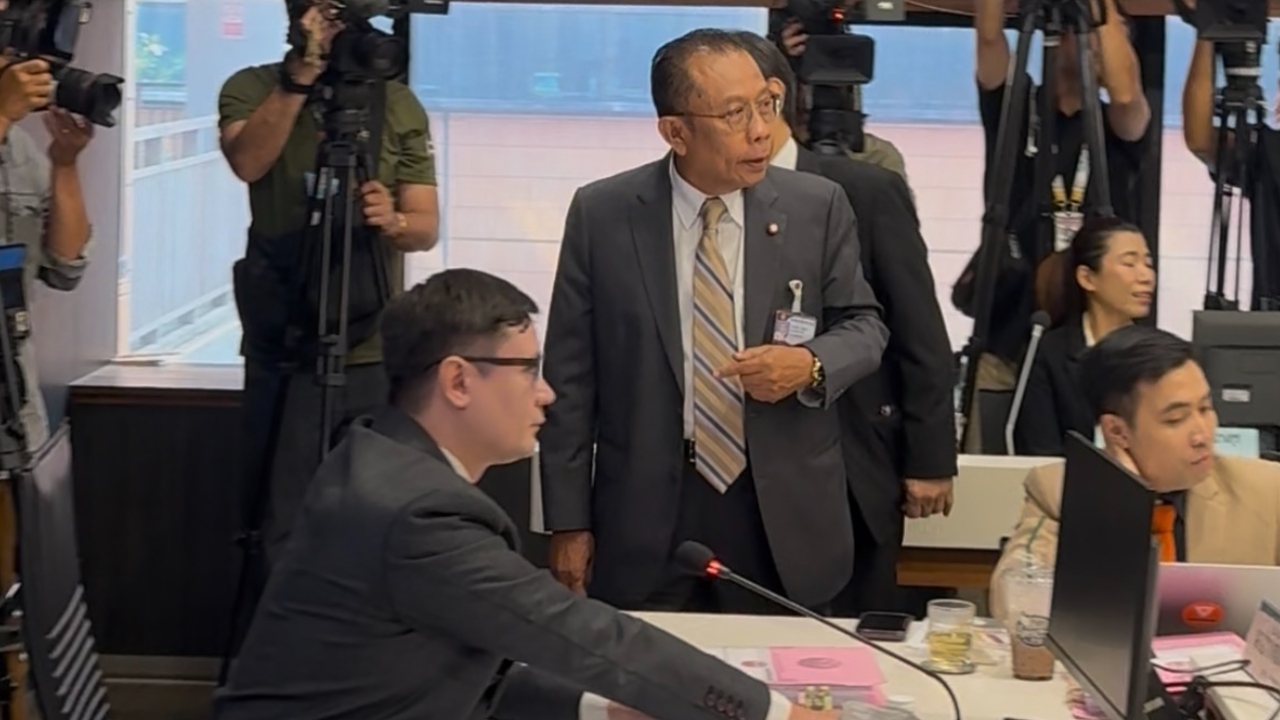
The Legal Committee erupted in a chaotic dispute as Bhumjaithai MPs criticized Rangsit Rome for inviting Sirichok to clarify the gambling website share issue involving the husband of an Idea party member without a committee resolution, before Supachai led pro-government MPs and committee members to walk out of the meeting room.
On 22 October 2026, the Legal and Human Rights Committee meeting of the House of Representatives, chaired by Rangsit Rome, a party-list MP from the People’s Party, invited Sirichok Sopa, former Songkhla MP from the Democrat Party, to provide information about gambling website shares related to the husband of Suchada Sang Tansap, a Bhumjaithai MP.
Supachai Jaisamut, a party-list MP from Bhumjaithai and deputy chair of the Legal Committee, objected, saying this was not a committee resolution. He referred to a meeting the previous day between the Speaker and 35 committee chairs, which clearly set guidelines that before proceeding with any matter in line with legal and constitutional rules, the committee must vote whether to accept the issue for consideration. If the meeting agreed, the matter could proceed; if not, it should be dropped. Supachai therefore proposed a motion for a committee vote. Piyarat Janthep, Bangkok MP from the People’s Party and deputy chair of the Legal Committee, said he had no objection if someone seconded it. However, the meeting notice had been sent on 9 October 2026, so agenda items should have been set before asking for a vote today.

Police Colonel Tawisodsong, a People’s Party member of the Legal Committee, said this issue had been discussed eight consecutive times and was the same matter. He noted that requesting a vote was not in the rules but was an agreement among members. A motion should be for new issues. Previously, bribery of 40 million baht was discussed, mentioning 4,000 gambling websites, and expanded to some using stock exchange channels. The Stock Exchange had come to explain. Therefore, a motion should be for a new issue. As legislators, they must follow the law. For example, the Speaker must seek a member motion to set parliamentary agendas. Since this was not written, they used the same approach and left it as an observation.
Supachai then stood to argue that his proposal was not for personal benefit but aimed to keep the committee sacred, not allowing arbitrary power but acting according to regulations and the constitution. He stressed he did not object to the outcome of any vote but insisted on setting a precedent on this matter that society was watching. What Police Colonel Tawisodsong said seemed correct but was not. The Speaker’s setting of agendas involved a vetting process by permanent officials. If this continued, future committee chairs might follow the same method, claiming it was precedent. This was the legislative body that made laws, not a place for arbitrary actions.
Rangsit Rome asked Supachai to summarize, but Supachai replied that when he finished speaking, that was the end. He added that inviting a person to provide information was another issue. He questioned whether the person was forced to come but insisted procedures must follow regulations and proposed a vote. Opponents said this had been done before, calling it a poisonous fruit and tree, meaning the problem and its offspring were toxic because they made it so. Therefore, he wanted a vote and to accept whatever the result.
A committee advisor said the debate concerned whether the chairman or the committee held the authority. In many committees, the chairman has the power to set the agenda, following the parliamentary meeting rules applied by analogy. He emphasized this was a continuation of a previous matter, not a new one.
Nattawut Prasertsuwan, Bhumjaithai MP and committee member, said he had boycotted the chairman twice because the chairman used the rules. Rangsit said Nattawut had not boycotted; if he did, his leave letter said he had a schedule conflict. If he claimed a boycott, it meant filing a false leave request. Nattawut admitted he had taken leave due to a schedule conflict, not a boycott, but suggested the chairman knew well why he took leave and that he took leave along with others.

Nattawut reiterated the previous point that the committee was debating whether the chairman had misused the committee’s authority. He cited Article 129, which states that any fact-finding must be within the duties and powers of the House and the committee. He expressed concern that the committee’s name was crucial to its work. As the Legal, Justice, and Human Rights Committee, they were violating the constitution and regulations. Investigations must have clear objectives and aims, such as leading to legal amendments or laws for justice. They were not a committee to find offenders; that was not their role.
Rangsit cut him off, asking Nattawut to summarize. Nattawut replied that because of the chairman’s behavior, there was no cooperation. The chairman spoke longer than he did. Although there was a resolution to meet once a week, the chairman violated it by holding meetings twice a week.
Nattawut added that the Legal Committee had a spokesperson who never performed the role because the chairman gave statements before and after meetings, contrary to committee resolutions.
Members of the People’s Party faction on the committee said this was the same issue, which could be considered without a new vote. They urged the House to be a place for discussion and debate, showing differences respectfully in a democracy. They called for broad-mindedness like the ocean. They told Supachai they wanted a broad heart, especially to address public questions. They acknowledged the importance of committee duties. After a meeting with the Speaker the previous day, the committee should know what was discussed, though no conclusion was reached. They wanted the chairman to provide the meeting minutes. Having met eight times, the committee should continue because the public was watching. If they stopped for any reason, it would raise questions about the House’s overall work.
The meeting continued to debate whether the authority belonged to the chairman or the committee. Rangsit cut in, allowing Sirichok to explain. Supachai raised his hand to speak, but Rangsit said, “Whoever I let speak is the one who speaks.” Supachai retorted, “This is you, and I want to say our debate is not about Sirichok, so why let him speak? What does that mean?”
Rangsit said he would not allow Supachai to speak because the rules must be followed. Supachai said this was the committee’s problem and stood to protest the chairman. Six or seven committee members joined him. Rangsit asked what rules they were protesting. Supachai replied no need to ask and said he had filed a complaint with the National Anti-Corruption Commission, accusing the chairman of serious ethical violations. He said there was no reason to remain and called for a walkout, inviting others who agreed to leave the meeting room.
Supachai then left the meeting room with pro-government MPs and held a press conference. He said that after the Legal Committee meeting, chairman Rangsit Rome opened the meeting and planned to consider the proposed agenda. He had proposed a motion that the matter was brought forward by the chairman without a committee vote, sparking dispute. Despite considerable discussion, the meeting continued, but he insisted that proper procedure required a vote to accept or reject the matter. He emphasized following regulations but Rangsit stuck to his approach.
He added that the matter should be discussed within the 15-member committee, but the chairman instead consulted Sirichok Sopa, a former MP invited as a witness, which was against rules. The chairman exercised full power, even ordering microphones off to silence speakers. These problems had persisted. Therefore, his pro-government party decided to leave the meeting, seeing the chairman’s actions as violating regulations and lacking legitimacy. They filed a complaint with the National Anti-Corruption Commission alleging serious breaches of regulations, constitution, and ethics by Rangsit Rome, and decided not to attend further meetings with this committee.
He said that if the committee wanted to proceed with seven members, that was their choice. However, they wanted society to see that their work had no hidden agendas. They were members of the House concerned about public hardship but would not allow the committee to be used as a tool to pursue the chairman’s covert agenda.
Supachai said the previous day’s meeting agreed that all matters must be decided by committee vote, as the rules did not grant the chairman sole authority but vested it in the 15 committee members. He proposed proper procedures to protect the chairman but the chairman continued to exercise his power. Therefore, he filed a complaint with the National Anti-Corruption Commission and would no longer participate in meetings or cooperate with the chairman until his behavior changed.
Reporters noted that the MPs who walked out were pro-government coalition members: Supachai Jaisamut, Bhumjaithai party-list MP; Ongart Wongprayoon, Saraburi MP from the Kla Party; Rinlita Adis, Bhumjaithai MP; Natthachon Srikokuea, Bhumjaithai MP; Siwa Pongtheeradul, Pheu Thai MP; Nattawut Prasertsuwan, Bhumjaithai MP; and Rittirong Phumisawat, Bhumjaithai MP. Meanwhile, Chusak Sirinil, Pheu Thai MP, was absent. The meeting continued without them.
