

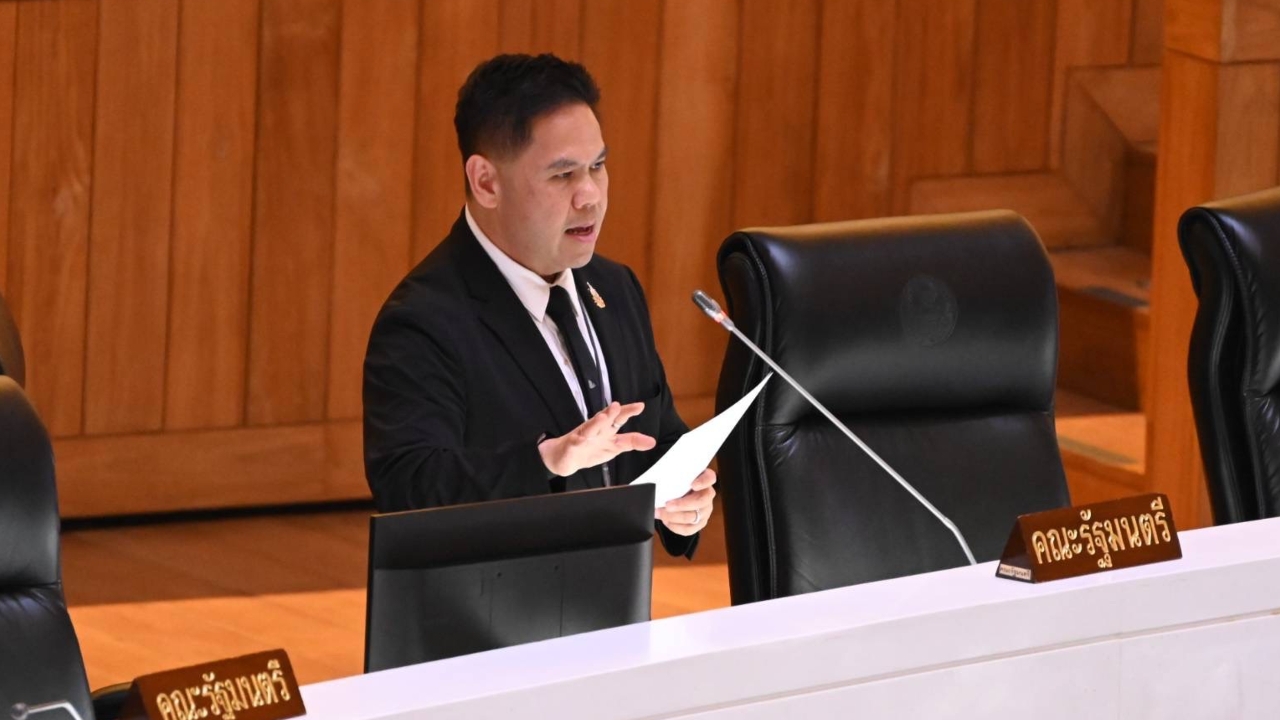
Warawut has organized 50 teams to conduct comprehensive inspections of toxic waste disposal factories in five provinces, expecting to gather data within one to two months. He affirmed that the Prime Minister is attentive to the issue, supporting enhanced enforcement powers for the Customs Department to scan containers to curb smuggling. Once cases conclude, authorities will pursue collection of fees from the operators.
On 22 Oct 2026 GMT+7, during a parliamentary session, Warawut Silpa-archa, Minister of Industry, responded to a question regarding electronic waste management in Prachinburi, Rayong, and nearby areas raised by Watcharapong Sirirak, MP of Rayong from the People's Party. Warawut said the recent Cabinet meeting showed the Prime Minister's strong commitment to the issue, assigning the Ministry of Industry, Ministry of Natural Resources and Environment, Ministry of Finance, Ministry of Commerce, the Department of Special Investigation (DSI), the Anti-Money Laundering Office (AMLO), and other relevant agencies to urgently address the problem. Thailand banned electronic waste imports in 2020, and the Department of Industrial Works prohibited the use of electronic waste as raw material that same year. Despite these measures, illegal imports persisted. Currently, Thailand has 3,049 licensed waste sorting and disposal factories under categories 105 and 106, with half located in five provinces: Rayong, Chonburi, Chachoengsao, Samut Prakan, and Prachinburi, where illegal electronic waste activities have occurred, including unauthorized sorting and illegal dumping. Upon discovering these problems, Warawut instructed provincial industry offices to inspect all approximately 1,500 factories in these provinces, deploying 50 inspection teams—10 per province—to conduct thorough checks and coordinate with local administrative, commerce, and environmental authorities.
Warawut acknowledged that past oversight may have been lax but did not blame any individual. He noted that some warehouses were set up for sorting, sometimes staffed by foreign workers. He urged local leaders—village chiefs, subdistrict heads, and mayors—to be vigilant about unusual constructions or activities in their areas, as they usually know what is happening locally. He requested these leaders to report suspicious activities so officials can investigate. The current focus is on inspecting factories licensed under categories 105 and 106 to expedite action against violations. Offending factories will be shut down and licenses revoked, including management of waste materials. While waste remains on factory premises, it falls under the Ministry of Industry’s oversight, but if illegally dumped in fields or ponds, the Ministry will sue to have the waste returned to the factory. Environmental damages will be pursued under the National Environmental Quality Promotion and Preservation Act, with the Pollution Control Department seeking compensation. Warawut reaffirmed that the Prime Minister is actively addressing the problem, directing all agencies from source to disposal to act swiftly. He expects detailed findings from the 50 inspection teams within one to two months to identify illegal operations and prevent future incidents.
Warawut also responded to a question about the large-scale smuggling of electronic waste into the country, raised by Watcharapong Sirirak, MP of Rayong from the People's Party. He emphasized the critical need to empower the Customs Department to scan every container entering the country. During his tenure as Minister of Natural Resources and Environment, he encountered a container partially filled with plastic scraps as raw material, but hidden behind them was waste illegally smuggled in. The problem lies not in the import bans or declarations required but in the ability to verify every container effectively. Regarding cases where container numbers were checked but no data was found, he urged people to call the Ministry of Industry’s 24-hour hotline at 1564 or contact his personal Facebook page for assistance. Warawut expressed strong dislike for these illegal practices as they harm the public. He has prioritized combating electronic waste smuggling because Thailand is not the world's dumping ground. He encouraged people to report information, promising coordination with relevant agencies. Local leaders such as village chiefs and heads are well aware of local activities and can report irregularities by calling 1564. If no response is received, citizens are urged to raise questions publicly to hold officials accountable for inaction.
Warawut stated that the current laws under the Department of Industrial Works are under review by the parliamentary committee. He has proposed increasing penalties because offenders often illegally dump electronic waste due to lighter penalties. Proper disposal costs between 800,000 and 1 million baht, but illegal dumping results in fines of only 200,000 to 300,000 baht. Hence, penalties and enforcement must be strengthened. Coordination with the Anti-Money Laundering Office is also underway to treat illegal dumping as a financial crime, enabling asset seizure from operators involved.
Warawut further addressed questions concerning contamination of water and chemicals in Prachinburi raised by the Rayong MP from the People's Party, asking whether waste management in the area can begin during ongoing legal proceedings, the source of funding, responsible agencies, and timelines. Although the law prohibits moving seized evidence before case closure, waiting could cause delays. The Ministry of Industry can request police permission to relocate the waste. The Department of Industrial Works will seek funding from central government or the national budget to remove the waste. Warawut expressed a desire for offenders to bear these costs and assured that once cases conclude, costs will be collected from operators. He emphasized his concern for the welfare of local communities.