

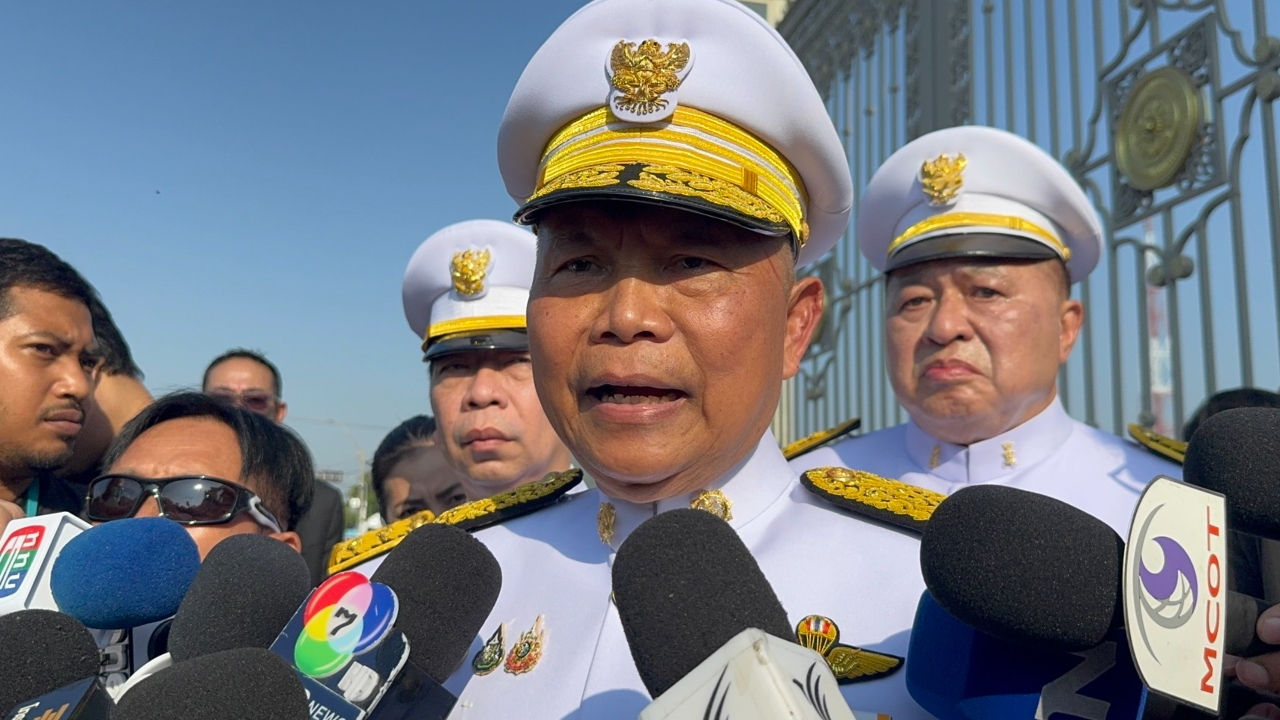
Sophon urged the three-party whips to each take a step back to find a resolution on the no-confidence debate schedule after two failed discussions. He called for an end through negotiation and confirmed he is ready to send a letter to the Cabinet if new convenient dates are proposed. He revealed the opposition said that if given four days, any dates from November to December would be acceptable.
At 08:20 on 23 October, in front of the King Chulalongkorn Memorial at Dusit Palace Plaza, Sophon Sarum, Speaker of the Parliament and House of Representatives, presided over a wreath-laying ceremony on behalf of the House of Representatives to pay homage to the King Chulalongkorn Memorial on the anniversary of King Chulalongkorn’s passing in 2026.

Sophon later gave an interview regarding the three-party whip coordination meeting's failure to agree on the schedule and allocation of time for the no-confidence debate under Article 151 of the 2017 Constitution. On 22 October, he assigned Mallika Jiraphanwanich, First Deputy Speaker responsible for this matter, to negotiate. However, both discussions failed: the opposition wanted five days, the government was ready for three, and a four-day compromise led to the opposition walking out without agreement. Subsequently, the opposition leader and party heads met Sophon in his office.
Sophon said he wished for smooth negotiations and therefore suggested both sides meet halfway at four days. The opposition raised concerns about reducing the number of speakers. He asked if it was really that difficult, and they replied yes, as preparations had already been made. He then asked which dates they preferred, and the opposition said that if given four days, any dates in November or December would be acceptable.
He added that he wanted the debate to conclude promptly to avoid burdening either side so they could move on to other work. Since the opposition insisted on four days in November or December, he noted that exercising discretion in setting the agenda could cause problems because he preferred the matter to be settled through discussion. Therefore, he asked both sides to continue talks to reach a conclusion. His role is to schedule the agenda, ensuring readiness from both the questioning and responding sides, as well as the quorum, with cooperation from all parties.
When asked if the government would be ready if the debate were in December, Sophon said he was unaware but knew only that the opposition insisted on any four days in November or December.
Regarding the opposition’s request for the Speaker to send a letter to the Cabinet indicating available debate dates, such as 7–11 November, Sophon said he could send such a letter without issue. However, he emphasized that orderliness depends not on the letter but on both sides stepping back in negotiation. Democracy rests on dialogue; if talks fail, decisions must be made by majority vote following democratic principles. If the outcome is unsatisfactory, legal provisions should be checked to ensure the decision’s legitimacy.
