

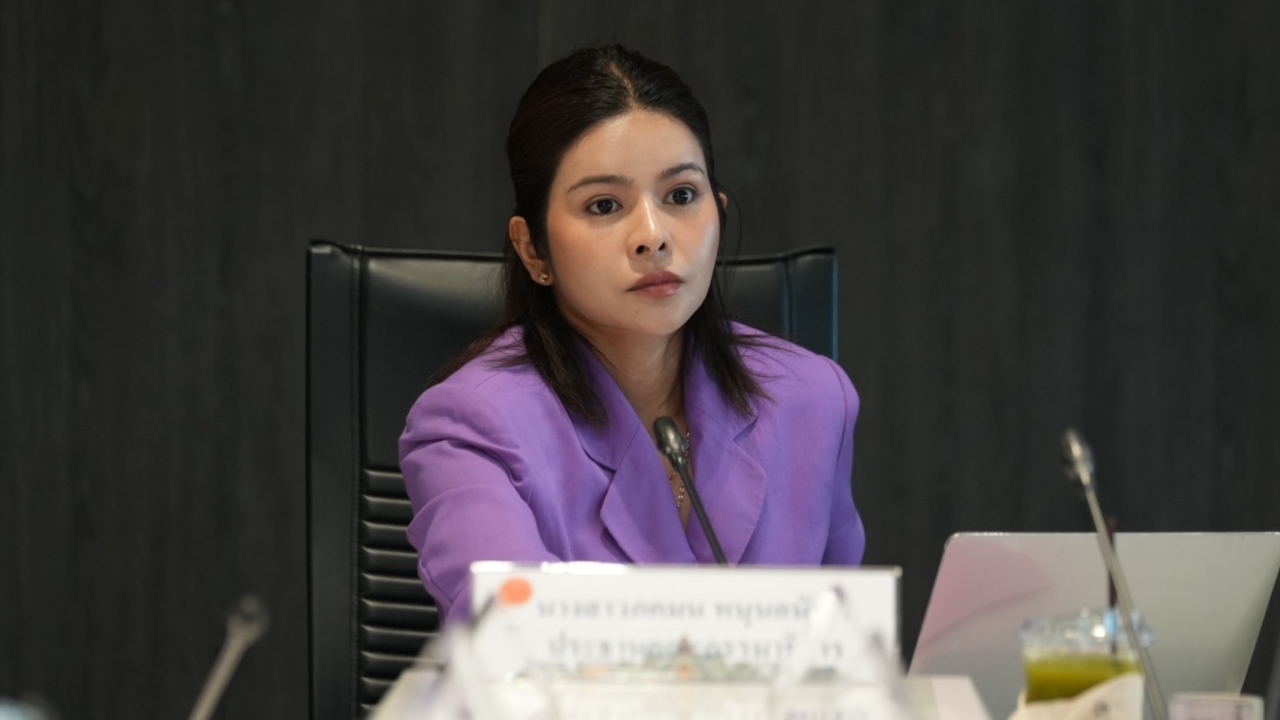
Pakamon, a party-list MP, urges Karaveer, the government coalition whip, to tell the whole truth, pointing out that the government is trying to pressure the impeachment debate schedule to suit its own convenience and questioning who is really unwilling to step back.
On 23 October 2026, Ms. Pakamon Noonanan, a party-list MP from the Prachachon Party, spoke about the recent tripartite whip meeting to finalize the date and framework for the no-confidence debate under Section 151, which remained unresolved after meetings on 21-22 October. She stated that Mr. Karaveer Prisananantakul, chairman of the coalition whip committee, should fully disclose the facts because the situation reflects the government’s attempt to set the debate schedule according to its own convenience and pressure the opposition to accept these conditions.
Ms. Pakamon said that previously, it was unprecedented for the Cabinet to send a letter to the House of Representatives setting the time frame for when the government was ready to receive debate before the whips from all three sides discussed together. However, this time, the government set a schedule convenient to the Cabinet and tried to force the House, especially the opposition who proposed the motion, to act within this time frame.
"If we look closely, we will see the government’s efforts over the past few days to interfere with and undermine the parliamentary checks and balances mechanism continuously. This is not a childish game or narrow-minded opposition as the government tries to portray, but we must question whether the real decision-maker may not be the person sitting in the negotiation room," she said.
Ms. Pakamon further explained that in the negotiations, the opposition insisted that if the debate must occur next week, it requires five days totaling 60 hours because their preparation and debate plans are based on this schedule. Any reduction in days, hours, or number of speakers would require internal party discussions, redistribution of information, and coordination with coalition opposition parties, which takes time to manage.
Therefore, the opposition proposed that if the government wants to reduce the debate to four days, it should be postponed to early November or the second week of November to allow time for adjustments and consultations with all parties. However, the Cabinet insisted that no other times were convenient and that it must be next week only.
"If the opposition proposes five days next week, but if it must be reduced to four days, then it should be in another week. This is an offer of options to find a solution, but the Cabinet insists no other periods are free and it must be next week only. So who is really unwilling to compromise?"
Ms. Pakamon also questioned the conduct of the meeting chair, saying that instead of remaining neutral and facilitating consensus, the chair used authority to pressure negotiators, including threats that if no agreement was reached, discussions would end, and showing readiness to close the meeting. She specifically noted the role of the Deputy Speaker Mallika Jiraphanwanich, who should focus on maintaining a conducive negotiation atmosphere and opening space for all parties to find solutions rather than acting as a representative for any side.
"Representatives attending as whips from both opposition and government should seek solutions together with mutual respect, not turn the negotiation into a stage where one side exerts power to pressure the other, because this is a discussion to allow the parliamentary mechanism to proceed, not a political contest to win against each other."
Ms. Pakamon added that during the 22 October discussions, although the government proposed extending the debate days from the afternoon of 26 October to 29 October, this schedule did not amount to a full four days of debate as the government claimed. The opposition still believed the proposed timeframe was insufficient given the content and the 18 ministers to be questioned.
When no joint conclusion was reached and the chair continued to exert pressure, the opposition decided to walk out of the meeting. However, Pakamon confirmed that before walking out, the opposition had consistently tried to propose alternatives and seek common ground.
"The walkout does not mean the opposition does not want the no-confidence debate, but affirms that we should not be pressured to perform the oversight role under conditions set solely by the government. The no-confidence debate is an important mechanism for the public to scrutinize those in power, so the government should allow full opportunity for oversight rather than attempting to limit time simply because its own schedule is inconvenient," Ms. Pakamon said.