

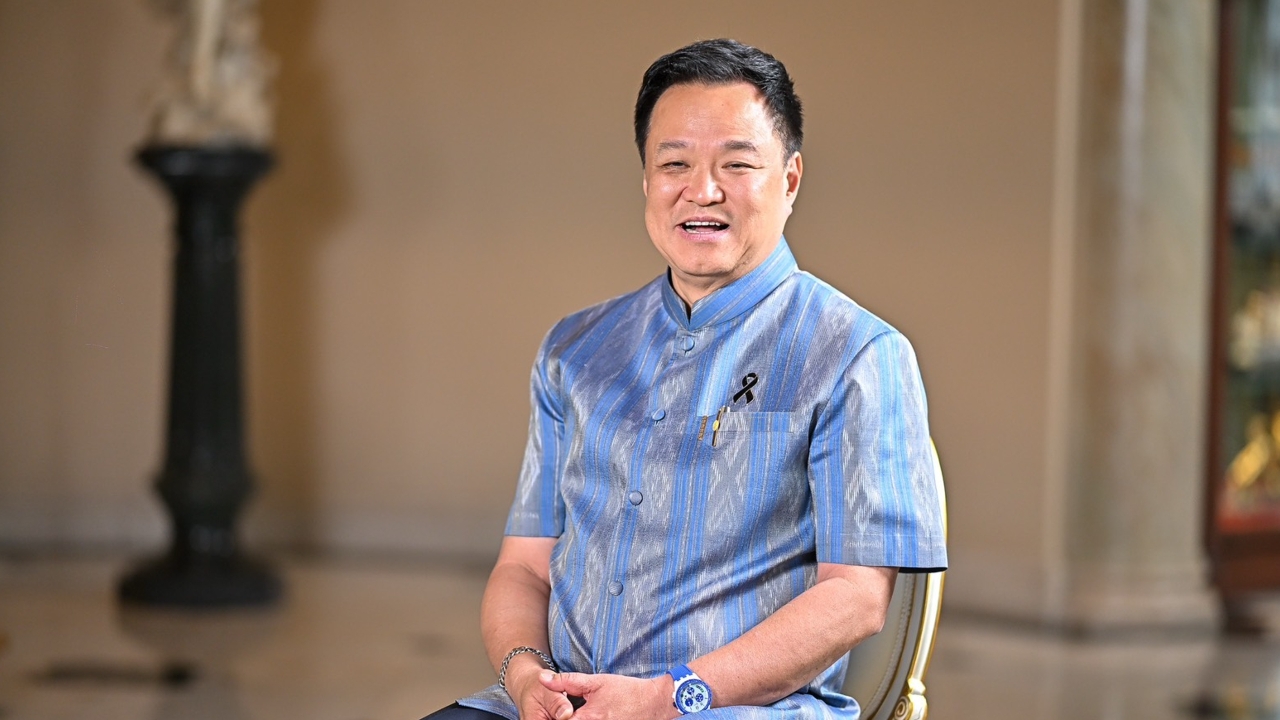
Anutin is confident this year's GDP growth will surpass 2.1%, ordering the National Economic and Social Development Council (NESDC) to re-examine both calculation methods and new assumptions. He asserted a new positioning for Thailand to foreign investors, warning that those coming for cheap labor are in the wrong place.
On 24 October 2026 at 09:05, Anutin Charnvirakul, Deputy Prime Minister and Minister of Interior, said in the program “Talk with Anutin’s Cabinet” that the current estimate of 2.1% GDP growth for this year should be reviewed after observing improvements in investment, exports, employment, and tax revenues. He tasked the NESDC to re-examine the details because many economic indicators paint a different picture than previous estimates. Notably, foreign investment in the first half of the year was about 30% higher than the entire value of last year, while exports expanded over 20%, even reaching nearly 25%. The government also noted increased corporate and personal income tax collections and cash flow from economic stimulus measures. He questioned how, if these key variables all move upward simultaneously, Thailand’s economy could grow by only 2.1%. Therefore, this year’s GDP growth is certainly not 2.1%. He has asked NESDC to review calculation methods, assumptions, and data before reporting back on the true improved overall picture and to assess how much upward revision is appropriate.
Anutin said investment is another priority for the government to accelerate, with overseas trips aimed at increasing trade, investment, and new cooperation. Thailand must present itself as a capable partner and ally, not a country seeking aid from others. The government plans to advance trade agreements with several markets, including the U.S., Europe, Central Europe, the United Arab Emirates, and Central Asia. Thailand’s new positioning to foreign investors is that it should not compete on cheap labor, low electricity costs, or merely contract assembly work for wages. Instead, it must sell strengths in personnel, transport systems, logistics, markets, and regional supply chain connectivity. "If you come to Thailand to find cheap labor, you are in the wrong place," he said. Thailand’s advantages include transport networks spread throughout the region, access to seas on both sides, and land, rail, air, and maritime routes. Investors using Thailand as a base can access not only the domestic market of about 70 million people but also connect to the ASEAN market of roughly 700 million. Investment in infrastructure over the past 10 to 20 years has begun to yield economic returns. Regarding energy, although Middle East conflicts pressure oil prices, Thailand has not faced shortages. Shifting from oil to electricity and natural gas has helped stabilize the energy system. Another government measure is to promote clean energy production by households for their own use, with excess electricity sold back to the grid. This creates an energy supply that feeds the industrial sector as well. Hosting the IMF–World Bank meeting in Bangkok has opened opportunities for bilateral discussions, business matchmaking, and increased international cooperation.