

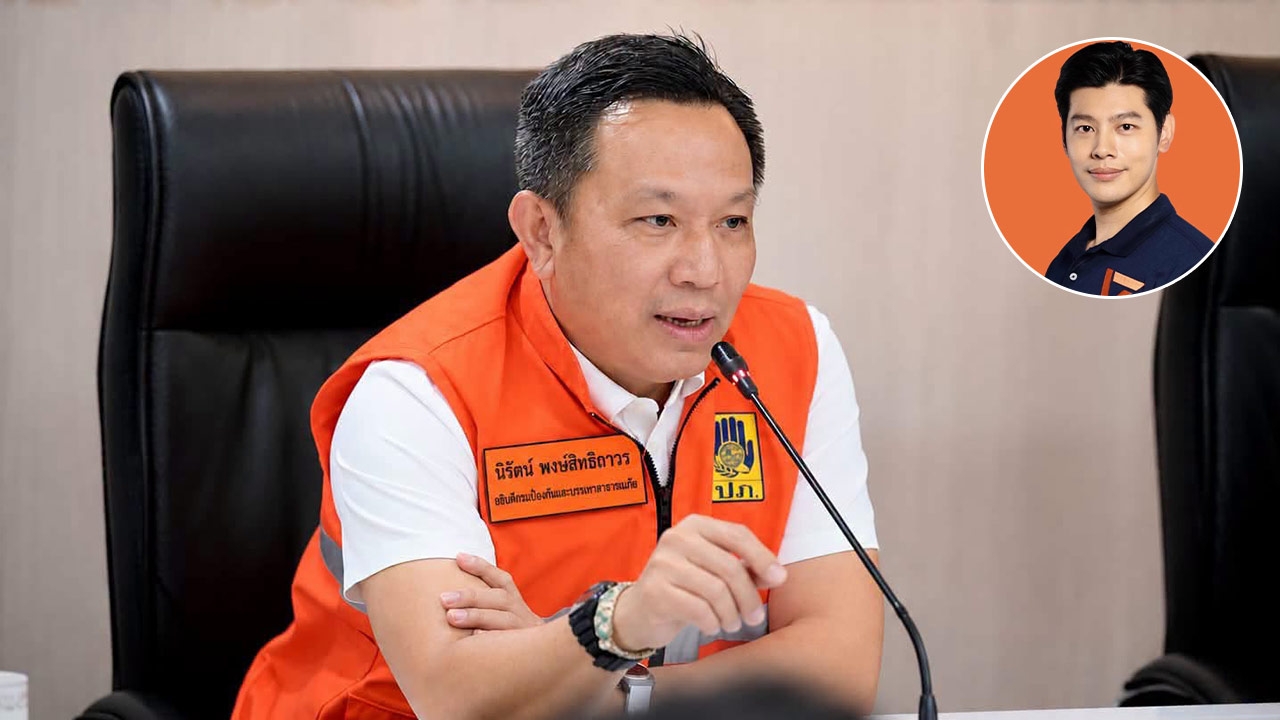
The Director-General of the Department of Disaster Prevention and Mitigation (DDPM) rebutted Suphanat's claims regarding Bangkok's 200 million baht relief contribution, explaining it is a normal procedure following Budget Bureau principles. He questioned who could coerce Bangkok, stating they only work with mutual respect and asked not to undermine the morale of frontline workers.
On 24 October 2026, Mr. Nirat Pongsitthithaworn, Director-General of the DDPM, clarified comments made by Mr. Suphanat Meenachainan, a Bangkok MP from the Prachachon Party, who posted on Facebook about Bangkok being pressured to contribute 200 million baht for flood relief. Nirat explained that disaster relief payments are not included in any government, department, ministry, Bangkok Metropolitan Administration (BMA), provincial administrative organization, or municipal budget since such major floods cannot be anticipated. Normally, local governments use their emergency funds if damages are manageable. However, this flood was extensive, so the government provided full assistance nationwide, including Bangkok.
Nirat further explained that large emergency funds, not from regular budgets, were disbursed under Ministry of Finance regulations for disaster relief and BMA rules. Various localities, including municipalities and subdistricts, have paid out relief. The government increased household relief payments to 5,000 and 9,000 baht. Before the fiscal year ended, the Prime Minister convened a meeting including BMA officials and the Budget Bureau. They agreed that Bangkok, with about 300,000 affected households—the highest among provinces—should share relief costs according to budget principles. The Budget Bureau explicitly states that financially capable localities must use their own funds first. Bangkok, as the largest and wealthiest local government, is required to contribute, with the government topping up. This is standard practice, also done in other provinces, though Bangkok has not faced such a large flood in at least 15 years since 2011.
"Current Bangkok residents might not fully understand this procedure," Nirat said. "The DDPM, Ministry of Interior, and BMA have discussions aimed at problem-solving for the public. There is no coercion involved. Don’t think Bangkok can be easily pressured—that’s impossible. We only work with mutual respect, as we have up to now."
"Requests are processed normally and quickly; if people say payments are slow, we expedite them due to the Prime Minister’s concern. Payments are made daily. When the first batch of funds ran out, people said money was exhausted, but that was only the initial batch. If necessary, more funds are requested—this is normal. Now the fiscal year 2027 has begun, and Bangkok has time to prepare its own funds to assist the government and help citizens. Nothing unusual here. We await figures and transfers from Bangkok; as soon as funds arrive, DDPM disburses them. Today, money arrived in the afternoon. There is no coercion. If anyone has questions or good suggestions, please share. Criticism should be constructive, not demoralize those working in DDPM, government, or localities. We must cooperate to overcome this situation well."
When asked how other provinces without Bangkok’s financial resources would handle relief, Nirat said the Budget Bureau applies financial capacity criteria. If a subdistrict administrative organization (SAO) in rural areas is affected, it contributes according to its capacity. Bangkok’s annual budget is nearly 100 billion baht; the 200 million baht contribution was not forced but assessed by Bangkok itself as an initial sum. Later, it reviews which budget items can be adjusted or delayed. This follows budgetary principles, releasing additional funds based on financial capacity.
He added that local contributions are standard nationwide, without fixed rules requiring equal amounts; contributions depend on financial status—those with larger budgets pay more, those with less pay less.
Regarding perceptions of inequality over why Bangkok must share relief costs, he reaffirmed that Bangkok is the wealthiest local government with the best financial standing in Thailand, fully capable of contributing alongside the government.
As for next steps, after Bangkok transferred funds to DDPM at 10:30 a.m. today, the details were checked and sent to Government Savings Bank that same afternoon. Another tranche was also transferred to Bangkok. He emphasized that the process is fast and done daily, including weekends.