

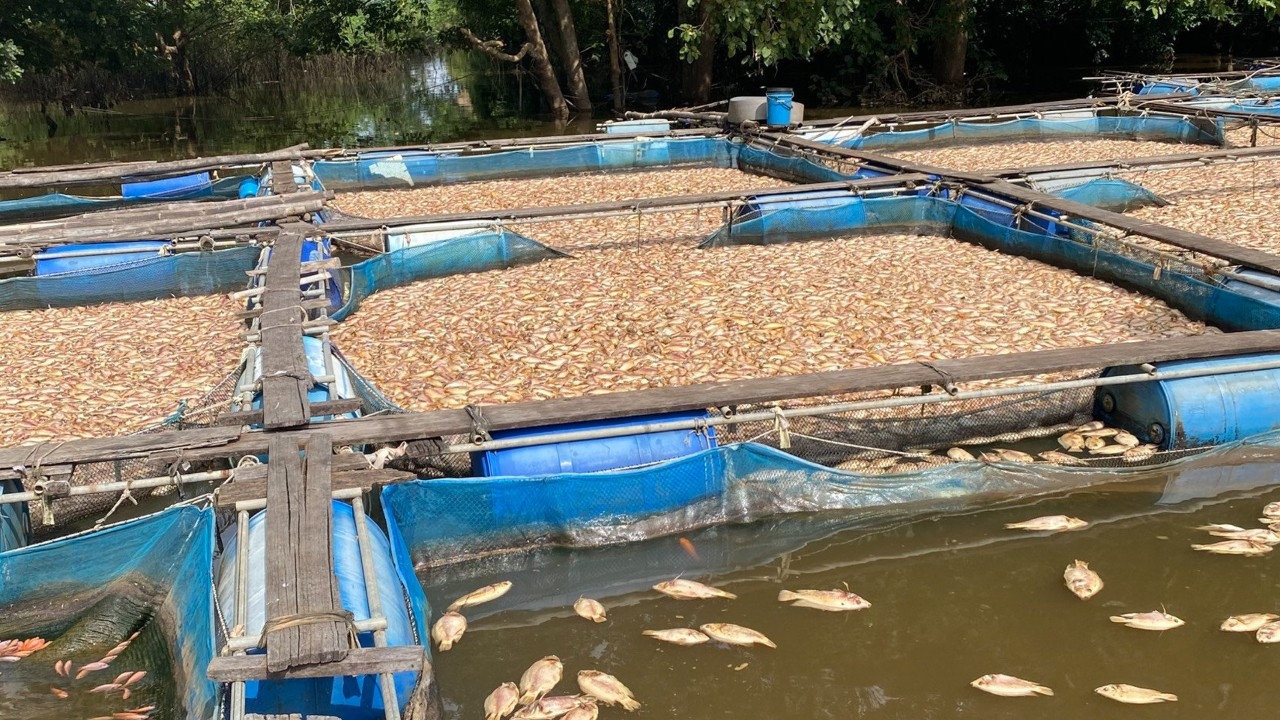
The government emphasized caution in concluding the cause of fish deaths in Prachinburi River. The Pollution Control Department is actively investigating aluminum levels in the water and preparing to collect sediment samples after floodwaters recede, while enforcing strict data verification before releasing information to the public.
On 25 Oct 2026 GMT+7, Ms. Lalida Pertwiwatana, Deputy Spokesperson of the Prime Minister’s Office, addressed the fish deaths in Prachinburi River, Prachinburi Province. She said the government prioritizes fact-finding and assessing impacts on residents. The Pollution Control Department (PCD) of the Ministry of Natural Resources and Environment is continuously monitoring water quality in the area.
She explained that aluminum is a naturally occurring element in soil and rocks, entering water bodies through natural erosion or weathering. However, aluminum can also originate from industrial activities and wastewater. Therefore, the results alone cannot determine the source of the detected aluminum or directly link it to the fish deaths. Further scientific and environmental investigations in the area are necessary.
Ms. Lalida added that on 24 Oct 2026 GMT+7, the Pollution Control Department clarified that previous water quality reports for Prachinburi River contained errors where ammonia and aluminum figures were mistakenly swapped. The corrected values are ammonia 0.22–0.48 mg/L and aluminum 0.559–3.547 mg/L. The department has updated the data and apologized to the public and media. This correction reflects accurate data and does not indicate a recent increase in aluminum levels in the river.
Regarding concerns about aluminum levels, the deputy government spokesperson stated a comprehensive assessment is needed since aquatic impacts depend not only on contaminant concentration but also water properties such as pH, hardness, dissolved organic carbon, aluminum species present, and exposure duration. Thus, it is premature to conclude whether the detected levels are safe or the cause of fish deaths without complete supporting data.
According to the U.S. Environmental Protection Agency’s scientific guidelines, assessing aluminum’s effects on freshwater aquatic life must consider local water conditions; a single numeric standard cannot apply universally. While aluminum occurs naturally, high concentrations can still harm ecosystems.
Meanwhile, the Pollution Control Department plans to collect sediment samples from Prachinburi River and its tributaries after floodwaters subside. This will help assess pollutant accumulation, identify sources, and support a comprehensive investigation into the cause of fish deaths. They emphasize thorough examination before concluding whether pollution is natural or anthropogenic.
At the detected aluminum concentrations, there is no direct health risk unless water is consumed continuously. Normally, the human body absorbs very little aluminum. However, if the water is to be used for drinking or domestic purposes, treatment to improve water quality is recommended. Among five sampling points, only two require further investigation due to aluminum levels: Point 1 at Pak Nam Ban Nong Hoi Bridge with 3.547 mg/L, and Point 2 at Prachinburi River Bridge in Kabin Buri Subdistrict with 0.874 mg/L.
To build future data confidence, the Pollution Control Department will tighten data verification before publication, including cross-checking figures, substance types, units, sampling locations, and lab analysis reports. Reviews by technical teams and responsible officials will be mandatory prior to public release.
Additionally, the Prachinburi Provincial Fisheries Office disclosed results from testing nine aquatic samples covering four districts on 21 Oct 2026 GMT+7. Mercury, cadmium, and lead levels were within standard limits in all samples. These findings support ongoing monitoring but do not cover aluminum nor confirm overall aquatic safety or fish death causes.
“The government understands local concerns and affirms that investigations will be conducted carefully based on scientific principles. Finding aluminum in the water does not necessarily indicate industrial sources, but neither can it be confirmed as natural or harmless to aquatic life without sufficient evidence. The government prioritizes thorough fact-finding to identify causes and address issues effectively,” Ms. Lalida concluded.
In closing, Ms. Lalida said the government will continuously monitor actions by the Pollution Control Department, Fisheries Department, and relevant agencies. It emphasizes transparent, accurate, and verifiable data disclosure to build public trust, ensuring efforts to improve Prachinburi River water quality are fact-based and prioritize public safety and ecosystem care.