

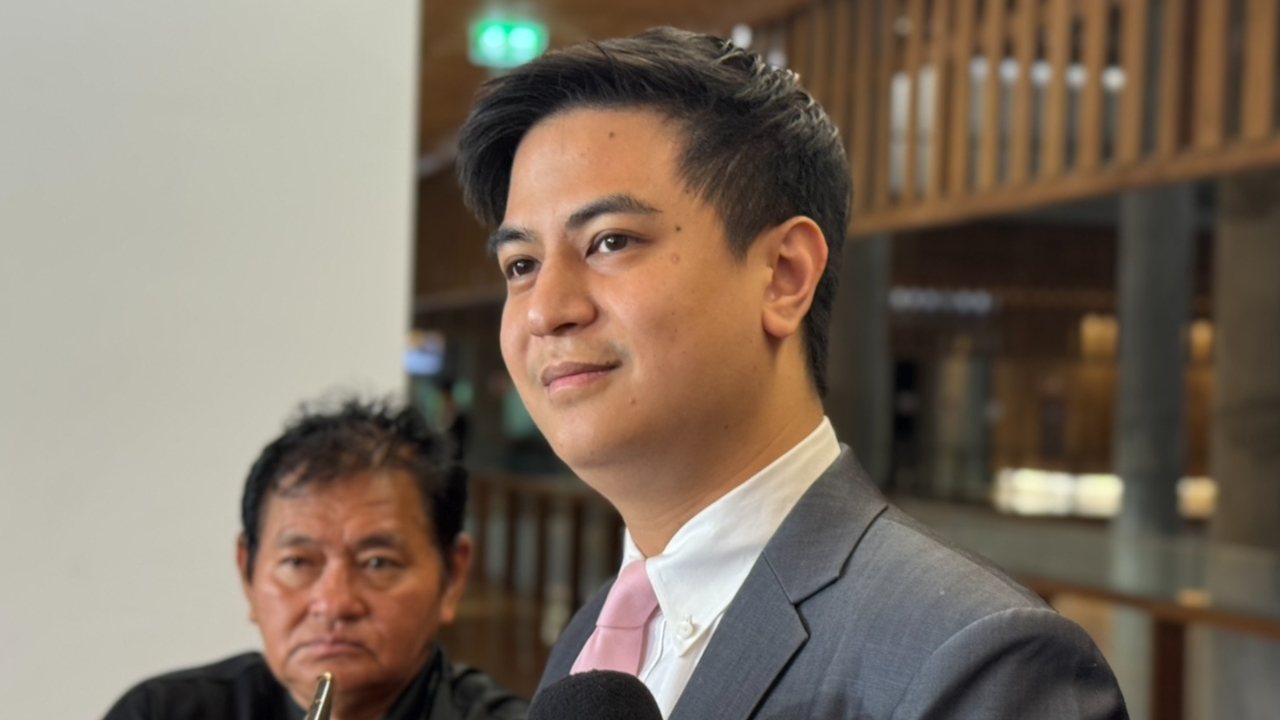
Prasit believes the Cabinet can still allocate time for the no-confidence debate in November despite a tight schedule, affirming willingness to adjust debate time without diminishing essential content. He also calls on ministers to attend parliament to answer opposition questions.
At 09:00 on 27 Oct 2026 GMT+7, Prasit Watcharasinthu, party-list MP of the People’s Party, in his role as opposition whip in the House of Representatives, spoke at the parliament about the tripartite whip meeting to set the schedule and allocate time for considering the motion for individual ministerial no-confidence debates under Article 151 of the 2017 Constitution. He said no date has been set yet, but from what he heard, the Speaker is willing to follow the opposition’s official request to the Cabinet to clarify what time slots the Cabinet can allocate for the no-confidence debate during this session. They hope to receive clarity from the Cabinet soon and find the earliest possible time within November.
Regarding the question of the government signaling early December, Prasit said the Prime Minister mentioned it might be in early December. However, the opposition believes November still has available time. They understand that some events like the APEC meeting and ASEAN summit have fixed schedules for many countries, but excluding those dates, there should still be sufficient days, such as 7-11 or 9-13 November, when the opposition is ready to perform their duties. Therefore, they hope to finalize the week and dates for the debate soon and await clear confirmation from the Cabinet. The opposition will hold an informal meeting this week to allocate debate time and prepare for any scenario.
When asked if debate content would need to be reduced if the government allows only four days, Prasit said they would adjust the content accordingly. The opposition had prepared a five-day, 60-hour debate framework based on past standards. With 18 ministers now, a reasonable time frame is needed. They have planned content within this framework but are open to discussing compromises if necessary, requesting time to revise the content so that under a new time limit the essential substance is preserved.
Prasit added that after the debate, all MPs will vote separately on each of the 18 ministers. The prepared content and evidence must be sufficient to support the decision-making of all 500 MPs. He emphasized that this week the opposition will discuss the time framework with the goal of managing debate time effectively without reducing the core substance or evidence to be presented.
He also urged ministers, since they have cleared their schedules for the no-confidence debate, to attend parliament and respond to opposition questions as well.
Additionally, Prasit spoke about this week's parliamentary agenda, saying it is a general session with consideration of legislation on 28 October, including bills returned to committees and new bills proposed by the Cabinet. On 29 October, the agenda includes questions and reports. He hopes that when the opposition raises questions about public hardships to relevant ministers, those ministers will be able to respond in parliament. Given that the Prime Minister and Cabinet have set aside time for the no-confidence debate, he hopes no minister will be unavailable to answer live questions.
When asked about the recent floods in Phuket and the government's management, Prasit replied that local MPs who are on the ground can report more accurately. Overall, for disaster management, he wants to see efficiency in three key phases: 1. timely warnings so people in affected areas can be informed and aware of risks; 2. effective response to ensure rapid assistance when disasters strike; and 3. swift relief efforts with reduced paperwork burdens. These three points have been consistently proposed to the government during flood crises.