

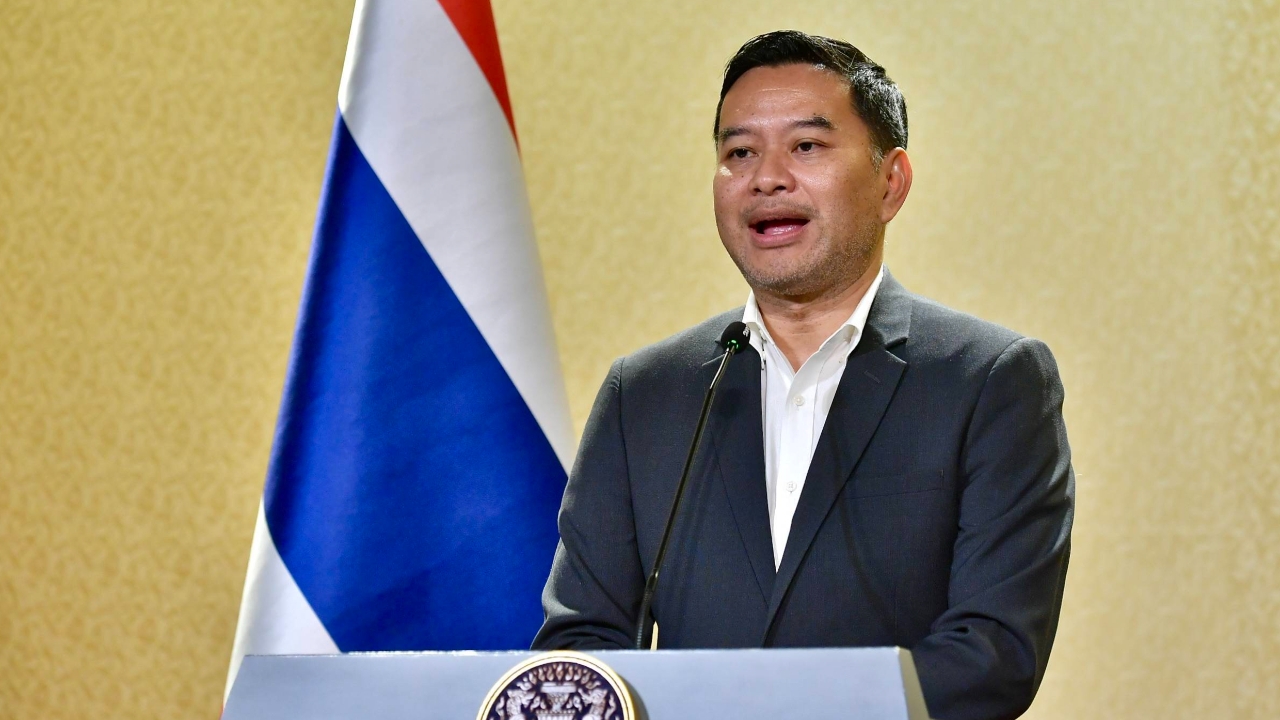
Anutin stressed that the Cabinet's mobile meeting in Udon Thani would focus on farmer support while pushing forward measures to reduce electricity and fuel costs and advance the energy transition. He ordered the Cabinet to clear their schedules to prepare for the no-confidence debate.
At 14:00 on 27 October 2026 at the Government House, Mr. Ekaphop Phianpiset, spokesperson for the Office of the Prime Minister, announced the outcome of the Cabinet meeting (Cabinet Meeting). Prime Minister and Minister of Interior Anutin Charnvirakul issued directives regarding the official off-site Cabinet meeting (Cabinet Mobile Meeting) in Udon Thani Province scheduled for 2-3 November 2026 and his role as chair at the opening ceremony of the World Horticultural Expo. The Prime Minister will visit the area and deliver policies focused on supporting farmers in Northeast Thailand and other regions, instructing relevant ministers to prioritize resolving farmers’ issues. Additionally, Anutin ordered agencies to systematically and strictly address electronic waste problems, pursue legal action against involved parties, inspect environmental contamination, and carry out systematic rehabilitation.
Meanwhile, at the Cabinet meeting, the Prime Minister also directed preparations for the no-confidence debate, assigning the government whip to coordinate discussions with all party whips to finalize the date and duration. Initially, the debate is likely to take place in early December. Preliminary talks indicated a possible four-day debate in November or December. Anutin instructed the Cabinet to review their schedules during this period to ensure readiness. The exact date and duration will depend on agreements between party whips.
The National Economic and Social Development Council Secretary will consider only suitable projects, expecting proposed budgets to be under one billion baht.
Mr. Danucha Pichayanan, Secretary-General of the National Economic and Social Development Council (NESDC), commented on project proposals for the Cabinet Mobile Meeting, stating that on 28 October he will consult with the Ministry of Interior and provincial agencies to set the agenda for the meeting, focusing on five key areas: agriculture, food, drug problem solutions, border trade development, and tourism development. This meeting will be similar to the one in Songkhla, but without a fixed 50 million baht per province budget cap. Projects will be accepted for consideration based on their relevance and necessity for the area. Some projects have already been proposed, including road development, hospitals, and drug treatment centers. Projects fitting into existing agency plans will be integrated accordingly. The total proposed budget is expected to be less than one billion baht, unlike the Songkhla meeting which involved significant flood response funding.
Progressing to reduce electricity and fuel burdens and drive energy transition measures.
The government spokesperson also revealed that the Cabinet approved a community solar roof project, part of the country’s energy transition efforts. The government has implemented multiple energy measures concurrently, such as reducing household electricity bills by separating public lighting charges from consumer bills and setting the electricity rate for the first two units at 3 baht per unit. It promotes direct electricity sales to businesses (Direct PPA) and revises small power producer contracts to prevent automatic renewals.
. The "community solar" project allows citizens who install solar systems to sell surplus electricity back to the utility at 2.20 baht per unit. The Cabinet approved the project under the framework of the Royal Decree granting the Ministry of Finance authority to borrow funds to address energy crisis impacts and support the energy transition in 2026. The energy transition includes multiple projects and support measures:
The Ministry of Labor received 972 million baht to enhance personnel skills for installing solar systems for the public. The total budget for these projects and measures amounts to 72.5688 billion baht. The government expects these measures to reduce electricity costs for citizens by approximately 24 billion baht and decrease electricity purchases from the existing grid by about 6.323 billion units in the first year.
Regarding measures to reduce energy expenses, the Cabinet approved the Excise Department’s reduction of excise tax on B20 and E20 fuels, to promote the use of agricultural products in fuel production and lower fossil fuel consumption. The Prime Minister assigned the Ministry of Energy to consider long-term energy solutions. The government has previously used various measures, including the energy fund, refinery fee reductions, and excise tax cuts, to ease citizens’ financial burdens.
Mr. Ekaphop added that the Trade Competition Commission set payment terms requiring operators to pay for agricultural products within 30 days and for other products or services within 45 days, effective 2 November 2026. Following this decision, some large private sector companies have begun implementing the new terms. Previously, billing and payment took on average 30 to 90 days; with the new rules, the average payment time is expected to drop by 15 days from 45 days. The commission estimates this will increase cash flow into the SME sector by over 100 billion baht every 15 days.
Regarding flood relief efforts, the Prime Minister assured continued support and rehabilitation, especially in southern regions facing heavy rains and flash floods. He ordered relevant agencies to expedite aid and implement disaster insurance to accelerate compensation. Additionally, he instructed strict and systematic management of electronic waste, legal actions against offenders, environmental contamination inspections, and systematic rehabilitation efforts.