

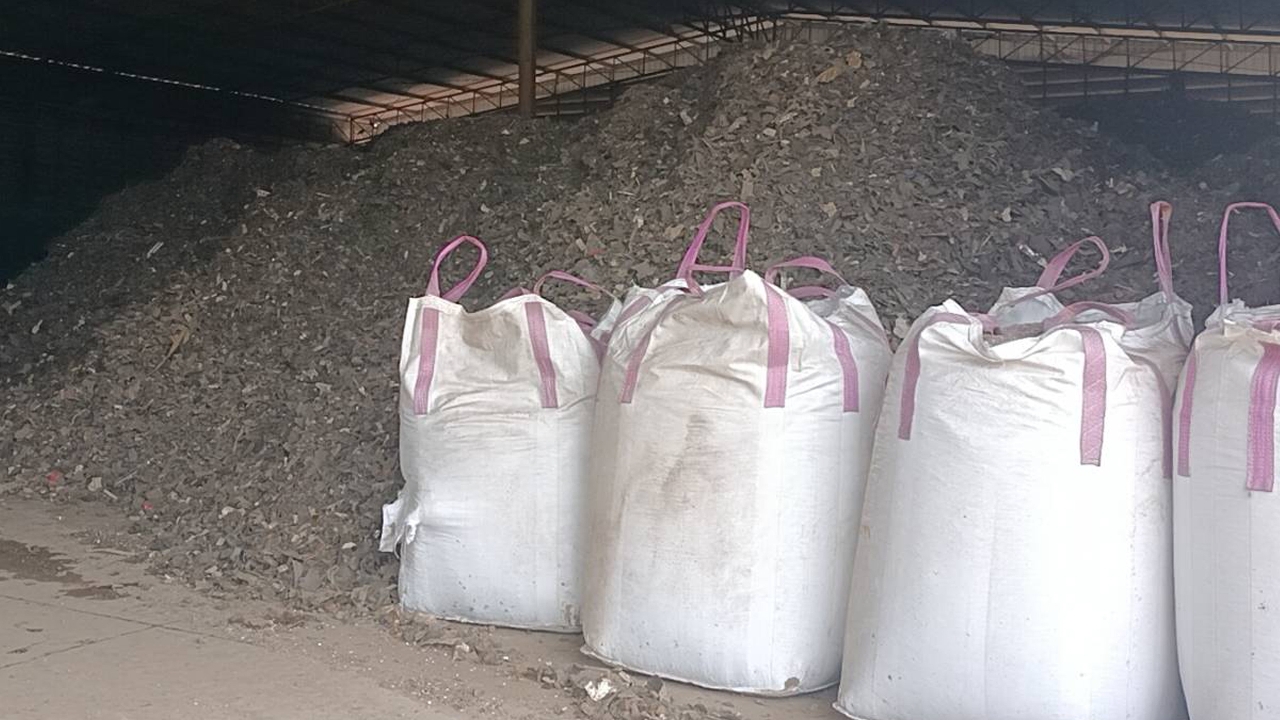
The government has partnered with China to receive over 375,000 U.S. dollars in funding from the Mekong-Lancang Cooperation Special Fund, moving forward with two projects aimed at advancing green industry technology for recycling batteries, solar panels, and electronic waste.
On 27 Oct 2026 GMT+7, Ms. Lalida Pertvivattana, Deputy Spokesperson of the Prime Minister's Office, revealed that the government is expanding cooperation with the People's Republic of China to elevate Thailand’s industrial sector toward a green economy and sustainable development. The Cabinet approved a draft agreement on cooperation under the 2025 Mekong-Lancang Cooperation Special Fund between the Ministry of Industry and the Chinese Embassy in Thailand, authorizing the Permanent Secretary of Industry or an authorized representative to sign the agreement to receive 375,900 U.S. dollars in funding from China for two projects promoting green industry and a low-carbon economy.
Ms. Lalida explained that this cooperation is part of the Mekong-Lancang Cooperation Special Fund (MLCSF), which supports capacity development and collaboration among member countries in the subregion. The Ministry of Industry received budget support for two key projects:
The first project, "Capacity Building for Recycling Industry to Support Circular Economy and Green Industry among Mekong-Lancang and China," is conducted by the Office of Industrial Economics over 18 months with a budget of 132,900 U.S. dollars (up to 983,500 yuan). It aims to assess and enhance the capacity of Mekong-Lancang subregional countries to efficiently manage and recycle car batteries, solar panels, and electronic waste, while developing regulatory frameworks and policy guidelines to promote resource efficiency, reduce environmental impact, and support recycling industry development in the region.
The second project, "Pathway to Net Zero: Empowering CLMVT Industries for a Low-Carbon Future," is implemented by the ISO Certification Institute over 18 months with a budget of 243,000 U.S. dollars (up to 1,798,200 yuan). It aims to equip industries in the CLMVT countries—Cambodia, Laos PDR, Myanmar, Vietnam, and Thailand—with the knowledge, tools, and resources needed to transition production processes toward Net Zero Emissions. The project also promotes sustainable manufacturing practices, policy development, and international cooperation to enhance industrial capacity in meeting environmental standards and international climate goals.
The Deputy Spokesperson said both projects will help prepare Thailand’s industrial sector for the transition to a low-carbon economy, particularly in managing waste from modern industries such as electric vehicle batteries, solar panels, and electronic equipment. As clean energy technologies expand, developing recycling knowledge and appropriate regulatory systems will increase opportunities for material reuse, reduce waste volume, and establish a foundation for sustainable recycling industry growth.
At the same time, strengthening industry capacity toward Net Zero will enable relevant agencies and entrepreneurs to share knowledge and best practices in reducing greenhouse gas emissions, as well as prepare for changes in environmental standards and international trade requirements—critical factors for the future competitiveness of Thailand’s industrial sector.
Ms. Lalida added that under the draft agreement, the Chinese side will allocate the full budget to Thailand within 20 working days after signing, and the Thai side must officially confirm receipt within 10 working days. The signing date marks the project start date, with monitoring and evaluation systems in place to ensure funds are used according to objectives and plans. Notably, implementing these projects will incur no additional costs or financial obligations for the government budget.
Moreover, this cooperation aligns with Thailand’s Bio-Circular-Green (BCG) Economy Model and ongoing industrial and environmental technology collaboration with China. It focuses on promoting carbon-reducing production, efficient resource use, and environmentally friendly industrial development to support economic growth alongside environmental conservation.
"The government prioritizes upgrading Thailand’s industrial sector to grow alongside environmental preservation, especially through developing recycling technologies and adjusting production processes to lower carbon emissions. This cooperation with China under the Mekong-Lancang Fund will enhance Thailand’s access to knowledge and green industry networks, which can be leveraged to further develop production capabilities and strengthen the competitiveness of Thai industries in the long term," Ms. Lalida said. ."},{
The Deputy Spokesperson concluded that the government will continue to promote international cooperation in green industry, circular economy, and environmental technology to support Thailand’s industrial sector in adapting to global economic changes, minimizing environmental impact, and creating new opportunities for sustainable industrial development. The transition to a low-carbon economy aims to benefit entrepreneurs, the economy, and the public in the long run.