

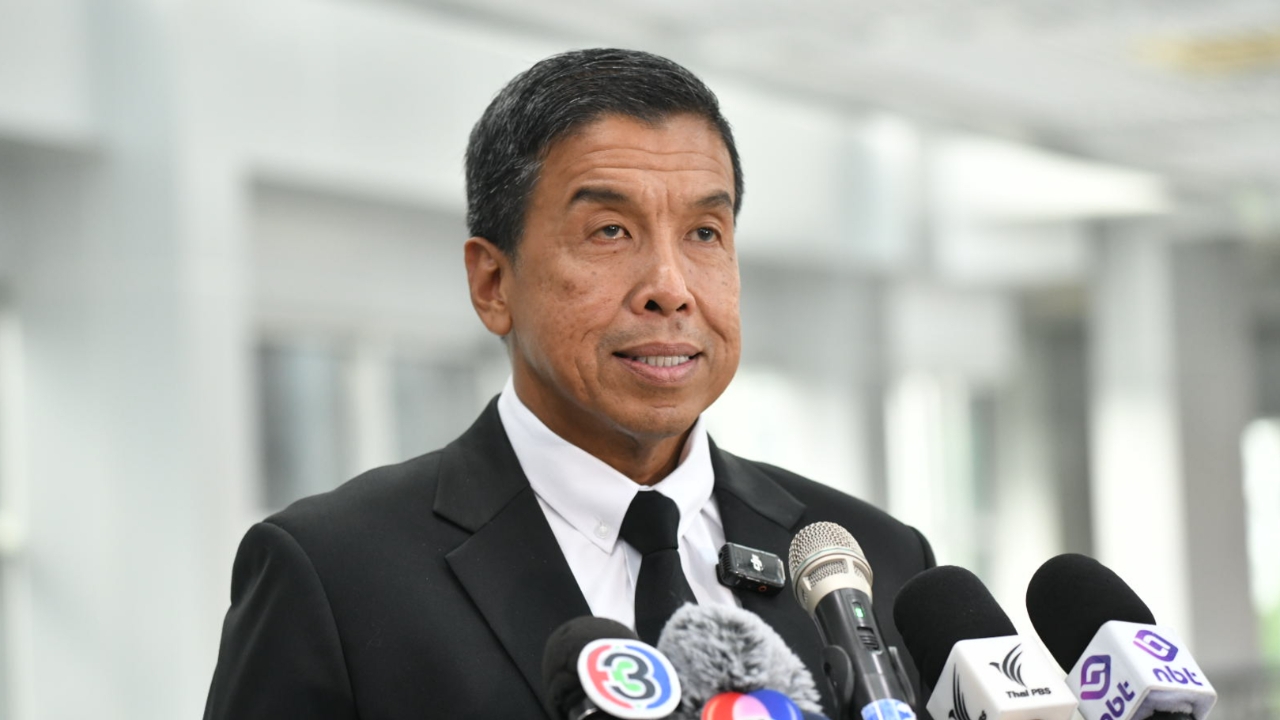
Governor Chadchart emphasized that Bangkok has no conflicts with the government. Nearly 4 billion baht in relief funds have been distributed to the public. He is preparing to collaborate with the Department of Disaster Prevention and Mitigation to expedite budget allocation for aid, and has ordered weekly visits every Sunday to flood risk points to address problems directly.
On 28 Oct 2026 at Bangkok Metropolitan Administration (BMA) City Hall 2 in Din Daeng, Governor Chadchart Sitthiphan spoke about the cooperation between Bangkok and the government in supporting budgets to assist flood victims, including plans for area rehabilitation and flood problem solutions going forward. He confirmed that the operations have been carried out with cooperation from all agencies, without conflicts, with all parties sharing the common goal of providing speedy and comprehensive relief to the public.
Governor Chadchart stated that since the flooding began, the government allocated budgets to assist victims and discussed budget support with Bangkok. The BMA cooperated according to Cabinet resolutions and relevant authority frameworks. So far, Bangkok has provided about 210 million baht from budgets allowed under regulations.
The Department of Disaster Prevention and Mitigation then proposed that Bangkok provide an additional 300 million baht. Bangkok is ready to cooperate. Initially, Bangkok can immediately provide about 100 million baht, while the remaining 200 million baht will be covered by funds the government still owes or compensation for revenue losses that Bangkok suffered due to tax and fee reductions. This future government payment can be withheld and used for this purpose.
Currently, Bangkok has paid the DDPM contributions in three installments: 10 million baht in the first, 200 million baht in the second, and the latest 100 million baht, totaling 310 million baht.
This budget support complies with authority frameworks and relevant regulations. Additional spending, especially for repairs and rehabilitation of affected areas, must be submitted to the Bangkok Metropolitan Council for approval today to ensure proper, transparent, and accountable budget use.
Governor Chadchart also said that nearly 4 billion baht in compensation has already reached the public, reflecting cooperation among the government, Bangkok, and relevant agencies in mobilizing resources to aid victims. Bangkok has received support from multiple sectors, including disaster prevention agencies, the military, the Department of Highways, rural highway agencies, the private sector, and local officials, all providing personnel, equipment, and tools to address problems and rehabilitate areas.
“There is no conflict. All agencies are fully cooperating because this is a large-scale crisis that no single agency can handle alone. The most important thing is that the public must receive help quickly. Therefore, we must work together and use resources to their fullest benefit,” Governor Chadchart said.
Responding to major disasters requires cooperation between the government and local administrative organizations, as each area faces budget, personnel, and equipment limits. Support from central agencies and cross-regional resource mobilization is essential. Likewise, Bangkok coordinates aid from unaffected districts to support affected areas to ensure effective assistance and rehabilitation.
For the next steps, Bangkok plans to continuously monitor and resolve flooding in vulnerable areas. Governor Chadchart will visit these sites every Sunday to survey community-level problems, directly hear residents’ situations and hardships, and review flood-prone points with drainage limitations. This enables relevant agencies to plan targeted solutions aligned with actual conditions. This approach helps Bangkok clearly identify each community’s issues and needs regarding drainage systems, infrastructure weaknesses, post-flood care, and coordination with involved agencies to establish concrete flood prevention and impact reduction measures for the future.