

The Prime Minister is preparing to revise the disease prevention strategy ahead of aging, believing good health is the foundation for national development. He urged trust in the government’s commitment to prioritize public health and to fully support the healthcare system.
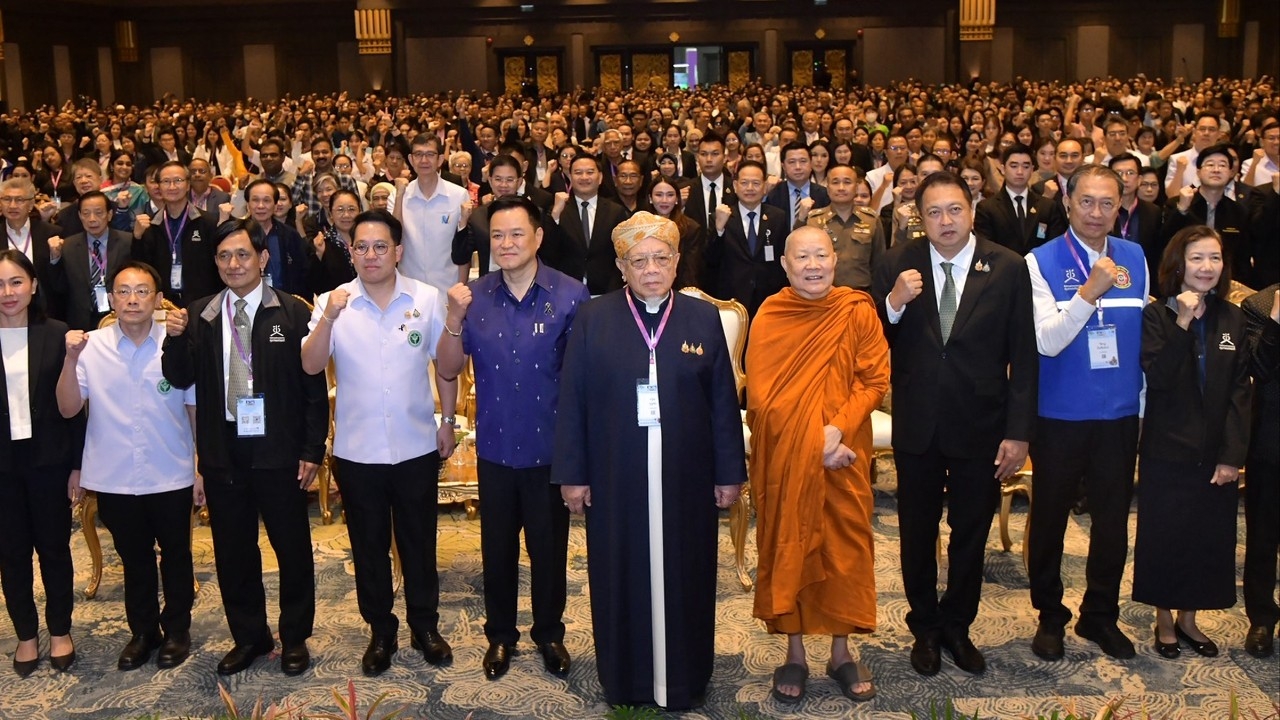
At 09:00 on 28 Oct 2026, in the Grand Diamond Ballroom at IMPACT Forum, IMPACT Muang Thong Thani, Prime Minister and Minister of Interior Anutin Charnvirakul presided over the opening of the 19th National Health Assembly 2026 titled “A Well-being Society: Positive Public Policy with Heart,” delivering a keynote speech on “Uniting All Sectors Towards a Sustainable Thai Health System.” The Prime Minister noted that this assembly is a key forum on national health. Having left the Ministry of Public Health since 2023, he observed that during his absence, the Ministry and the National Health Office have made significant progress in developing and restructuring to advance public health and well-being. The Ministry is now stable with continuous results, as current Minister Pattana Prompat has not faced censure, unlike during Anutin’s three years there when he faced annual censure debates.
During the COVID-19 outbreak, the Ministry’s personnel showed strong unity and worked tirelessly for the public’s health, without fear of criticism or scrutiny. They were able to explain and gain public support. The Prime Minister recalled his last attendance at the National Health Assembly around 2022 when COVID-19 was severely impacting Thailand, but the Assembly served as a network helping to keep people safe from infection.
The Prime Minister said the most important task is to build Thailand’s public health security continuously while adjusting policies and strategies. As Thailand approaches a fully aging society, we should not fear this but face it with confidence, seeing that parents can live longer with us, and we and our acquaintances can live longer and remain strong enough to contribute greatly to the country. Previously, at age 77, many were nearly bedridden, forcing working children to leave jobs to care for them, hampering career progress. Therefore, the government aims to care for public health as much as possible.
He added that the strength of the National Health Assembly lies in providing an open space for all sectors to exchange diverse knowledge and perspectives, turning proposals into public policies related to health and quality of life. Regardless of criticisms about increasing health care costs, the government insists on allocating sufficient funds to ensure longevity and quality of life for citizens, even under budget constraints. Health is the one area the Budget Bureau dares not cut.
The Prime Minister stated that Thailand will become a fully aged society within 6-7 years. Health policy must focus on disease prevention and health promotion. Early detection leads to full health restoration. Since 2019, the government has emphasized this, successfully managing COVID-19 by leveraging Thailand’s public health system’s full capacity, demonstrating its strength in handling health crises and epidemics. This approach serves as the foundation for expanding public health care. Elderly people should help reduce the working population’s burden so they can generate income, which the country can use for elderly welfare. An aging society can coexist with the general society with mutual understanding.
Anutin also said that despite some internal conflicts in the universal health coverage system and occasional delayed payments to hospitals, the public still receives financial support from the government’s annual budget. He assured people not to worry because their health is the government’s top priority. When central funds or savings from other areas become available, the first action is to allocate these back to the NHSO to pay the Government Pharmaceutical Organization and hospitals. The government manages the budget but guarantees full care for public health and precise systems for care delivery.
“Thailand maintains strict fiscal discipline, which does not mean wasteful spending. This fiscal discipline allows us to manage budgets effectively in all aspects,” the Prime Minister said.
The Prime Minister noted that at the recent IMF–World Bank Group Annual Meetings 2026 hosted by Thailand, many issues were discussed, including the shrinking workforce, the rise of AI, and retirements. Thailand must develop new strategies to manage workforce, budget, and services to ensure proper care. The World Bank presented a report warning of Thailand’s rapid aging, predicting a fully aged society by 2033, recommending enhanced health prevention, primary care, and continuous elderly care. These recommendations highlight concrete challenges such as ensuring sufficient public health personnel to meet increasing care demands; without enough staff, the system cannot function.

Meanwhile, village health volunteers (VHVs) must serve as good role models promoting health care. Today, the government plans to expand the wellness industry and health economy, covering disease prevention, rehabilitation, pre-aging preparation, elderly care, and technology to improve quality of life. Thailand has great potential to develop by integrating traditional wisdom, such as Chinese medicine, Thai traditional medicine, and alternative medicine, with modern science and innovation. Thus, national development opportunities lie in health services and the health economy, but growth must be built on trust, ensuring safe, quality, and accessible services.
“The government’s vision for Thailand’s health system is to build a system that enables people to be healthier, reduces hospital admissions, and promotes the wellness industry to create economic value. A strong economy naturally improves quality of life. People who can care for themselves have the strength to develop economic security. Good health and national development are inseparable. The National Health Assembly is a vital platform linking people and knowledge,” the Prime Minister said.
The Prime Minister concluded by pledging full support for all health-related matters, even those not directly under his supervision, confident in the work of civil servants and health personnel. Now, as Prime Minister and head of government overseeing the Ministry of Public Health, there is no reason not to support good policies. Public health must continue to develop in this era of progress. The current Minister of Public Health is named Pattana, meaning development. “Thank you all for honoring me with this keynote speech today. If there are any shortcomings, tell Minister Pattana; he will inform me. I just tick and sign, all approvals are by Anutin,” the Prime Minister said.