

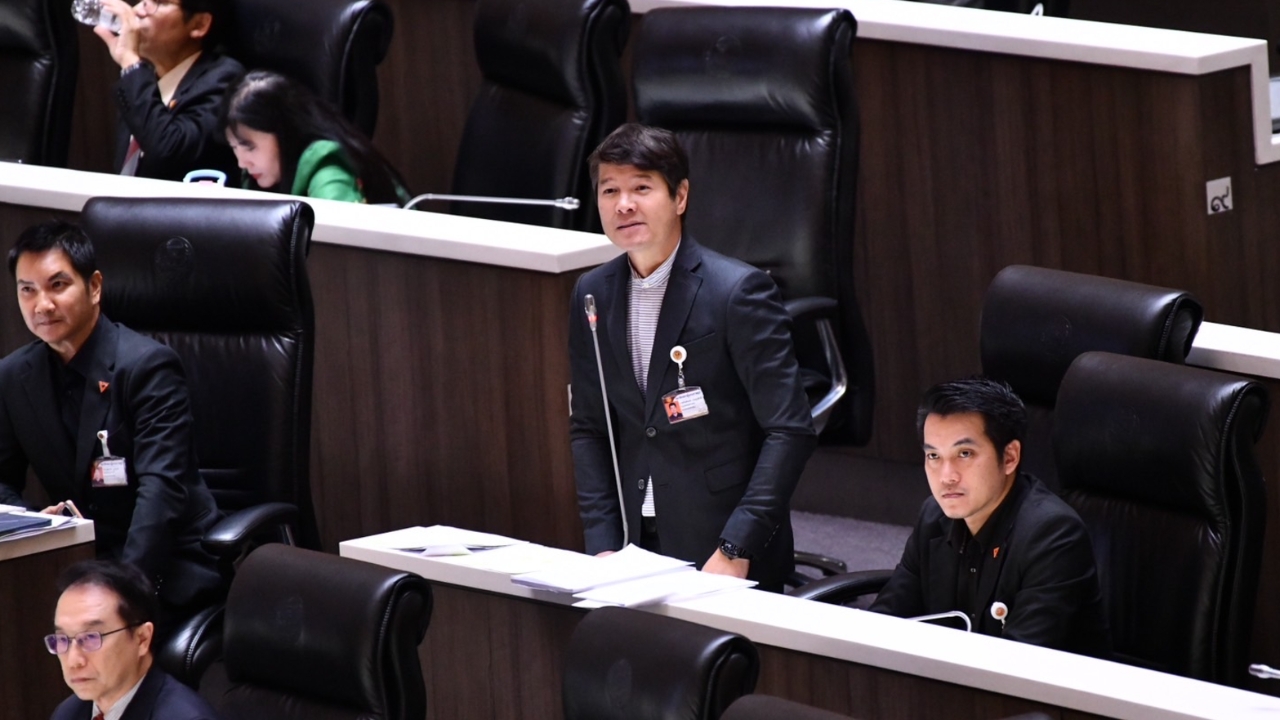
Kantapong is pushing a draft Electronic Transactions Act proposing the "3 K Model," stressing that Thailand must control major platforms by screening business operators and enforcing clear penalties for violations.
On 28 Oct 2026 at the Parliament building, Kantapong Prayunsak, MP for Bangkok’s 19th district from the People’s Party, spoke as the bill’s sponsor for a new Electronic Transactions Act. He justified replacing the 2001 law by raising three questions: First, are we still being deceived in transactions via platforms? This includes scams involving sales, job offers, loans, concert ticket purchases, and gambling, both online and offline.
The second question is whether we already have ways to regulate platforms or electronic business and transactions. Although we have the Electronic Transactions Development Agency (ETDA), consumer protection committees still receive many complaints about electronic transactions, such as platform GP fees and various scams through platforms.
The third question is whether we have ever been able to punish offenders. In reality, no. Meanwhile, other countries have such laws, like the U.S. Federal Trade Commission (FTC), which can fine online platforms, and Europe’s Digital Services Act (DSA), which controls platforms to protect citizens’ rights.
"So far, major platforms treat Thailand like a small player they ignore. But if we have this law, they will know Thailand is serious. Large platforms wanting to do business, serve, and earn money from Thai people must enter a system we can control," Kantapong said.
Kantapong emphasized that it is crucial to bring these major platforms under our supervision, not allowing them free rein, as even the Consumer Organization Council cannot hold them accountable now. This new act would help prevent such issues.
Additionally, the People’s Party draft will transform the Electronic Transactions Act into the “Digital Platform Business Services Act,” regulating these platforms with rules such as mandatory registration, permission, and appointing representatives in Thailand.
. The "3 K Model" is proposed as a guideline for oversight: protecting consumers, screening businesses engaging in electronic transactions with Thailand, and finally controlling these platforms with clear penalties for violations.
Kantapong concluded, "Thailand already has electronic waste. Therefore, we will not allow electronic services to become problematic waste for our people anymore."