

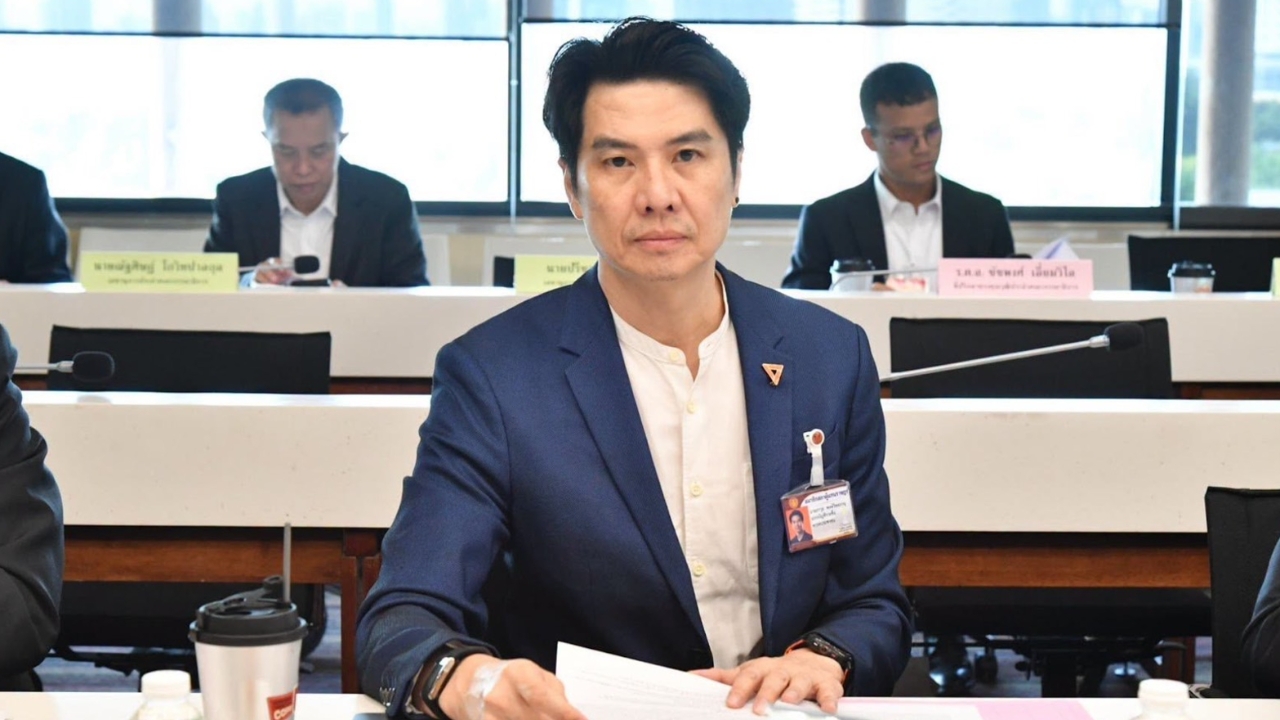
Pawat, MP from the People’s Party, pointed out that the six-month reduction in GP fees on online platforms is only a short-term pain reliever and urged the government to quickly enact laws to create bargaining power for Thai SMEs.
On 29 Oct 2026 GMT+7, Pawat Pongwitthayaphanu, party-list MP from the People’s Party, commented on the government’s negotiations with online platforms Shopee, Lazada, and TikTok Shop to reduce online sales fees (GP) for six months to assist small entrepreneurs. He said it was good that the government and Ministry of Commerce addressed the issue, but a temporary fee cut is insufficient without structural reforms and sustainable empowerment for Thai entrepreneurs.
Pawat praised Deputy Prime Minister and Minister of Commerce Supachai Sutthampan, along with the Trade Competition Commission (TCC), for negotiating with platforms after GP fees had increased multiple times over the past year, which impacted many Thai SMEs’ costs.
“However, this is only a short-term pain reliever, not a structural fix, because this measure reduces fees only back to early 2026 levels for six months, with no guarantee that fees won’t rise again after 31 May 2027,” he said.
He also noted that the measure excludes electronics and sets seller eligibility by income criteria, so he wants the government to clarify how it will support entrepreneurs outside these conditions.
Pawat sees a bigger problem than GP fees as the imbalance of bargaining power between sellers and platforms, since entrepreneurs not only pay sales fees but also advertising, shipping, and other service costs, while platforms control rules on customer access and product visibility, forcing sellers to rely on sales channels where their bargaining power is limited.
Pawat proposed that during this six-month period, the government should focus on four key actions:
1. Disclose total costs transparently so sellers know all expenses paid to platforms and can clearly calculate net income from every 100 baht of sales.
2. Establish fair rules for fee changes and trading conditions, requiring advance notice and appeal mechanisms when sellers are unfairly affected by rule changes or product ranking adjustments.
3. Allow sellers to transfer store data and sales history to other channels, reducing lock-in to any single platform and helping entrepreneurs build their customer base continuously.
4. Accelerate the enactment of the Digital Platform Economy Act and build an open central infrastructure connecting stores, platforms, payment, and logistics systems—citing PromptPay as an example that enables shared payment infrastructure, rather than the government competing directly with private e-commerce apps.
Pawat urged the government to expedite the Digital Platform Economy Act, noting that the legislative process could take one to two years, so it should start immediately.
“This bill should be sent to parliament soon; I’m ready to support it immediately. It may take one to two years to be enacted, so we can’t delay. I also ask the government to support OCN or Open Commerce Network, a Thai product aggregation platform spreading sales channels widely. It is currently under the Office of Small and Medium Enterprises Promotion (OSMEP),” he said.
He also called on online entrepreneurs to unite strongly to create representatives for negotiations, bargaining, and protecting Thai sellers’ interests. He believes having alternative sales channels is key to increasing bargaining power with platforms. He supports encouraging people to use Thai platforms more to create options and promote Thai business growth.
Pawat emphasized that while reducing GP fees is a measure worth supporting, the government must not rely solely on occasional cooperation requests from platforms. It must establish fair rules and promote genuine competition to enable Thai SMEs to operate sustainably.
“Today platforms reduce GP fees because the government asks, but what will protect Thai SMEs when the government does not ask?” Pawat concluded.