

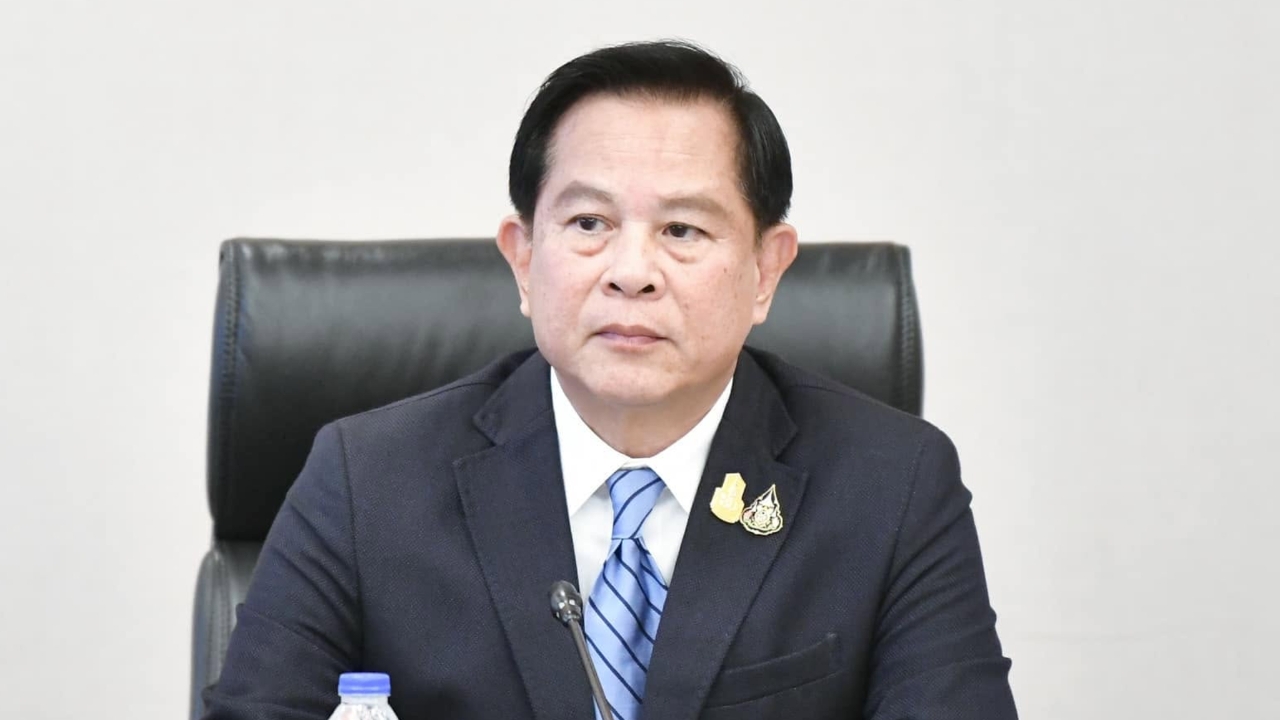
Peerapun criticized the citizen solar program, saying legal barriers remain and residents have to pay nearly 100,000 baht more. He highlighted the draft Free Solar Act proposed by the United Thai Nation Party to unlock these legal obstacles, alongside tax relief measures and interest-free loans.
On 29 Oct 2026 GMT+7, Peerapun Salirutviphak, leader of the United Thai Nation Party and former Minister of Energy, commented on the Cabinet's approval of the "Citizen Solar Program for 1 Million Households." He noted that citizens still face legal and procedural obstacles when applying to install rooftop solar panels, involving four agencies: the Energy Regulatory Commission (ERC), Department of Alternative Energy Development and Efficiency (DEDE), local administrative organizations (LAOs), and either the Metropolitan Electricity Authority (MEA) or the Provincial Electricity Authority (PEA). These hurdles cause delays of 7 to 8 months. While serving as Deputy Prime Minister and Minister of Energy, Peerapun submitted a draft Solar Promotion Act (Free Solar Act) to remove access barriers by changing the process from requiring permits to a notification-only system. However, the Council of State rejected the law once the government changed, despite prior Cabinet approval and its legal binding status.
He questioned whether the government's 50-billion-baht budget targeting 1 million households is cost-effective. He observed that a 5-kilowatt rooftop solar system costs about 140,000-150,000 baht on the market, meaning citizens still pay an additional 90,000-100,000 baht despite government subsidies. Moreover, selling surplus electricity back to the grid requires high investment in technology. Therefore, the government should support backup batteries for citizens to use electricity at night or during sunless periods.
Peerapun added that during his tenure as Energy Minister, he had already planned a more cost-effective project approach, including producing equipment such as inverters—key devices converting solar panel electricity for home use—developed by Thai inventor Kru Noi Taweechai Kraiduang. The 5-kilowatt inverter costs around 80,000-90,000 baht, roughly half the current price, reducing the extra cost citizens must pay. The prototype has been developed and certified by the National Science and Technology Development Agency (NSTDA), meeting the same standards as foreign equipment. Following the Energy Ministry's prior plan, tax measures approved by the Cabinet include promoting investments and upgrading machinery, equipment, and energy-saving materials, allowing tax deductions of up to 200,000 baht for rooftop solar installations in homes.
"My proposal focuses on lowering installation costs by reducing equipment expenses, reforming laws, and supporting interest-free loans through the Energy Conservation Promotion Fund to help with loan interest payments. This approach will help citizens pay less, reduce interest burdens, and promote domestic technology development, enabling more people to access clean energy," Peerapun said.