

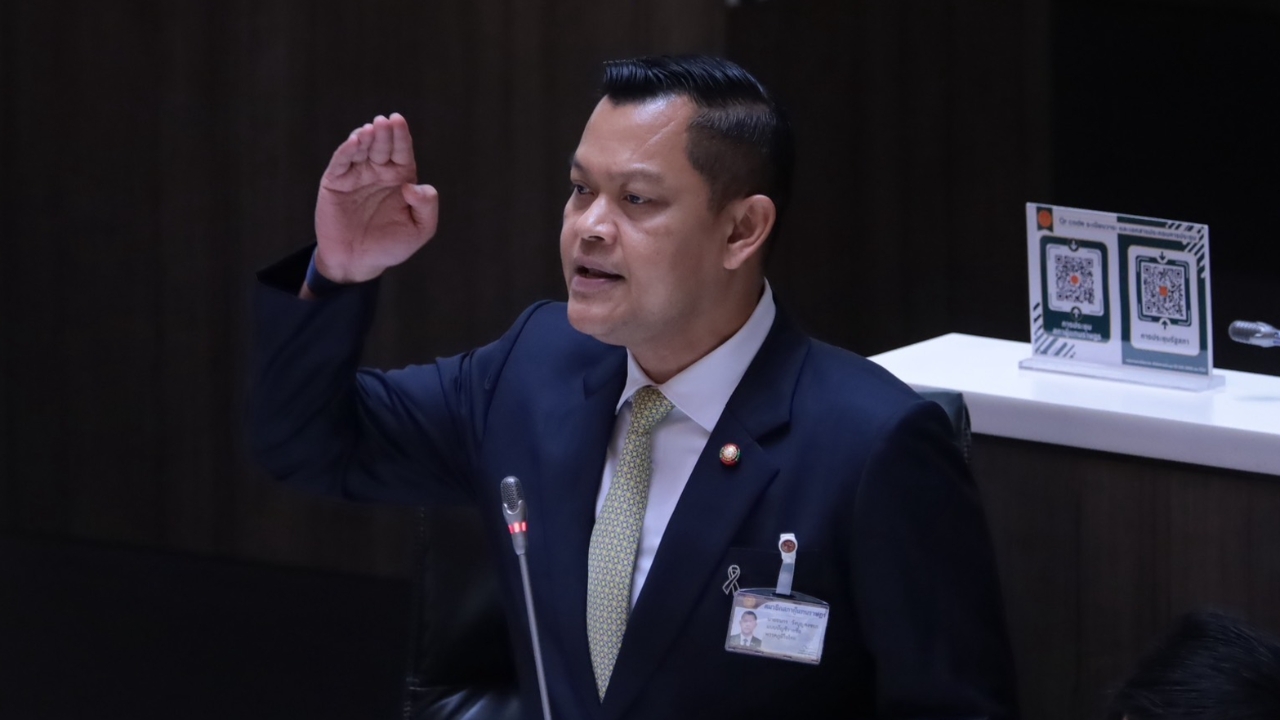
Thanakorn pointed out that PM 2.5 dust causes economic damage to the country. He suggested that technology and economic incentives are necessary to help farmers genuinely adapt. He supported the Prime Minister’s idea to revise approaches for sustainable solutions to the problem.Tags: ["PM 2.5", "economic damage", "technology", "farmers", "sustainable solutions"]
On 29 Oct 2026 GMT+7, Thanakorn Wangboonkongchana, a party-list MP from the Bhumjaithai Party and former Minister of Industry, spoke during the wildfire and PM 2.5 commission report acknowledgment. He said PM 2.5 is not just an environmental issue but a hidden cost causing major economic damage, including medical expenses, lost labor productivity, impacts on business and tourism, and government spending to address the problem annually. He observed that while budget discussions focus on how much money is needed, there is less attention on the ongoing losses if the problem persists each year. Therefore, investing in pollution prevention from the source protects public health and reduces long-term economic losses for the country.Tags: ["PM 2.5", "economic cost", "health", "government budget", "pollution prevention"]
Thanakorn added that industry must be part of the PM 2.5 solution, including pollution control in factories and reducing sugarcane burning. During his tenure as Minister of Industry, the focus was on pollution prevention at the source by proactively inspecting 2,472 factories across 17 provinces and promoting continuous emission monitoring systems (CEMS). According to accumulated data reported by the Department of Industrial Works to the commission, 981 factories covering 1,680 chimneys have installed CEMS to enhance pollution monitoring and control effectiveness.Tags: ["industry", "pollution control", "factories", "CEMS", "inspection"]
To reduce sugarcane burning, measures included controlling purchases of burnt cane, promoting mechanical harvesting, supporting farmers cutting fresh cane, and using cane leaves as biomass fuel. This cooperation involved farmers, sugar mills, and government agencies. In the 2025/2026 production season ending in March, fresh cane crushing reached a record 96.6%, while burnt cane dropped to a historic low of 3.4%. This shows that law enforcement alone is insufficient; technology and economic incentives are essential to help farmers genuinely adapt. Industrial development and environmental care must progress hand in hand.Tags: ["sugarcane", "burning reduction", "technology", "economic incentives", "environmental care"]
Thanakorn further revealed that the dust problem does not fall under a single ministry’s authority. For example, agricultural burning is managed by the Ministry of Agriculture, factories by the Ministry of Industry, while hotspot monitoring and law enforcement involve other agencies. Even if each agency fulfills its role, without clear responsibility for overall outcomes, the problem may persist. He agreed with the proposal to establish a central data center linking hotspots, burnt areas, dust levels, and weather forecasts for shared decision-making. However, such shared data will be fully effective only if there is a clear lead agency with decision-making power. The government should appoint policy-level responsible parties. Importantly, the goal is not more agencies but better cooperation and shared accountability among existing ones.Tags: ["government", "agency coordination", "central data center", "responsibility", "PM 2.5"]
"The government should clearly define who is responsible, when actions will occur, budget allocation, and how results will be measured," Thanakorn said, citing the recent wildfire crisis in Indonesia that caused severe haze in Singapore as a warning. Thailand must prepare early before the dust season rather than react after a crisis occurs, and make information transparent for public scrutiny. This is to ensure people can breathe cleaner air and avoid annual dust crises. He expressed support for the Prime Minister’s idea to revise approaches for sustainable problem-solving.Tags: ["government accountability", "crisis preparedness", "public transparency", "haze crisis", "sustainable solutions"]