

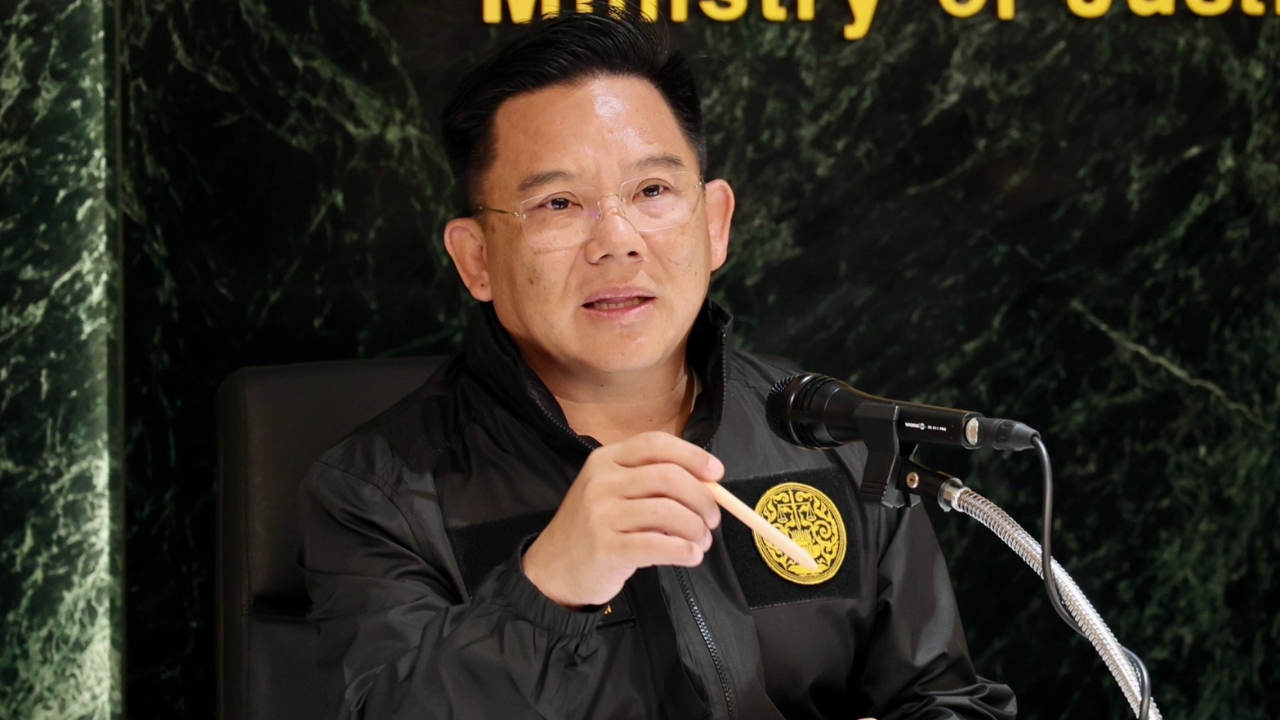
The Secretary-General of the Ministry of Justice affirmed that the amnesty bill applies equally to everyone, whether youth or ministers. He smiled and agreed that pro-democracy protesters would benefit from it. He declined to comment on former Prime Minister Thaksin Shinawatra's petition for exoneration, which may be linked to ongoing court cases.
At 3:00 p.m. on 29 Oct 2026 at the Ministry of Justice, Piyasiri Watthanawarangkun, Secretary-General of the Ministry of Justice and chairman of the subcommittee reviewing matters under the 2026 Social Peace Promotion Act, spoke about developments regarding former Prime Minister Thaksin Shinawatra's petition to the Social Peace Promotion Committee, submitted to Pakorn Nilprapunt, the committee chairman. Thaksin requested recognition of his right to amnesty and full exoneration under the 2026 Act, authorizing Winyat Chatmontri to file the petition on his behalf to clear political-related charges. Piyasiri said he had already briefed the media at the Government House on 28 Oct. He emphasized that the review follows a set framework and, as subcommittee chair, he aims to present clear, straightforward cases quickly. Misunderstandings will be clarified, and no case will be disregarded if there is evidence of unfair treatment. The subcommittee intends to review all cases with good intentions. He reaffirmed that the legal standards and measures apply equally to all, whether youth, children, ministers, or former ministers, reassuring there is no need for concern. He noted the media's focus on Thaksin's case, but questioned why they have not asked about children, youth, or others in difficult circumstances. He urged society not to worry, as the process is ongoing and will be expedited. Coordination with the Office of the Prime Minister's Secretary is underway, with a meeting expected next week. Afterward, details will be submitted to the Social Peace Promotion Committee, chaired by Deputy Prime Minister Pakorn Nilprapunt, along with various experts, and relevant agencies will be notified promptly.
When asked about speculation that former Prime Minister Thaksin Shinawatra's petition for amnesty in his political case might affect ongoing court proceedings related to the Shin Corp share tax case, Piyasiri said he would not comment on this matter. He explained that providing opinions is not solely his responsibility but that of the Social Peace Promotion Committee. His role is to screen cases and provide perspectives from the Ministry of Justice. The final decision rests with the full committee. He assured that the process will be expedited. Deputy Prime Minister Pakorn Nilprapunt has also confirmed the goal to complete proceedings within six months without extensions, aiming to allow those still involved in legal processes to resume normal life and help the country move forward.
When recently asked about pro-democracy protesters, some of whom are detained on political charges, benefiting from the amnesty law, the Secretary-General smiled and confirmed, "Yes, the youth benefit." He urged not to focus solely on individuals but to consider the broader picture of all Thai citizens benefiting from this law.
Piyasiri added that regarding progress on the 2026 Social Peace Promotion Act, which directly involves the Ministry of Justice, several working groups have been formed to support data review. They are currently compiling figures on individuals involved in political protest cases, dividing them by those under the prosecution’s jurisdiction and those under DSI investigation. For cases handled by prosecutors, inquiries have been made about their progress. The DSI is responsible for two cases. A meeting is scheduled next week to avoid delays. Regarding whether the two DSI cases relate to protests in 2010, Piyasiri said he has not yet seen full details but believes they are likely connected. He will review the officials' details, noting conditions set with the Office of the Prime Minister’s Secretary about how to consider cases—whether directly related to political protests, the extent of involvement, or if the matter concerns private parties, which would be handled separately. If cases involve other criminal charges, further review will be necessary. He emphasized that whether a person is detained, involved, or expressing opinions, this framework will guide discussions and deliberations.