

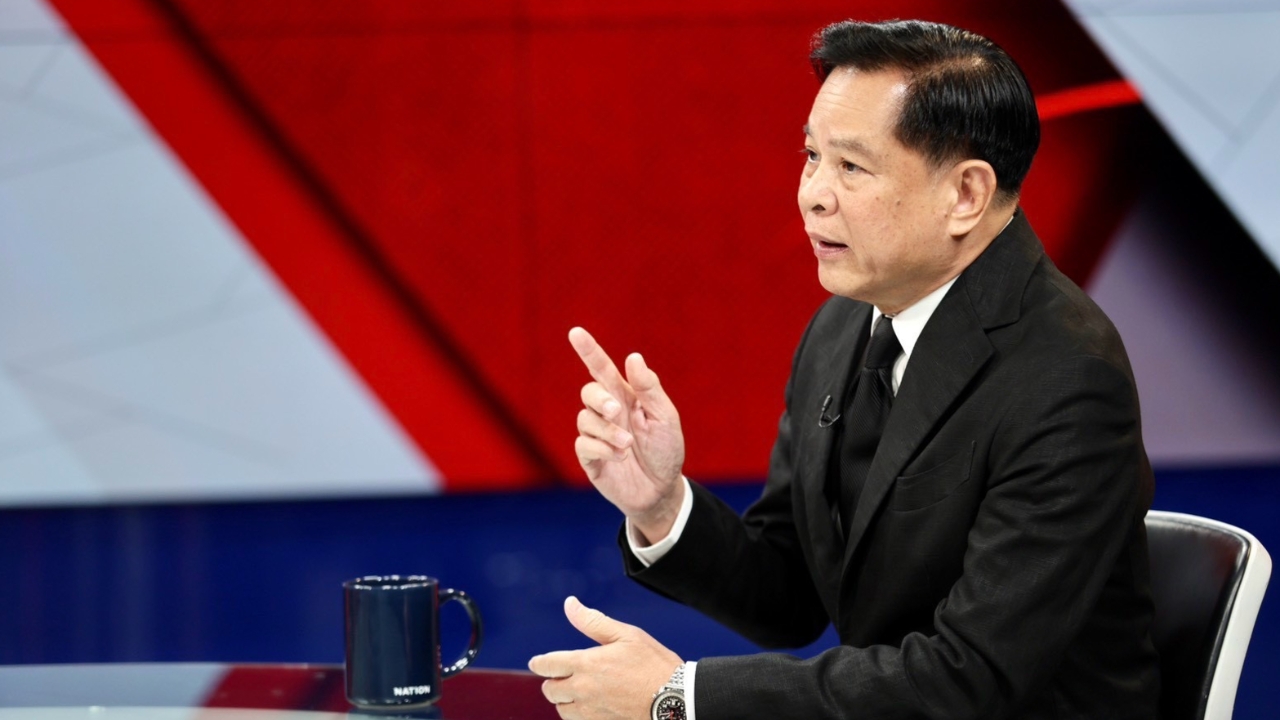
Peerapun explained why the Singapore oil price reference system was not ended during his tenure as Energy Minister, citing the need for legislation to support a new system. He had planned to propose an emergency decree but was interrupted by a government change.
On 30 Oct 2026, Sasikan Wattanajan, spokesperson for the Ruam Thai Sang Chart Party (RTSC), revealed that Peerapun Saleeratwiphak, party leader, former Deputy Prime Minister, and Energy Minister, posted on Facebook addressing why the Singapore oil price reference system was not abolished during his 2023–2025 tenure. Peerapun clarified that ending the system isn't just about stopping its use but requires deciding on a replacement system and the legal authority to enforce it. Thus, new systems and supporting laws had to be prepared first. Historically, Thailand used government-controlled fuel pricing before switching to market-based pricing per Cabinet resolution on 21 May 1991, following energy policy recommendations then. Subsequently, refined oil prices from the Singapore market were used as a reference at refineries for over 30 years. Peerapun noted that past reasons supporting this system no longer align with current economic and energy business conditions.

Peerapun emphasized that ending a long-standing system requires clear criteria, appropriate and verifiable price calculation methods, and legal support for systematic enforcement to ensure fairness and prevent operator disputes. The priority was drafting comprehensive laws regulating oil trade and pricing under the new system. While serving as minister in a coalition government, advancing major legislation required not only his input but discussions and agreement with government leaders. Throughout 2024, he spent months studying data, consulting experts and stakeholders in the oil business to find the best approach, while also addressing natural gas and electricity issues.
"By early 2025, Peerapun seriously began drafting the legislation. After the first draft, it was reviewed and revised multiple times with experts and stakeholders until a suitable draft emerged around June 2025. Considering the complexity, this was a swift process. After finalizing the draft, consensus favored proposing it as an emergency decree rather than a regular law, which Peerapun agreed with. However, changing the legal form required further consultation with government leaders. By mid-July 2025, consensus was reached to proceed as an emergency decree, with the then-Prime Minister's secretary tasked to review the draft before Cabinet submission. While following this process, border conflicts between Thailand and Cambodia arose in late July 2025, followed by political upheaval with the Prime Minister's resignation and government change in September 2025. Consequently, Peerapun left office, and the succeeding government did not continue this legislation," Sasikan said.
Sasikan added that when asked why the 1973 Emergency Decree on Fuel Shortage was not used, Peerapun explained that the law grants the Prime Minister authority to impose measures addressing fuel shortages. The Energy Minister cannot independently invoke it without delegation. During his tenure, no situation qualified as a fuel shortage crisis warranting such measures, and the Prime Minister then did not delegate authority under this decree. Therefore, Peerapun could not rely on that power to act.
Regarding questions why the current Energy Minister, as chair of the Energy Policy Administration Committee, could remove transport, insurance, and loss fees—calculated based on Singapore route—from the refinery price formula, Peerapun explained it depends on the legal authority used. The current minister acted under the 1973 Emergency Decree amid energy circumstances different from those during Peerapun's tenure, with issues arising since March 2026. Peerapun had previously urged the current Prime Minister to use this decree's powers. Initially, there was talk about needing to consider refinery operators' interests before implementing the law and appointing committees to proceed. The decree's powers began to be used from the Anutin 1 government onward. Peerapun believes the current Energy Minister likely received delegation from the Prime Minister to act under this law.
The RTSC spokesperson continued that Peerapun stressed the removal of transport and insurance fees that did not actually occur is not the same as abolishing the Singapore oil price reference system, a misconception still widespread. Removing these costs, calculated from a hypothetical Singapore-Thailand route, from the refinery price formula is merely adjusting some pricing formula components. Peerapun further explained that Thailand still uses refined oil prices from the Singapore market as the reference price, but no longer adds certain cost items to refinery prices. It is important to distinguish between adjusting formula components and completely changing the oil pricing system. Considering why the Singapore price reference was not ended during his tenure requires examining the entire replacement pricing system, supporting legislation, roles of involved parties, procedural steps, and legislative limitations at that time—not simply questioning why the minister did not order an abolition.
