

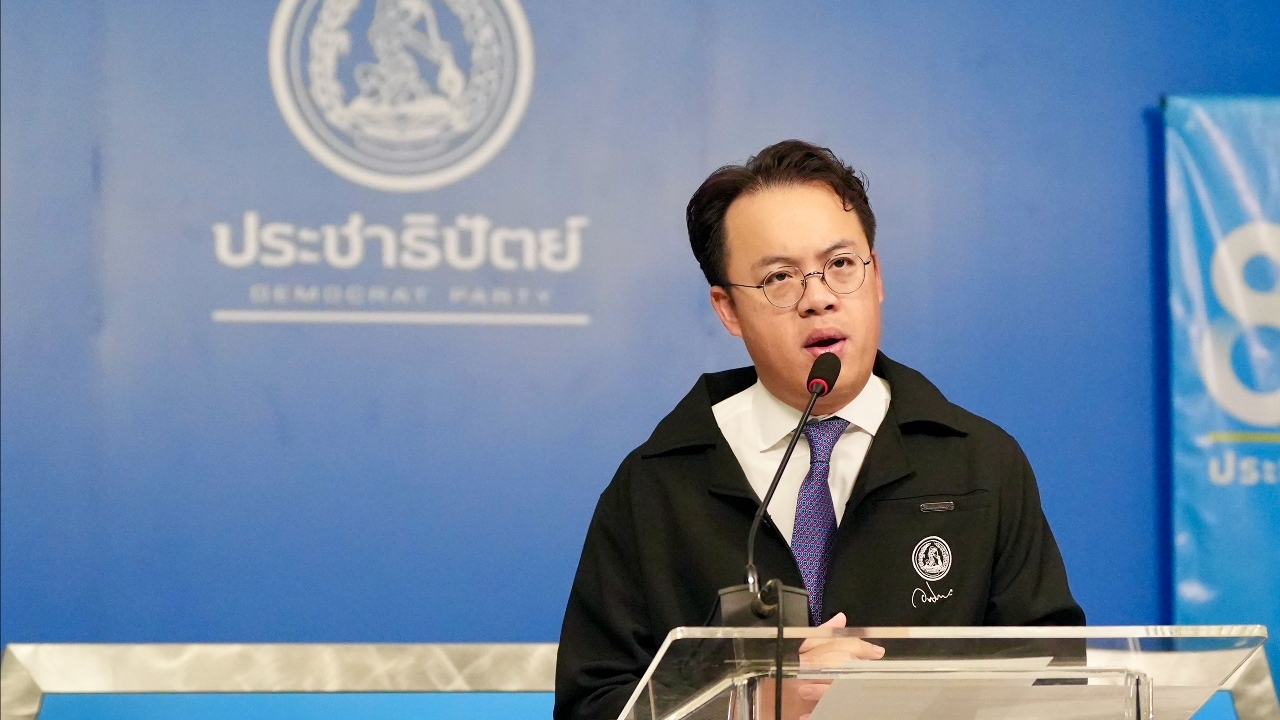
“Teerarat” questions the One Million Households Solar project, highlighting that the electricity authorities act as both installer and regulator, raising fears of kickback systems that could increase costs for citizens.
On 30 Oct 2026 GMT+7, Mr. Teerarat Sirichantaropas, an energy economist and expert advisor to the Energy Commission, posted on Facebook regarding the government's launch of the “One Million Households Solar” project, which includes a subsidy of up to 50,000 baht per household.
Although the policy aims to promote clean energy and reduce electricity bills for the public, certain criteria have raised concerns among industry operators, especially solar energy SMEs, who fear the project may advantage large businesses and reduce fair competition opportunities.
A key issue is that installations must be carried out through the Metropolitan Electricity Authority (MEA), the Provincial Electricity Authority (PEA), or contractors registered under the electricity authorities’ conditions, while the electricity authorities also serve as installers, system inspectors, and approvers of grid connections, prompting questions about the appropriateness of their dual role as regulator and market participant.
Furthermore, the electricity authorities lack sufficient solar installation personnel to support the million-household target, raising practical concerns that work may be subcontracted, potentially increasing costs due to intermediaries and preventing citizens from fully benefiting from lower prices.
Another criticized aspect is the requirement for bank guarantees during and after project completion for several years. While intended to protect consumers, this may burden smaller operators with limited credit lines and working capital, thus favoring larger businesses.
If the government’s goal is to accelerate public access to clean energy quickly and at the lowest cost, it should consider allowing qualified and standard-compliant operators to participate on equal terms, especially since the equipment used is already regulated under Thai Industrial Standards (TIS).
The crucial question is not just whether the project increases solar installations, but whether its structure is designed to truly maximize public benefit and foster fair competition among operators of all sizes.
Ultimately, if the objective is a clean energy transition, citizens should receive fair prices, diverse options, and a freely competitive market—not bear increased costs due to a structure that unnecessarily limits competition.