

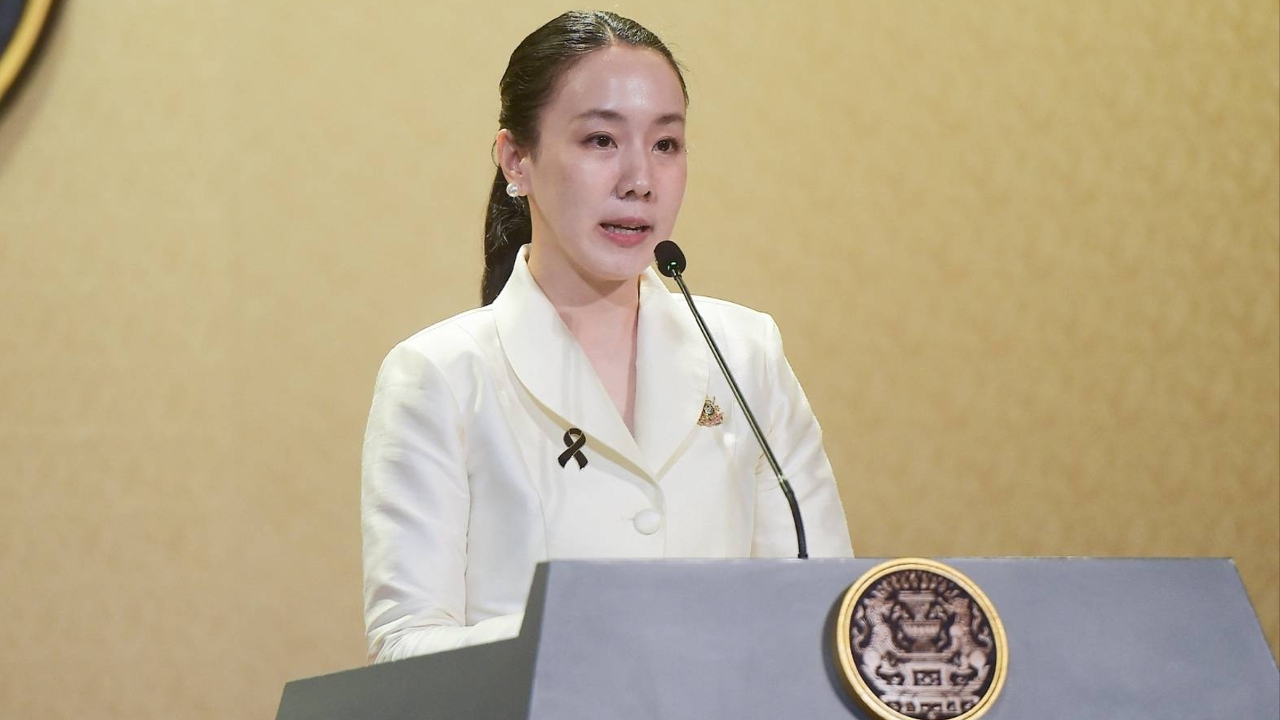
The Deputy Government Spokesperson refuted Treerat's criticism regarding the People's Solar Project, emphasizing that the non-participation of some operators should not be taken as evidence of favoritism toward big capital. She revealed that the Ministry of Finance is preparing to reduce guarantee fees to as low as 500 baht per year and will support SME loans.
On 30 October 2026, Ms. Lalida Pertvivatana, Deputy Spokesperson of the Prime Minister's Office, addressed Mr. Treerat Sirichantaropas's concerns about the People's Solar Project targeting one million households. She noted his issues regarding installation costs, competition, the role of the electricity authority, and guarantee conditions. She said the government welcomes constructive suggestions but warned against concluding the project favors big capital just because some operators do not participate, without considering the actual prices paid by the public, installer choice, safety standards, and after-sales service.
Ms. Lalida explained that the Metropolitan Electricity Authority (MEA) offers a 5-kilowatt Solar Rooftop package priced no more than 140,000 baht, including a 7-year installation warranty and fire insurance, plus an annual panel cleaning service for 7 years. The project provides up to 50,000 baht installation support per household under conditions. Therefore, value should be assessed based on price, quality, and long-term service, not merely initial installation costs.
“The government’s role is not to set profit levels for every operator but to ensure the public receives quality systems at reasonable prices and to allow qualified operators to compete fairly. Some operators' view that the conditions are unprofitable does not prove the project favors big capital or increases public costs,” Ms. Lalida said.
The Deputy Spokesperson stated the government understands concerns from some installers about working capital, guarantee burdens, and long-term warranty costs, which must be seriously considered. However, the number of non-participating operators cannot be used as evidence of monopolization. The public can choose from registered operators, and the MEA provides channels to verify service providers. The electricity authority, responsible for service and connection approval, applies the same acceptance and approval criteria as private companies and transparently discloses procedures and timelines.
Regarding concerns about intermediaries and subcontractors, Ms. Lalida said the one-stop service system facilitates convenience from installation to connection but must not include hidden fees. The public should receive detailed quotations, know the contracting parties, and identify responsible persons for issues. Claims that intermediaries raise prices require actual cost data and comparisons of systems with equivalent size, equipment quality, and after-sales service.
Meanwhile, Industrial Product Standards (TISI) certification of equipment cannot fully substitute for installation and electrical connection standards. Verifying installer qualifications is essential for public safety, but conditions must fit the risks without imposing unnecessary burdens.
Addressing Mr. Treerat’s concern that bank guarantees may exclude small operators, Ms. Lalida clarified that the 50,000 baht guarantee per household is not a fee paid by operators but a security deposit to prevent contractors from abandoning work. Mr. Polpee Suwanchawi, Deputy Minister of Interior, explained the guarantee will be refunded within seven days after system connection is completed. Another 10,000 baht serves as a warranty for seven years of after-sales service, serving a different purpose.
Importantly, the government does not leave SMEs to bear these burdens alone. Mr. Akniti Nitithanprapas, Deputy Prime Minister and Minister of Finance, has coordinated with three state banks—Government Savings Bank, Government Housing Bank, and Bank for Agriculture and Agricultural Cooperatives—alongside the Small Industry Credit Guarantee Corporation to establish a guarantee mechanism with fees capped at 1% per year or 500 baht annually for the 50,000 baht guarantee. Discussions are also underway for the Government Housing Bank to provide special loans to help small operators finance equipment purchases and operations.
“I want Mr. Treerat to consider the government's measures comprehensively. The government does not just set guarantee conditions and leave small operators to shoulder costs; it has prepared mechanisms to reduce fees and support loans simultaneously. The bank guarantee is not a 50,000 baht fee but a security deposit to protect the public if contractors abandon work. Protecting the public and enabling SMEs to compete are not mutually exclusive, and the government is pursuing both,” Ms. Lalida said. . Ms. Lalida added.
Ms. Lalida added that the Provincial Electricity Authority (PEA) is accepting registrations for installation operators under the PEA SOLAR business until 31 December 2026. At the project monitoring meeting on 29 October, the potential and readiness of operators were reviewed. The goal of one million households depends on the number of service providers ready to work, installation quality, and benefits to the public—not merely the number of applicants.
“The government is ready for scrutiny regarding whether the financial support reaches the public, whether prices are fair, if the system is safe, and whether SMEs can truly compete. However, accusations of favoritism toward big capital or increased intermediary costs require evidence. The government welcomes suggestions to improve the project because the essence of the People's Solar Project is not guaranteeing profits for any operator but helping Thai households access clean energy, reduce electricity costs, have choices, and receive fair protection,” Ms. Lalida said. . Ms. Lalida said.