

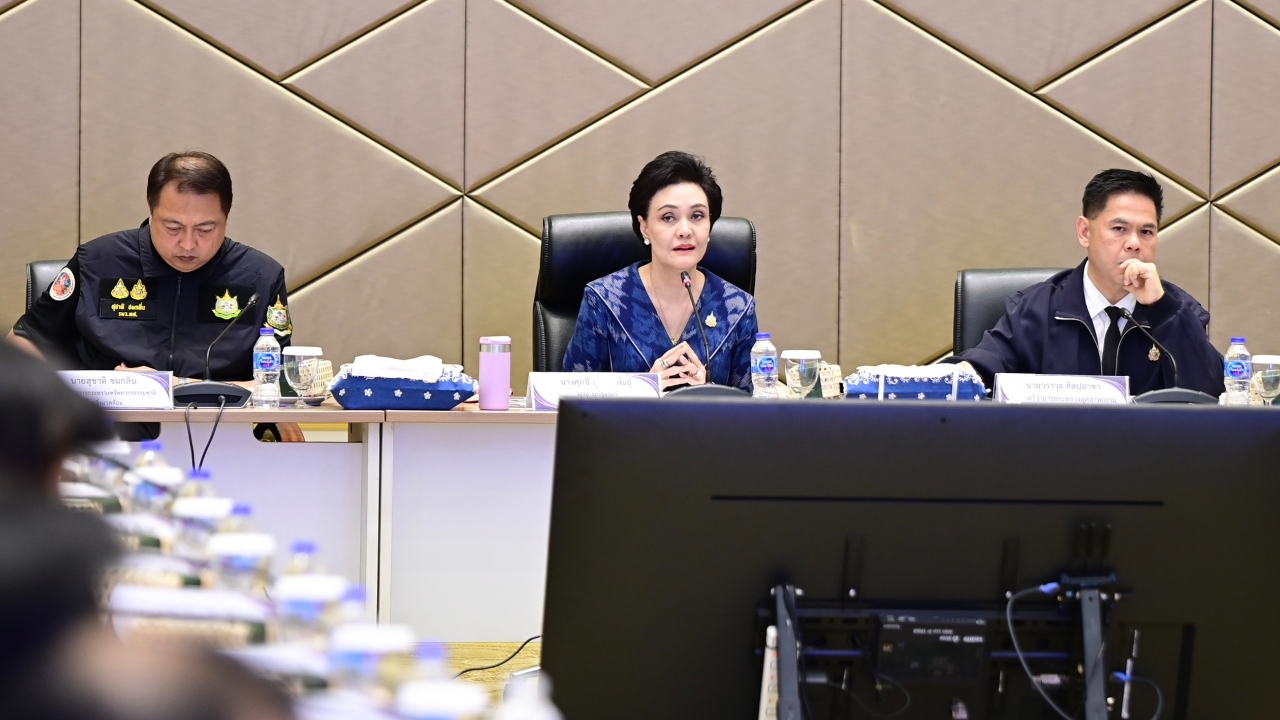
Supachai, together with Warawut and Suchart, held the first meeting of the team addressing electronic waste issues, accelerating solutions for the short, medium, and long term by forming two special task forces to inspect high-risk factories nationwide, starting immediately on 1 Nov 2026.
30 Oct 2026 GMT+7 Ms. Supachai Suthamphan, Deputy Prime Minister and Minister of Commerce, spoke after the first meeting of the Electronic Waste Problem Solving Committee, held jointly with Mr. Warawut Silpa-archa, Minister of Industry, , and Mr. Suchart Chomklin, Minister of Natural Resources and Environment, along with relevant agencies such as the Customs Department and the Department of Foreign Trade. She said the meeting followed the Prime Minister’s directive to integrate efforts to manage electronic waste problems, ensuring Thailand will not become a dumping ground for waste from other countries, protecting the environment and public health.
Ms. Supachai further revealed that in the short term, there will be two special task forces: the first led by Mr. Warawut, deploying 50 teams to inspect existing factories for compliance regarding licenses and products on site; and the second led by Mr. Suchart, focusing on inspections based on public complaints.
In the medium term, the Directors-General of the Customs Department and the Department of Foreign Trade will be appointed as co-chairs to review and strengthen electronic waste import-export measures to improve prevention from the source.
For the long term, another committee led by Mr. Weerasak Kowsurat, Advisor to the Deputy Prime Minister, will examine whether current laws are sufficiently strict or require enhancement to address the problem sustainably.

Mr. Warawut added that inspections will kick off on Sunday, 1 Nov 2026. Thailand currently has 3,049 licensed factories managing industrial waste registered with the Department of Industrial Works. About 1,500 of these are in five provinces: Chonburi, Rayong, Chachoengsao, Prachinburi, and Samut Prakan. Priority will be given to factories with complaints, with the goal of inspecting up to 100 factories daily. If violations are found, licenses will be revoked, and requests will be made to the Anti-Money Laundering Office for asset seizures and criminal prosecutions.
Additionally, they are considering legislation to prohibit traders from importing waste. Regarding metal waste imports such as vehicle scrap that may contain electronic waste contamination, limits on permissible contamination levels will be set, aligned with international standards, to prevent Thailand from effectively becoming an electronic waste importer. Meanwhile, amendments to the Department of Industrial Works law are planned to hold local officials accountable—such as village heads, subdistrict, and provincial administrative organizations—since they have local knowledge of factory locations and activities, enabling them to help monitor and report.