

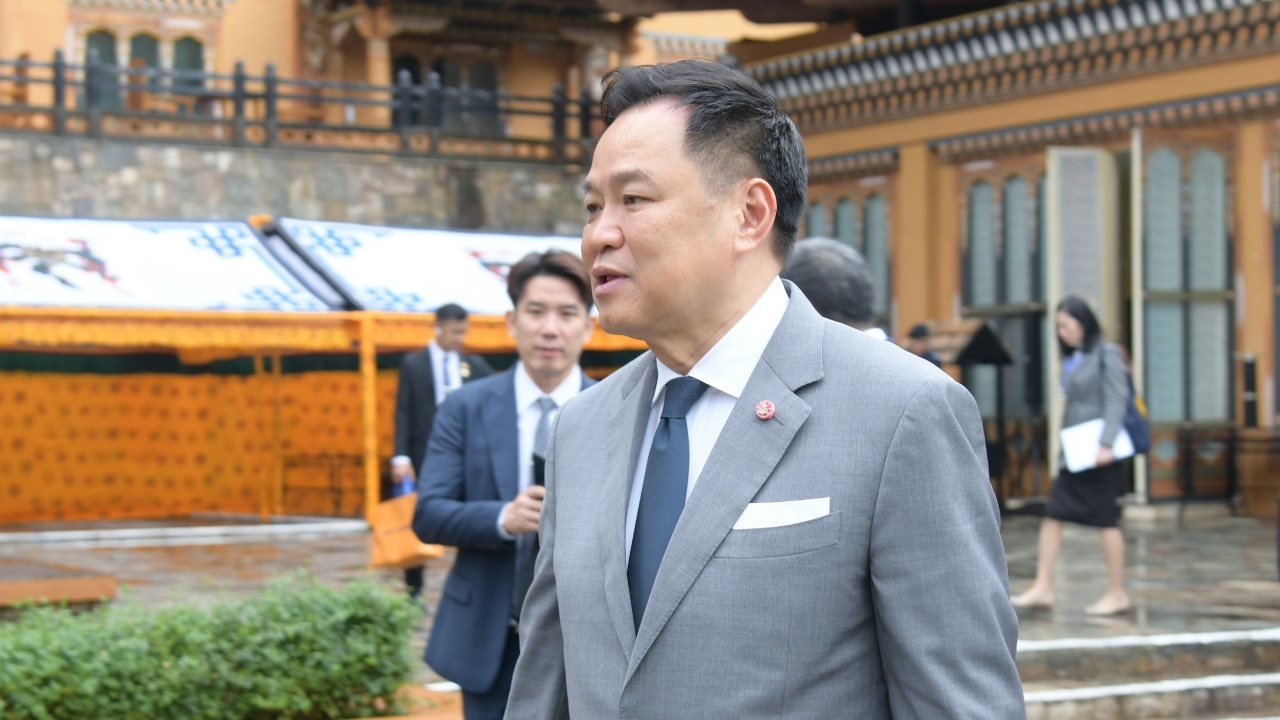
Prime Minister Anutin Charnvirakul stressed the promotion of community solar power to transform the energy structure. He disagreed with simultaneous increases in taxes on all fuel types, advocating for national agricultural priorities as an economic engine and boasting of Thailand's food security.
At 09:05 on 31 Oct 2026 GMT+7, Anutin Charnvirakul, Prime Minister and Minister of Interior, said in the program “Talk with Prime Minister Anutin” at one point, “The 'People's Solar Project' is part of the energy structure transformation, not merely a short-term electricity bill relief measure. The initial phase targets one million households, supporting each household with 50,000 baht. This project will reduce dependence on crude oil and imported fossil fuels amid conflicts in various regions. If households can generate their own electricity, it lowers the amount they must buy from the grid, while surplus power can be sold back to the electricity authority, creating additional income for households.”
Regarding opposition criticism that the project's loan is a blank check, Anutin said they are delusional, incapable, lack sufficient data, and fail to study the issue properly. Their intent is merely to attack and bully. Observing their attacks reveals nearly all their information is false. If the government listened to such immature voices, it would have to change course and would not remain in power.
Therefore, the government has already outlined its path and must proceed accordingly. We are not acting unilaterally. Government initiatives undergo thorough scrutiny and approval by permanent officials as implementers. Concerning loans under the Royal Decree, a loan approval committee chaired by the Permanent Secretary of the Ministry of Finance oversees this. These officials have no reason to follow government orders if they are not beneficial to the country.
He disagreed with raising taxes on all fuel types simultaneously.
Anutin further commented on the "measures to reduce taxes on E20 and B20 fuels." He explained that the government aims to create a price differential to encourage consumers to increase biofuel use, reducing machinery and transport costs for farmers and boosting demand for palm oil, sugarcane, and cassava, which are raw materials for biodiesel and ethanol production. He opposed cutting taxes on all fuel types at once, noting that gasoline types 91 and 95 still depend on imported raw materials. If all taxes were cut, the state would lose substantial revenue needed for road development, flood prevention systems, public relief, and other public services. Therefore, measures must assist the public without causing excessive fiscal burdens.
Boasting that foreigners no longer see Thai labor as cheap,
the Prime Minister also said companies meeting him are investing in high-tech businesses with plans to invest about 100 billion baht in Thailand by 2030, having already invested about 80 billion baht. They see Thailand’s strengths in logistics, reliable energy sources, and personnel ready for technology transfer. One thing they never mention is cheap labor; they emphasize that education, technology access, AI understanding, and advanced technology skills among Thai youth and students meet their standards.
A key turning point is that Thailand should not compete solely on cheap labor but must attract investment involving supply chains, research and development, knowledge transfer, and skill upgrading. The government will regulate foreign labor proportions to ensure new investments create jobs for Thai people and use the Board of Investment as a One Stop Service to solve investors’ problems within the legal framework.
Driving the national agriculture agenda as an economic engine,
the next phase of economic structure must advance energy, investment, technology, and agriculture simultaneously. At the upcoming official Cabinet meeting outside Bangkok in Udon Thani next week, the government will discuss and plan the national agriculture agenda. Udon Thani is a key center in the Northeast, and the government seeks to elevate agriculture as another economic engine for the country.
Amid global uncertainties and conflicts, food security is becoming a strategic strength for Thailand. The country still has a rich food production base and the potential to export food to many regions worldwide, offering opportunities to increase export value and generate income for the agricultural sector. If Thailand can structure food security to connect with global markets, benefits must reach farmers—not just stop at export figures. For the government, 'prosperous farmers' means improved quality of life, adequate income, savings appropriate to their status, and freedom from household debt struggles.
“While you sell us oil, we produce food you cannot compete with. Amid uncertainties in many world regions, if anything happens, think of Thailand—a country still abundantly rich in food.”
