

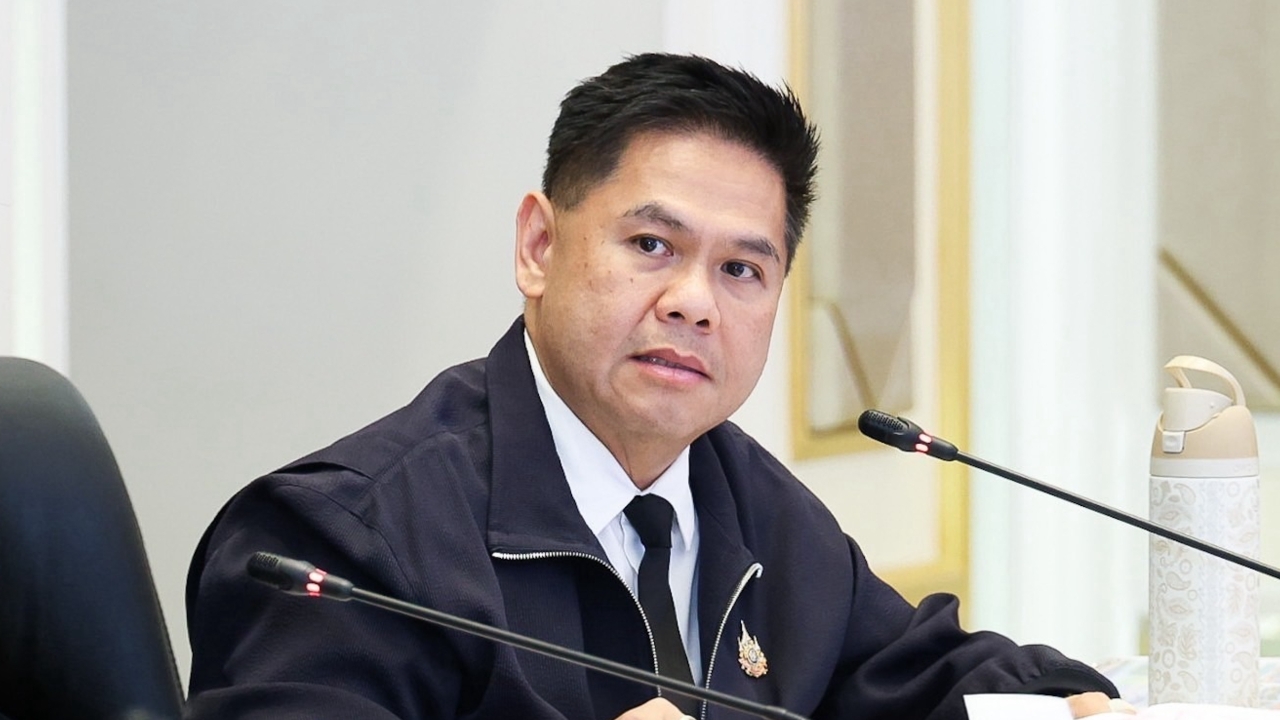
"Warawut" confirmed the Ministry of Industry is amending laws to close loopholes in electronic waste management, noting that enhanced penalties will help solve false declaration problems. He revealed the kickoff of special task forces conducting thorough inspections of high-risk factories with progress seen within one week.
On 31 Oct 2026, Warawut Silpa-archa, Minister of Industry, spoke about tackling electronic waste issues. The Electronic Waste Problem Solving Committee, chaired by Deputy Prime Minister and Commerce Minister Supachai Sutthammanoon, has set mechanisms and concrete frameworks for collaborative work among relevant agencies by establishing three special task forces to drive integrated operations, consisting of:
1. Enforcement and crackdown teams: Team 1 led by the Ministry of Industry conducts proactive inspections at high-risk factories numbered 105 and 106; Team 2 from the Ministry of Natural Resources and Environment follows up and addresses public complaints.
2. Import-export control team led by the Customs Department and Department of International Trade to inspect imports and exports and establish related legal measures and criteria.
3. Legal enhancement team focused on strengthening laws and increasing penalties to deter repeat offenses. The committee will report findings to the Prime Minister.
Warawut added that for violating factories, in many areas, the Department of Industrial Works has enforced Sections 37 and 39 of the Factory Act, pursued civil lawsuits, and plans criminal cases. In the future, environmental violations will be predicate offenses for money laundering cases, cooperating with the Anti-Money Laundering Office (AMLO). Currently, amendments to the Factory Act are underway to increase and toughen penalties.
Currently, there are 3,049 factories numbered 105 and 106, with over 1,500 located in five provinces: Chonburi, Rayong, Chachoengsao, Prachinburi, and Samut Prakan. The Ministry of Industry has deployed special teams to these provinces, each comprising officials from the Department of Industrial Works, provincial industry offices, natural resources and environment offices, local administration, military, and police to inspect every factory.
The kickoff starts on 1 November with ongoing site inspections. Within one week, progress will show which factories comply with conditions. Inspections focus on high-risk areas, complaint sites, and cases previously ordered to correct but without action. Extensions will no longer be granted; failure to comply will result in factory closure. Factories suspected of being nominee entities will also be urgently investigated.
Warawut noted that since 2020 Thailand has banned electronic waste imports, but illegal imports continue. Recently, issues arose with crushed car scrap imports containing wires and other components, making the entire batch illegal. Authorities will consider allowable contamination percentages per international standards. The electronic waste and scrap metals problem-solving committee will review details and provide answers soon.
Regarding scrap metal use in Thailand, banning scrap metal imports could benefit some European countries reluctant to export, but Thailand still needs imports as raw materials. The Pollution Control Department reported some types of steel are minimally recycled yet heavily exported, requiring detailed investigation. It's time for serious cleanup efforts.
On tracking goods from origin, past difficulties involved inter-agency data coordination. Discussions with Customs and the Ministry of Commerce are planned. For false declarations, while inspecting every container would ensure 100% safety, Warawut believes stronger penalties and requiring factories to order raw materials directly will enable better origin verification and reduce false declarations.
Asked whether inspections would affect factories that consider themselves exempt but must temporarily halt operations and whether this impacts supply chains, Warawut said factories must comply with laws. Supply chain impacts will be considered but cannot justify non-compliance. For factories authorized for multiple activities, he will verify if operations match permits; if not, licenses may be revoked. He also coordinated with police to monitor compliance.
Regarding Section 21 of the Factory Act allowing license leasing—which could let Chinese investors operate without environmental concern—Warawut said he instructed the Department of Industrial Works director to amend or repeal this section as it is unreasonable. The amendment process is ongoing.
On whether this includes loopholes in five-year license renewals, Warawut said foreigners sometimes see the period as too short and question renewal certainty. Consultations with various parties, such as the Federation of Thai Industries, will be held.
Warawut also updated on actions against offending factories and compensation for affected people. The Ministry of Industry has taken action against some offenders, such as in Prachinburi where wastewater discharge occurred. Discussions on farmer compensation will follow after water recedes.
If seized evidence cannot be traced to owners, the Department of Industrial Works must use its budget, or request additional funds. If offenders are identified, they must bear damage responsibility. The extent of liability will be determined by a committee comprising companies, provinces, and affected citizens.