

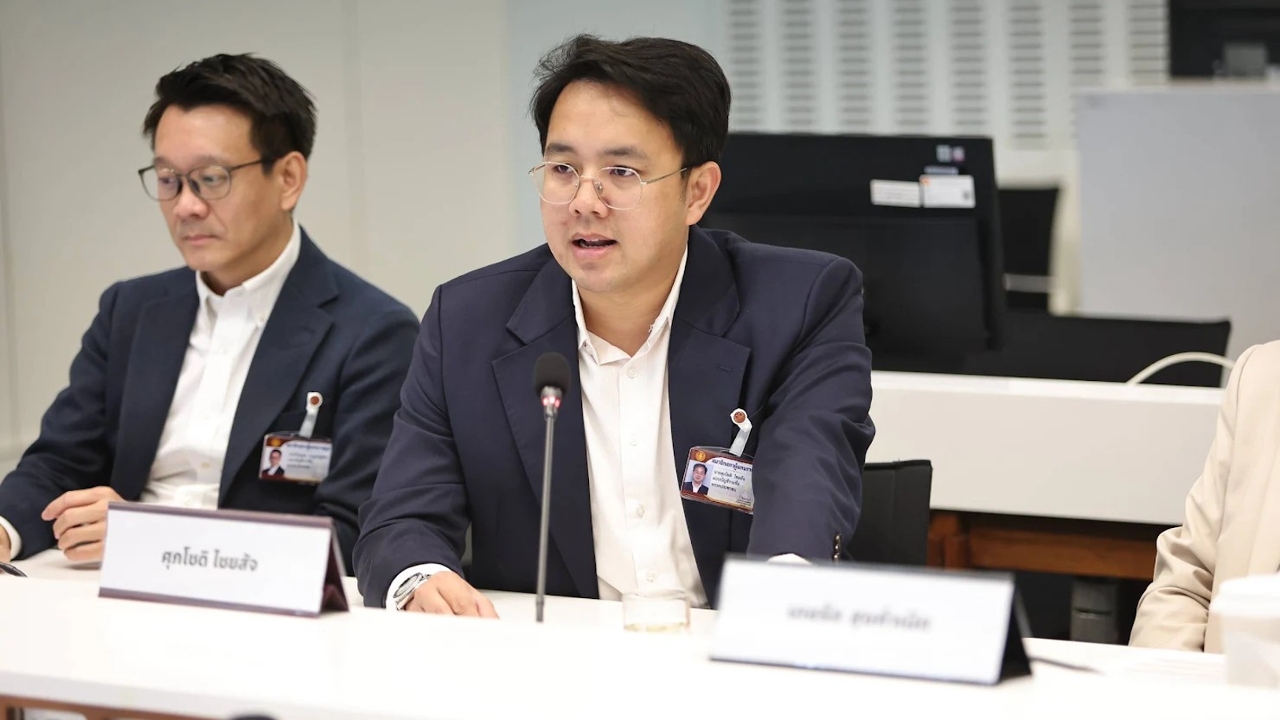
Supachot reveals that over 60 companies participating in the 'People's Solar Project' share the same addresses, and more than 120 companies have directors holding shares across multiple firms.
On 1 Nov 2026 GMT+7, Supachot Chaisat, a party-list MP from the People’s Party, disclosed detailed observations about the 'People's Solar Project.' He stated that this large-scale government initiative was advertised to the public as offering citizens freedom and rights to independently choose solar installation companies without quota locks favoring any private firm. However, ongoing monitoring and checking of qualified private companies now participating revealed suspicious and unusual data links that raise serious doubts.
Supachot said that in-depth research found that among over 60 qualified companies, many registered identical office addresses. Further investigation of company directors showed repeated names appearing in cross-shareholdings across more than 120 networked companies. Such behavior resembles a commercial game of musical chairs: even if citizens select one company, they effectively cycle back to another owned by the same group and network. Therefore, the claim of allowing free competition is untrue.
Supachot added that news agency data indicating that currently 60-70% of SME operators have submitted withdrawal letters and left the project reflects a crisis. Only about 30% of companies remain active, and among them, there is a high risk of interrelated firms or cross-shareholding structures dividing benefits within this quasi-monopoly project.
Supachot further said this phenomenon highlights two critical points: 1) lax and ineffective government screening and qualification processes, or 2) possibly a deliberate government and authority strategy to set conditions excluding small players and favoring one or more large capital groups. Despite hundreds of listed companies on paper, in practice, the project uses a 'corporate splitting' tactic within the same network to block fair competition.