

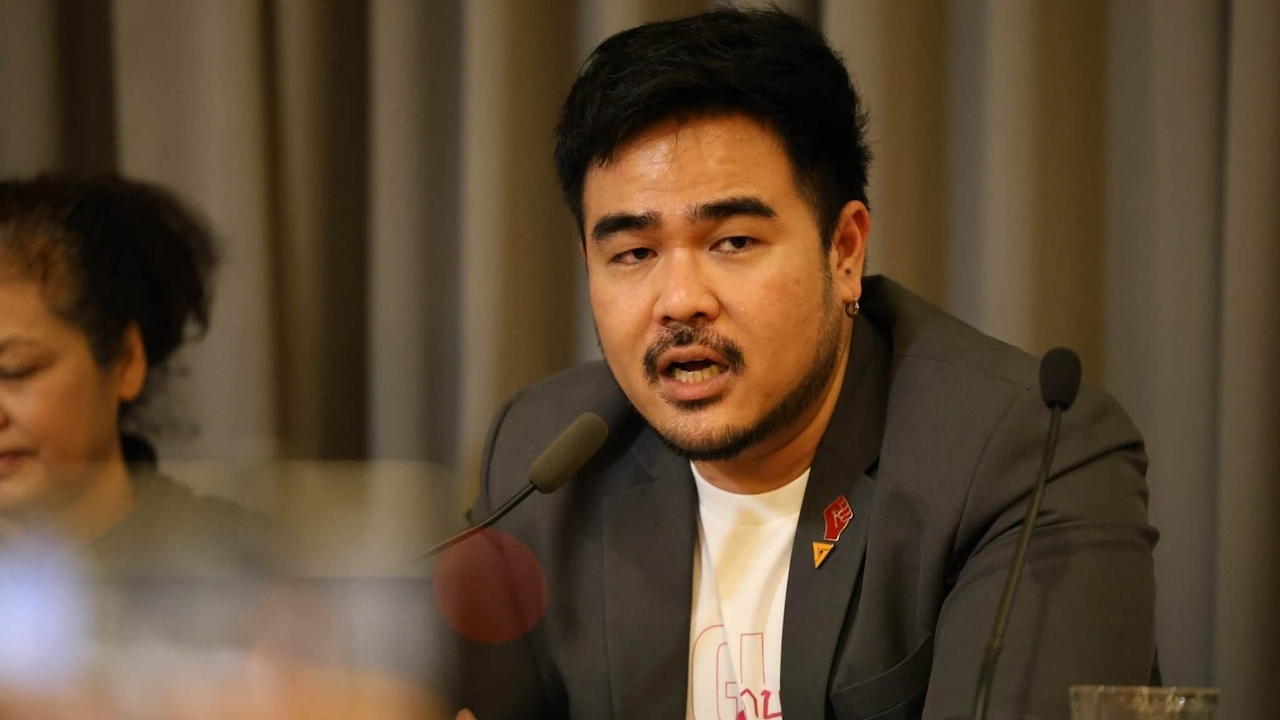
Sahasawat urges the Thai government not to allow the Myanmar military government to intimidate Thai people or pressure workers to send money back to Myanmar. He stresses that those working on Thai soil must have their benefits remain with Thailand rather than foreign control.
On 1 Nov 2026, Sahasawat Koomkong, Chonburi MP from the Prachachon Party, spoke about security at the Thai-Myanmar border. He reported that on the night of 31 Oct, the Myanmar military dropped two bombs near So Lat Tha, along the Salween River opposite Ban Mae Sam Laep in Mae Hong Son province. Though the bombs fell on the Myanmar side, the blasts damaged Thai homes, a subdistrict health promotion hospital (SHPH), and government buildings on the Thai side. Thai residents had to evacuate for safety, showing that people living in Thailand faced danger from foreign military actions.
Sahasawat continued that earlier reports said the Myanmar military government sent a letter warning Thai officials, operators, and businessmen not to contact or trade with the Karen National Union (KNU) forces. They also threatened to attack warehouse areas on the Myanmar side. He questioned what right the Myanmar military had to dictate whom Thai people can trade with, since all border trade must comply with Thai law and related regulations, not be subject to Myanmar military orders. He expressed concern about how the Thai government responded to this threat letter, since attacks did occur causing damage and forcing Thai border residents to flee.
Additionally, regarding the operation of Myanmar labor Citizenship Identification (CI) centers in Thailand, recent news indicated that the Department of Employment allowed 31 officials from the Myanmar military government to work at these CI centers in Thailand. He questioned why, given that these workers pay taxes and contribute economically to Thai enterprises, the Thai government permits the Myanmar military to use document processes to extract additional money from workers on Thai soil.
Sahasawat highlighted financial mechanisms whereby the Myanmar military government requires overseas Myanmar workers to remit at least 25% of their income back through banks controlled by the military government, plus a 2% income tax. While sending money home voluntarily is acceptable, this system monopolizes document issuance, which workers need for legal work permits in Thailand. If workers refuse these financial conditions and cannot renew documents, they risk losing legal status, affecting both workers and their Thai employers. This means the Thai government is allowing the Myanmar military to exert excessive control over the work status of people residing in Thailand.
Sahasawat emphasized that he does not oppose international cooperation on document coordination, but such cooperation must not allow foreign governments to use documentation as tools to intimidate, coerce, or exploit those living and working in Thailand. Both the border security issues and the use of documents to interfere financially reflect the same problem: the Myanmar military is abusing power in ways that affect Thailand's sovereignty. He clarified that his criticism targets the Myanmar military government’s actions, not the Myanmar people, who also suffer from this abuse of power.
Sahasawat concluded that he is not calling for Thailand to engage in war or become a party to Myanmar’s civil conflict, but the Thai government must take serious responsive measures. These include sending diplomatic protests demanding explanation and accountability for damages to Thai citizens and reviewing cooperation mechanisms with the Myanmar military government, especially regarding the operation of CI centers. Thailand should have its own system to register and authorize workers residing and working in the country without letting their employment rights depend solely on financial conditions imposed by the Myanmar military government.
“Thailand’s sovereignty is not something the Myanmar military government can intimidate or undermine at will. It is the Thai government’s duty to protect that sovereignty—not to wield power only against the weak but remain silent when facing a military government armed with guns and bombs,” Sahasawat said. Sahasawat said