

The People's Party exposes the 50 billion baht People's Solar Project scandal, criticizing the government for rigging specifications to benefit large investors. There are only empty promises to support Thai businesses while Chinese capital and brokers pocket commission kickbacks. Suspicious duplicate addresses and cross-shareholding were found, prompting demands to cancel the project if questions remain unanswered.
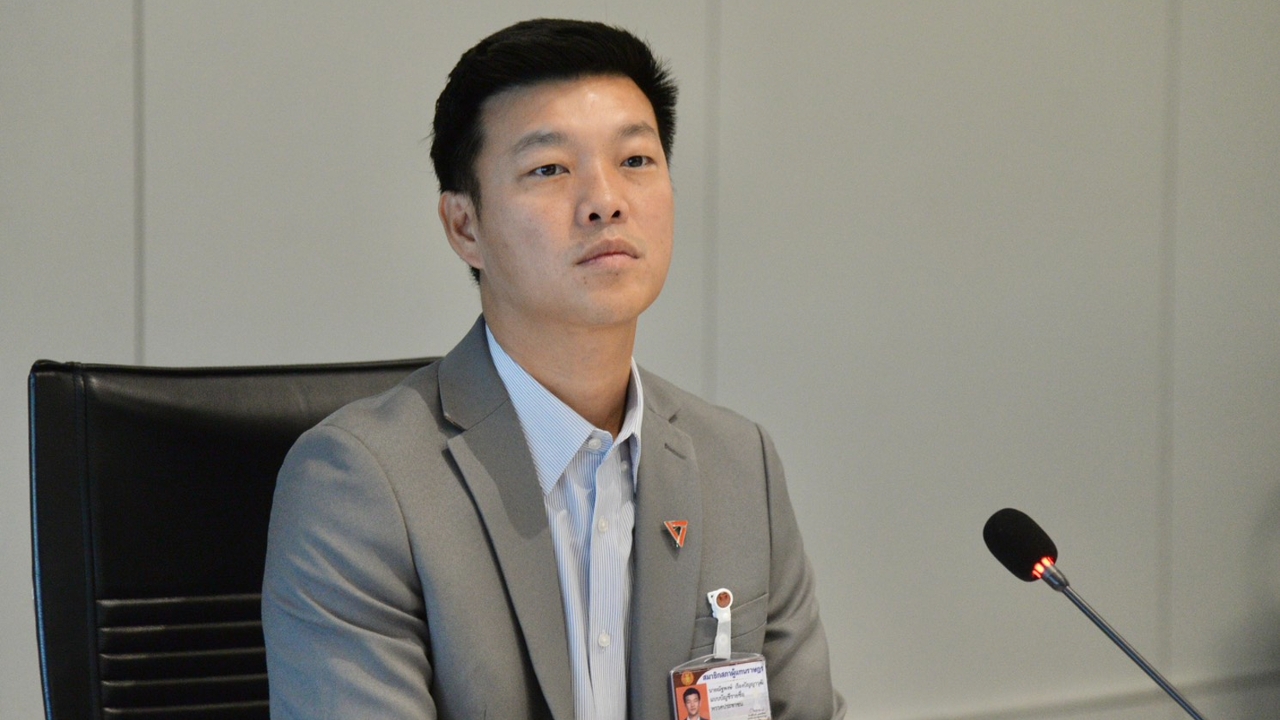
On 2 Nov 2026, Mr. Supachot Chaisat, a Member of Parliament from the People's Party, expressed concerns and updates on the ongoing investigation into the lack of transparency in the "People's Solar Project" with a budget exceeding 50 billion baht. He said the project is turning into a large cake allocated to just a few investor groups and brokers instead of maximizing benefits for the public as the government had promised.
The People's Solar Project aims to subsidize loans or discounts for one million households, offering 50,000 baht per household to promote solar power system installations on rooftops. The government originally stated that citizens would freely choose installers without quotas locked to any operator. However, in reality, the processes and rules have been designed to exclude small operators. Irregularities start with a deposit requirement as high as 60,000 baht per household, forcing over 600 small operators registered with the Provincial Electricity Authority to withdraw—about 60-70% dropped out—leaving only roughly 100 operators, or 30%, able to continue. An examination of remaining qualified companies found 60 firms sharing the same address, suggesting nominee companies or subsidiaries were set up to grab project quotas to feign numerous options. Further investigation of directors and shareholders revealed over 120 companies had the same group of shareholders and directors, sharing surnames and holding cross-shares, meaning whichever company citizens select, subsidies end up controlled by the same investor group.
The People's Party leader also reported complaints about commission kickbacks as high as 30,000 baht per case. This raises doubts about who ultimately controls the 50 billion baht loan intended for the people. If the government cannot resolve these doubts or justify the inadequate benefits to citizens, the People's Party demands the government cancel the project. They also call on Deputy Prime Minister and Finance Minister Dr. Akeniti Nitithanprapas, who oversees the loan funds, to stop supporting the political network profiting from the loans, emphasizing this is public money—not to be exploited—and to stop using the people as a front. Without rigged specifications favoring investors, the project might have installed solar cells on two million rooftops or even more than the government’s target.
Mr. Weerayut Kanchuchat, Deputy Leader of the People's Party, added that the Bhumjaithai government only makes empty promises about helping Thai operators or developing Thai technology. When it comes time to borrow money for support, Chinese capital and Thai brokers take the commission kickbacks. The government’s project style is to spend large budgets on questionable purchases, similar to the TH-AI Passport project, all claimed to benefit the people. While every policy benefits citizens, questions remain about cost-effectiveness and efficiency. The country faces increasing financial constraints as the government borrows hundreds of billions but does not focus on developing the domestic economy or industry.
“Dr. Akeniti and Dr. Yossanan often talk about promoting domestic technology and supporting Thai operators, but when the loan money is used, it invites criticism over kickbacks. For example, spending hundreds of billions on energy transition should at least build the domestic economy by producing Smart Grid systems or smart meters locally. Thai operators should have the capacity to develop these, as well as energy storage systems like BESS batteries, which could develop many Thai businesses. Importantly, the loan decree requires funds to be fully used by December 2027, imposing a tight deadline that leaves no room to foster Thai operators,” Mr. Weerayut said.
Mr. Weerayut further stated that opposition leaders and the economic committee visited Khon Kaen province, which has several potential energy development sites. Khon Kaen University can produce lithium-ion batteries and has developed sodium-ion (salt-based) batteries. However, this research remains unused due to lack of scale-up policies to promote Thai operators. The December 2027 deadline makes it impossible to complete projects, leaving research shelved. The government’s approach uses hundreds of billions to stimulate China's economy and pay brokers kickbacks within the 200 billion baht energy fund, raising serious concerns. Instead of transforming challenges into industry, as the People's Party has consistently proposed, the Bhumjaithai government only offers empty promises about helping Thai operators and businesses.
Asked about evidence of commission kickbacks when the government claims citizens benefit, Mr. Supachot said evidence is publicly available. Comparing private operators outside the program, similar installations of the same brand generally cost about 100,000 baht plus or minus. But the government, through the state enterprise—the Electricity Authority—sets the price at 140,000 baht. This raises the question where the 30,000-40,000 baht price difference goes. It explains why government projects cost citizens more. The 50,000 baht subsidy per case reduces the net price to 90,000 baht, but the subsidy money can be passed along to others. The government may pay installers only around 100,000 baht, with the remaining difference going elsewhere. The government must clarify where and to whom this money flows.
When asked if this issue would be used in a no-confidence debate, Mr. Supachot said they have continuously gathered information and will use every platform to monitor and scrutinize the project. Mr. Weerayut added that the government is trying to delay the debate to clear these emerging suspicions. The government is motivated to postpone or delay the no-confidence debate to resolve these issues beforehand, alongside attempts to manipulate political narratives to overshadow the debate.
“Using the people as a front is a tactic the Bhumjaithai Party excels at. This is why Thailand hasn’t developed much in over 50 years. Every policy and measure, no matter how flawed, always benefits someone and thus appears to help the people. But in today’s world, governments are questioned about value and efficiency, especially when borrowing money. This is not normal budget spending; it’s borrowed funds, so demands for cost-effectiveness and efficiency are even higher. Instead, the money is used to stimulate China’s economy and enrich brokers through kickbacks.” Mr. Weerayut concluded.