

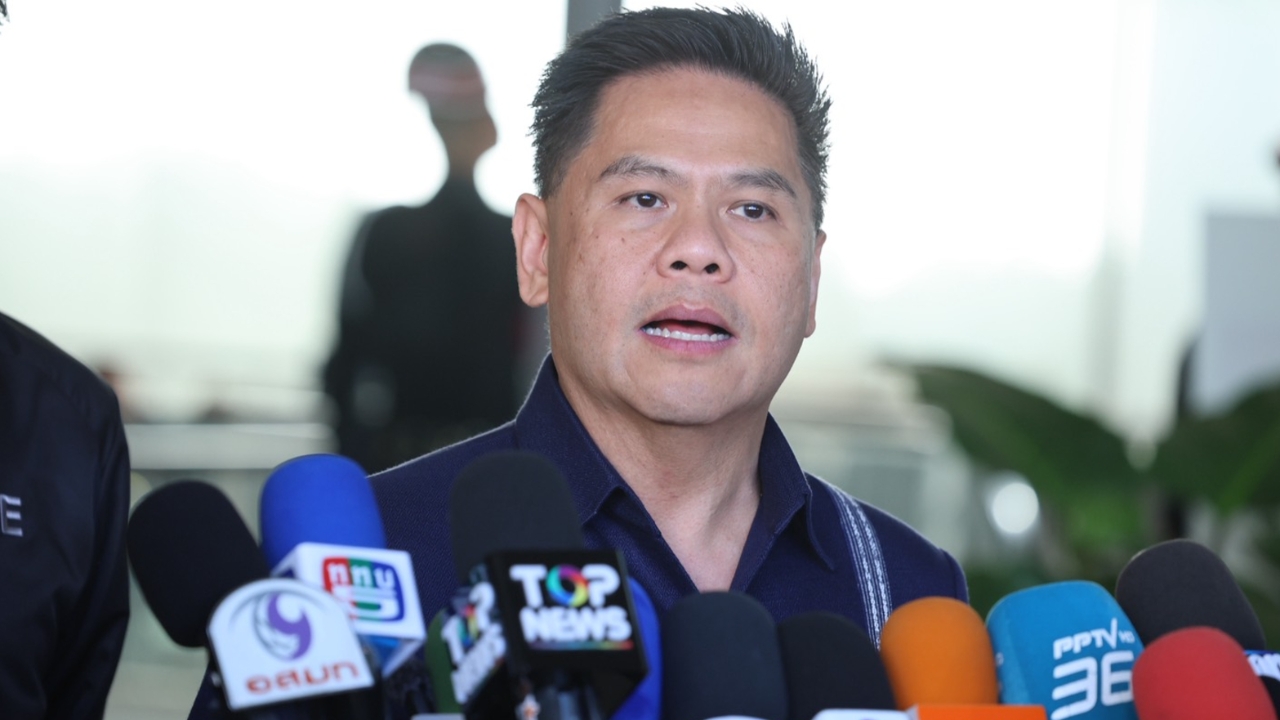
Warawut Sinlapacha proposes the Cabinet consider imposing excise tax on imported electric vehicles to support domestic manufacturers, aiming to ensure fair competition and confident attraction of investors to Thailand's market and industry.
At 08:20 on 3 Nov 2026 at the Udonthani International Convention and Exhibition Center, Warawut Sinlapacha, Minister of Industry, spoke about the policy to support domestic electric vehicle (EV) production, which includes raising excise tax on imported EVs. He clarified this is not an import duty but an excise tax. He noted that Thailand's automotive supply chain, supported for decades especially by Japan, has become stable. However, with new players like electric vehicles entering the market, collaboration is essential. The excise tax measure is intended to allow domestic manufacturers to compete more fairly because without import tariffs, other benefits must be used; otherwise, local producers are disadvantaged compared to importers.
Asked about support for domestic manufacturers, Warawut said they will encourage the use of automotive parts produced locally. Thailand's strength lies in its supply chain, including SMEs that assemble parts. This will give confidence not only to the automotive industry but also to advanced technology sectors to invest in Thailand. Recently, Taiwanese investors who met with the Prime Minister plan to increase their investment in Thailand from over 65 billion baht to more than 100 billion baht in the future, confirming Thailand's strong supply chain.
Warawut also revealed that today the Ministry of Industry will submit its opinion for Cabinet consideration regarding the excise tax measures on imported electric vehicles (EVs).