

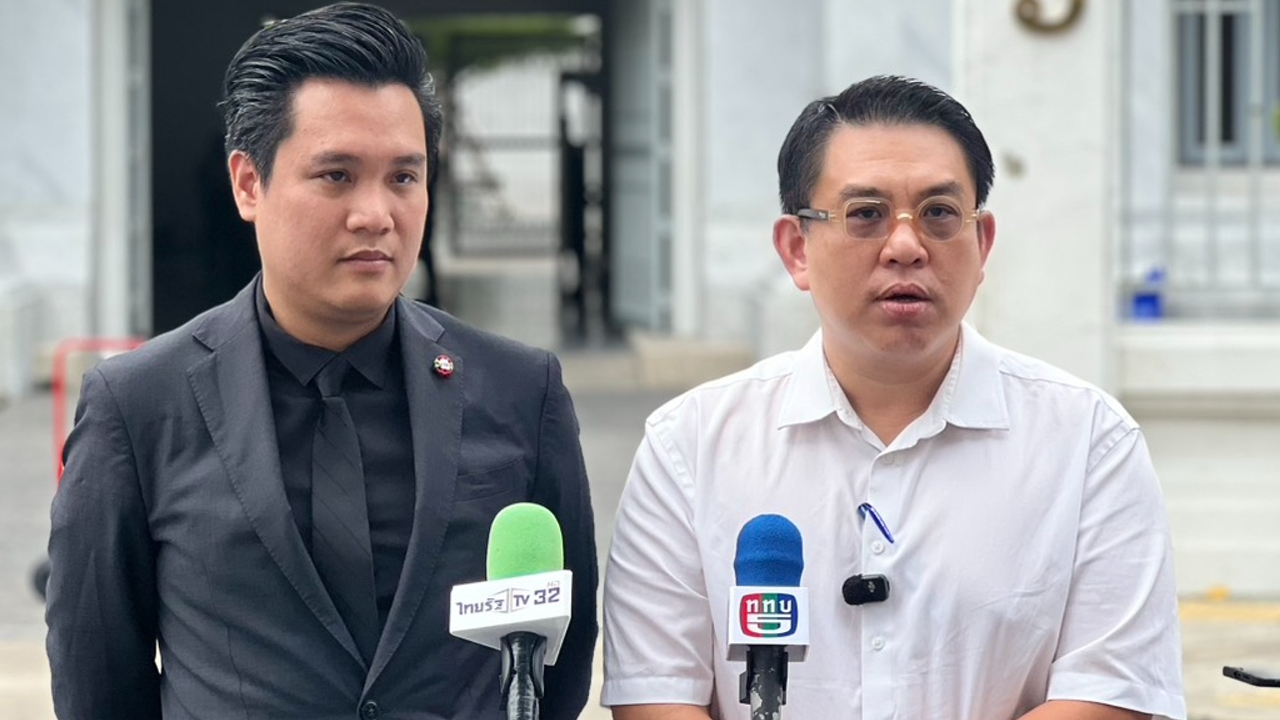
Wiroj is confident in his good faith regarding the case involving 44 former Move Forward MPs before the Supreme Court, emphasizing that internal party debates are normal. Meanwhile, lawyers have prepared 60 opposing witnesses and scheduled Sulak Sivaraksa to testify on 17 November.
On 3 Nov 2026 GMT+7, Wiroj Lakkhanaadisorn, former Move Forward MP, spoke after attending the Supreme Court hearing in case no. Kom.Jor.1/2569 between the National Anti-Corruption Commission (NACC) as petitioner and 44 former Move Forward MPs as respondents. The case concerns alleged severe ethical violations for jointly proposing amendments to Criminal Code Section 112. After the witness hearing, in which he was a respondent, Wiroj expressed confidence in his intentions and felt relieved having explained his good faith and related matters to the court, noting that the three judges listened and allowed him to clarify his true intentions.
Regarding the over two-hour hearing and whether facts were clearly explained, Wiroj said that forgetting some past dates or details is normal for humans and acceptable, though it may cause minor discrepancies. However, his intentions, emotions, and good faith from the start remain clear and need no memorization. He reaffirmed that all actions were taken with good intentions.
Wiroj added that he normally makes eye contact and observes listeners’ reactions when speaking, and today he felt positive seeing the three judges listen attentively. The judges asked questions genuinely seeking facts and gave him the opportunity to explain his good intentions, nodding and maintaining eye contact. However, he could not disclose further details of today's hearing due to court restrictions.
Two witnesses testified today: besides Wiroj, Assistant Professor Dr. Ronakorn Boonmee from Thammasat University’s Center for Criminal Law and Criminology, an expert in criminal law and a respected academic, also testified as an expert witness.
Concerning mentions during the petitioner’s witness testimony about internal party meetings where some members opposed the law amendment proposal and allegations that some were threatened not to run as party candidates, Wiroj said he did not feel pressured. He explained that political parties naturally have differing opinions, and if everyone agreed fully, there would be no reports of disagreements or members opposing proposals, which is normal in meetings.
Wiroj said everyone wished well for the country at that time and recognized national conflicts and the broad application of Criminal Code Section 112. They intended to resolve conflicts through parliamentary mechanisms. However, members differed on how to address the issues and the law’s content, with some proposing one approach and others another, leading to debates and sometimes raised voices or quieter arguments, all normal in meetings.
When proposals were challenged, meetings allowed those challenged to explain. If explanations were insufficient, they were asked to research further, consulting law faculty professors, reviewing academic documents, and referencing reports from the National Reconciliation Commission (NRC). These were used to clarify doubts in subsequent meetings until concerns eased. Nonetheless, new doubts and debates sometimes arose in second meetings, which is normal.
Wiroj said he does not understand the petitioner’s motives in raising these issues but reiterated that internal debates are normal in the party and always conclude with mutually accepted resolutions.
Regarding why he was the first respondent witness among the 44 former MPs, Wiroj said he was also the first to testify before the NACC. His readiness, rather than litigation tactics, determined this. Having attended meetings and participated throughout, he witnessed the good intentions of all members.
Wiroj said he felt very uneasy when accused of bad intentions because internal debates and differing opinions do not imply ill intent. He wanted the chance to explain personally and was glad to be the first witness clarifying good intentions. Allegations that they worked casually or superficially are untrue; otherwise, the bill would not have been drafted, reviewed, and debated multiple times. He emphasized two key points: everyone acted with good intentions and sought to proceed as carefully as possible.
Regarding Kasemsan Meethip, former Move Forward list MP and petitioner witness, who claimed pressure from being removed from a group chat and attacked by IO forces if not supporting the amendment to Section 112, Wiroj said these are mere allegations without evidence and frankly anyone can make such claims. He suggested the pressure might be self-created.
Wiroj recalled that Kasemsan did not object during MPs’ meetings and viewed it as opposing opinions from the other side, now politically opposed and unlikely to agree with him. Reviewing Kasemsan’s Facebook statements shows disagreement on almost every issue, not just this one. Wiroj respects opposing views and holds no grudge but leaves credibility judgments to individuals.
Asked whether he suspects the opposing witness lied in court, Wiroj said he cannot say if the testimony is true or false but believes each must be responsible for their words. He urged consideration of the witness’s statements over time, including since leaving the party, noting consistent opposition to him. He trusts media can draw conclusions from this behavior.
Nithi Layaddee, lawyer authorized by the People’s Party, spoke about upcoming opposing witnesses, highlighting Sulak Sivaraksa, a Thai writer, scholar, and social activist, knowledgeable in ancient royal traditions and monarchy status. Sulak has continuously provided academic opinions on the matter for decades and is scheduled to testify on 17 November.
About the total opposing witnesses, about 60 are prepared. The hearing schedule cannot guarantee adherence to all deadlines due to possible complications such as witness unavailability or emergencies causing postponements. Nevertheless, efforts will be made to meet the court’s timeline as agreed.
Regarding whether Sulak Sivaraksa has received court permission to testify, Nithi said the procedure requires submitting names for court approval, with possible objections for the court to decide. Ideally, witnesses should testify in person to clarify unresolved points fully, as providing testimony directly to the court yields more complete details than written statements alone.
On the court’s directive for 13 academics to provide written testimony, Nithi expressed a preference for all witnesses to testify in person to fully present facts and opinions, but final decisions rest with the court’s discretion.
Asked about Professor Kanit Na Nakorn, former chair of the National Reconciliation Commission (NRC), whose NRC report has been cited in proceedings, Nithi said he cannot confirm if Kanit is listed as a witness. However, Kanit’s work as NRC chair is highly valuable to society—comprehensive and thorough. The opposing side has already referenced this content in their case defense.
The final hearing before the verdict is expected in late March 2027. Nithi confirmed that closing arguments will definitely be made to summarize all facts and opinions from the hearings to assist the court in legal interpretation and case judgment. Given the large number of witnesses and documents, summarizing key points is necessary for the court’s clear understanding.