

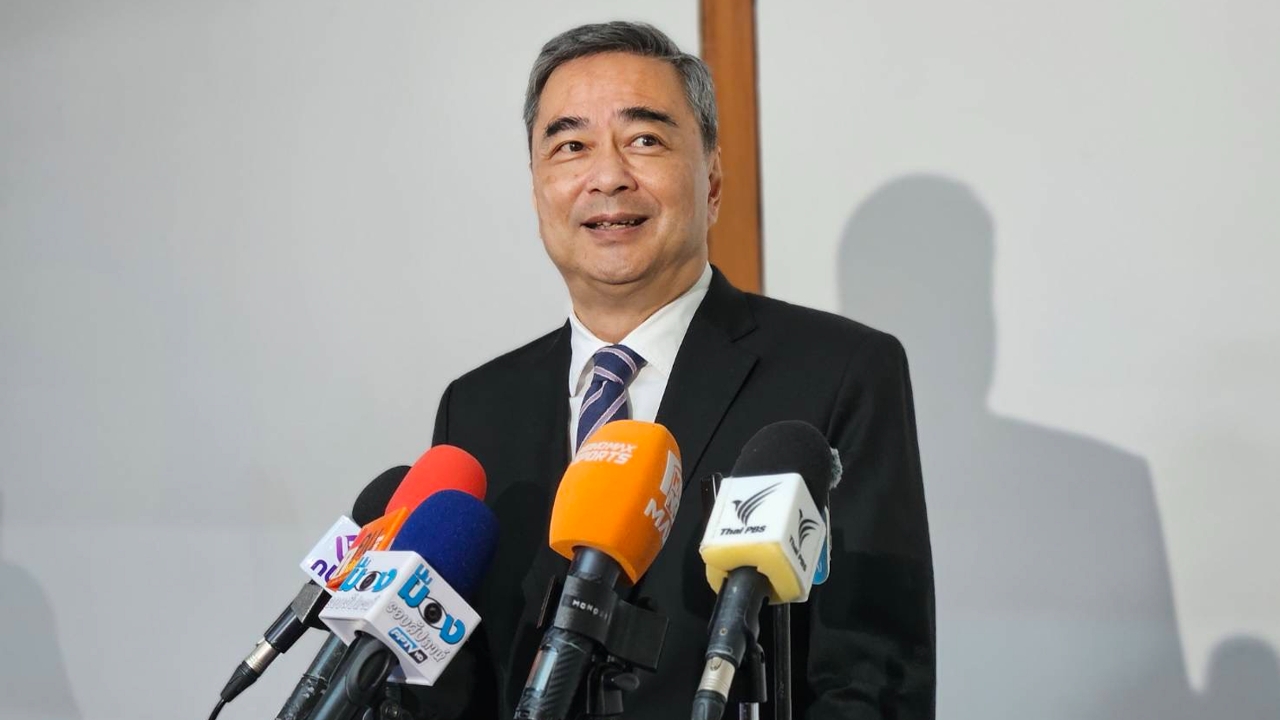
Abhisit criticizes the parliamentary speaker’s order using procedural rules to cut the oversight powers of 35 committees, warning it may violate the constitution. He emphasizes concerns that it could enable government-aligned MPs to use it as a loophole to avoid parliamentary scrutiny mechanisms.
At 12:00 on 3 Nov 2026, Abhisit Vejjajiva, party-list MP and leader of the Democrat Party, commented on House Speaker Sophon Saram’s changes to the working rules of all 35 standing committees in the House of Representatives. He said the opposition whip meeting was likely to discuss this issue today. Personally, he believes that committee agendas should allow all committee members to participate when inviting individuals or agencies for briefings. However, requiring all matters to be decided by committee vote could pose problems if government MPs refuse committee scrutiny. Since most committees have a majority of government coalition MPs, if they use majority votes to block scrutiny, the committee cannot fulfill its oversight role, which contradicts the constitutional purpose of these mechanisms.
"In my view, a balanced principle is needed. If there is concern that committee chairs might act arbitrarily, a vote is not necessarily required, but they should inform the meeting. After notification, objections or discussions can occur. But if rigid rules like these are imposed, and the government refuses cooperation, parliamentary oversight through committees effectively cannot proceed, which violates the intended oversight function of the House."
When asked about concerns that the new rule restricts opposition parties’ oversight roles, Abhisit said the bigger worry is the attempt to amend House rules. Simply put, all operations in the House could be controlled, even the chairmanships of committees might all go to the government if amendments proposed by Bhumjaithai Party MPs are passed. Yet, historically, such problems have been managed through parliamentary traditions and political culture, including mutual respect for roles.
Abhisit added that although the government holds a majority in the House and committees, oversight principles require allowing minority voices to perform oversight. Each committee’s powers are already defined by rules specifying what can or cannot be examined within legal frameworks. Therefore, there should be no concerns. He urged the government not to fear oversight. If their actions are correct and transparent, there is nothing to fear. In fact, oversight can help demonstrate that all actions are reasonable and beneficial, which ultimately serves the government. Conversely, if opposition oversight is ineffective, the opposition harms itself. Thus, parliamentary mechanisms must function properly to align with democratic intent.
Asked whether this is an attempt to monopolize and block opposition oversight through committees, Abhisit acknowledged many expressions of concern but reiterated that the government should not be afraid because ultimately, they cannot escape the truth.
When asked about next steps or whether a formal objection letter would be submitted to the House Speaker, Abhisit said the opposition whip meeting discussed this issue earlier this morning, but he did not attend and so was unaware of any conclusions. He personally believes the rules should be relaxed. Forcing everything through votes makes work more difficult, but informal discussions and rehearsals are feasible. In fact, committees currently allow opportunities for dialogue, with all members understanding this is to enable each side to perform their roles.