

The joint committee discussed the Clean Air Act draft, agreeing on six points and pushing for completion within this parliamentary session. They hope to enforce it in time for the PM2.5 dust season, emphasizing they will not rush to the point of inefficiency and will not use caution as an excuse for delay.
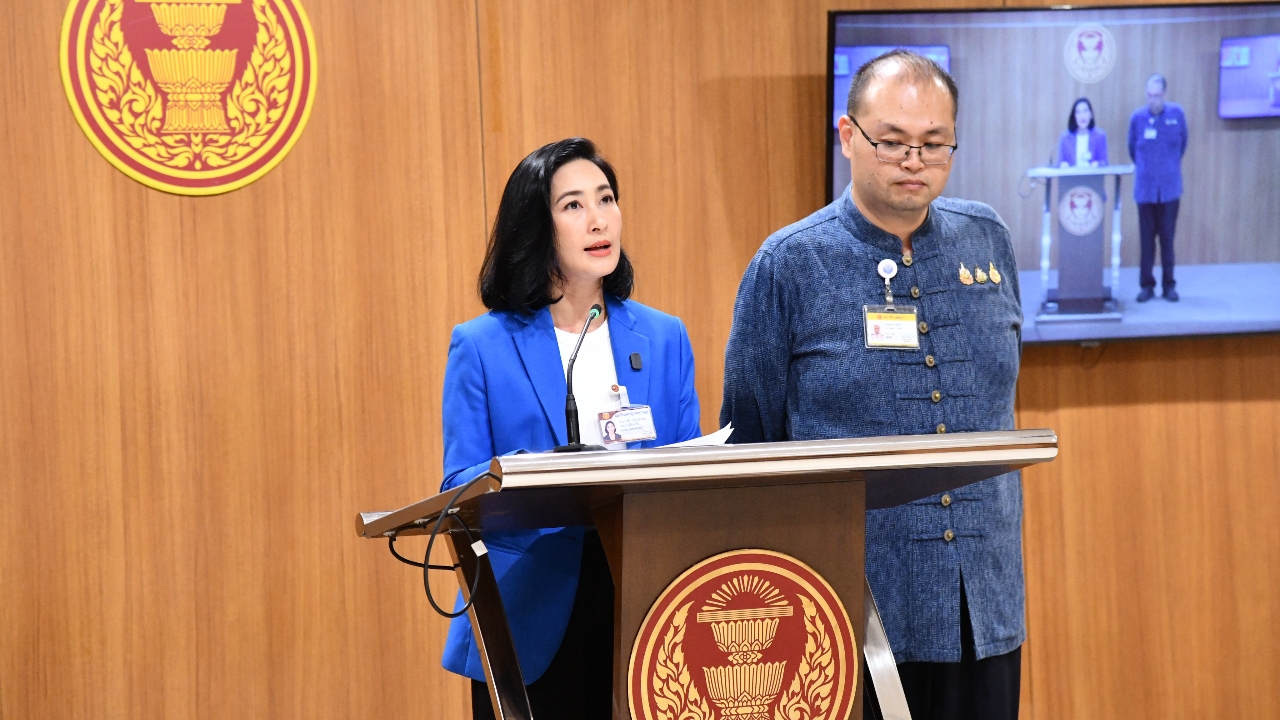
3 Nov 2026 13:00 GMT+7 Ms. Kardi Liaopairoj List MP and Deputy Leader of the Democrat Party, serving as spokesperson for the joint committee drafting the Clean Air Act, along with Mr. Palawat Tansiri Senator and spokesperson for the committee, jointly announced progress of the joint committee reviewing the draft Clean Air Management Act B.E. …. of the House of Representatives and Senate, at the Parliament Building.
Ms. Kardi said the meeting focused on practical aspects that can be implemented in the law, including simplifying complexity, aligning with other laws, avoiding regulatory overlaps, and ensuring pollution control covers not only endpoints but also sources. The legal framework aims to balance structure, such as private sector involvement, ensuring broad participation while maintaining fairness and correctness. The joint committee aims for thorough completion and to submit the draft to the House within this session to enforce it before the dust season. Delay until the next session in March would miss the PM2.5 situation.
"We confirm that the joint committee is counting down to get this law enacted as soon as possible because we know the dust season is approaching. We want to assure that we are not rushing to produce an ineffective law, nor are we using caution as an excuse for delay." ."

Mr. Palawat said there were 15 discussion points, with six agreed upon:
1. Extending enforcement of the Clean Air Fund chapter by one year after the Act is promulgated to allow preparation and approval under the Revolving Fund Act, benefiting fund usage.
2. Refining the definition of vulnerable groups more specifically to include outdoor workers continuously exposed to air pollution, aiming for clear protection, necessary budget allocation, and manageable fiscal impact.
3. Removing the requirement for farmers to install pollution monitoring systems, which will ease practical burdens on farmers.
4. Preventing duplicate fee collections.
5. Automatically appointing Clean Air officers, with authority vested in the Minister and involving local administrative organizations in implementation.
6. Managing end-of-life vehicles by defining vehicle usage lifespan. The Department of Land Transport views this as within their clear authority. The committee believes focus should be on emissions rather than vehicle age.
The remaining nine points remain unresolved due to differing opinions:
1. The proportion of business sector members on six committees. It was suggested that oversight and fund committees should exclude private sector members to avoid conflicts of interest.
2. Criminal penalties: Senators proposed reducing fines from 50 million and 100 million baht to 5 million and 10 million baht. This sparked wide debate on potential impacts on foreign investment due to higher ASEAN regional penalties. Concerns were raised that too light penalties would invite violations and disregard for the law. The Legal Council was tasked with drafting revised language, which may differ from senator or MP proposals. Further consideration is pending.
3. Eliminating the Pollutant Release and Transfer Register (PRTR) system, as existing laws already cover factory emissions data.
4. Disagreement over whether provincial committee chairs should be governors or provincial administrative organization heads. Both options have pros and cons, and a vote is planned at the next meeting. Today is the final day to decide the draft's form.
5. Pollution project oversight: MPs' draft adds an extra provincial layer, but the meeting noted existing laws such as EIA, EHIA, and public participation through the Factory Department reduce redundancy. The Legal Council is adjusting language to align with committee objectives.
6. Transboundary pollution management: There is disagreement over wording from the Ministry of Foreign Affairs on how to proceed. Ultimately, the ministry's role was clarified as managing broad international relations to avoid overlapping authority with existing laws and agencies.
7. Temporary protection rights: The joint committee agreed to establish specific temporary protection rights allowing public use that may differ from other laws.
8. Financial institution liability: The meeting agreed that offenders should bear responsibility and recommended removing credit assessment criteria for loans to farmers or small SMEs to prevent undue lending difficulties.
9. Cancellation of the deposit-refund and recycling system, since clearer laws govern recycling. These nine points are expected to be resolved, with the goal of completing within this session.