

The government is advancing Thai agriculture towards a low-carbon economy to drive the Net Zero 2050 goal. The Prime Minister has ordered accelerated development of water resources and smart agriculture to reduce costs, increase productivity, and raise farmers' incomes alongside sustainable environmental stewardship.
On 3 Nov 2026 GMT+7, Ms. Lalida Pertwivatana, Deputy Spokesperson of the Office of the Prime Minister, stated that under the leadership of Prime Minister and Minister of Interior Anutin Charnvirakul, the government is advancing agricultural development alongside natural resource and environmental management. This aims to enhance farmers' quality of life and incomes while pushing Thailand toward net zero greenhouse gas emissions by 2050. The transition to a low-carbon economy is intended to reduce production costs, improve efficiency, and create concrete economic opportunities for the people.
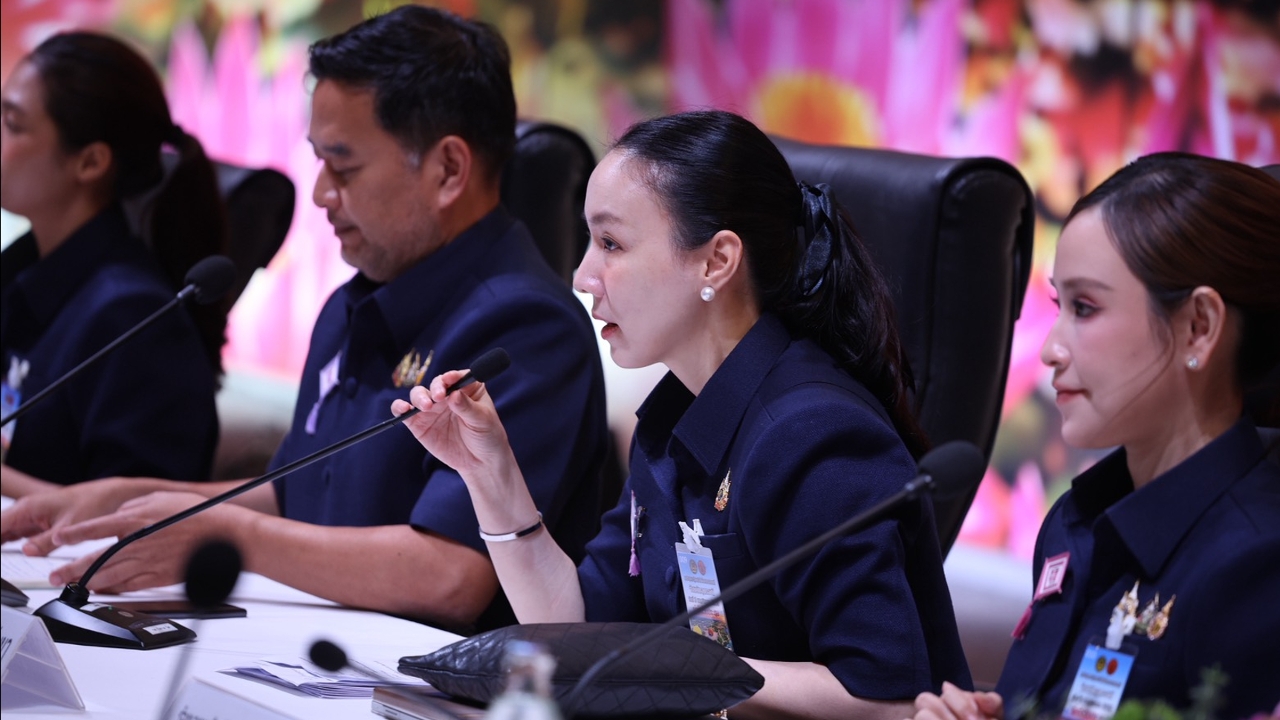
Ms. Lalida said that during the 2/2026 official offsite cabinet meeting at Montathip Hall, Udon Thani International Convention Center, Prime Minister Anutin emphasized that all agencies must expedite development in the Upper Northeastern Provincial Cluster 1, consisting of Udon Thani, Bueng Kan, Loei, Nong Khai, and Nong Bua Lamphu. The plan includes over 170 projects with a budget of more than 78.46 billion baht, covering four key areas: agriculture and food, border trade, tourism, and drug suppression.
The Prime Minister highlighted the importance of upgrading the agricultural sector, a key economic base for local people. He instructed relevant agencies to comprehensively support farmers by developing water resources for agriculture, adopting smart agricultural technologies, improving infrastructure, and adding value to agricultural products. These measures aim to reduce production costs, improve product quality, and provide farmers with stable incomes over the long term.
Ms. Lalida added that the Ministry of Natural Resources and Environment, led by Minister Suchat Chomklin, supports the Prime Minister's directives. The ministry plans to integrate natural resource and environmental management with agricultural development under the revised second version of the country's Long-Term Low Greenhouse Gas Emission Development Strategy (LT-LEDS). This will support a just and sustainable transition to a low-carbon economy.
Key approaches include promoting precision and smart agriculture technologies to enable farmers to use resources efficiently; managing water and production inputs appropriately; developing livestock management systems; applying fertilizers and plant nutrients effectively; and adjusting production and consumption patterns to reduce greenhouse gas emissions. These actions consider production costs, competitiveness, and farmers’ incomes concurrently.
The government places importance on a just transition, especially for small-scale farmers and communities potentially affected by the shift to a low-carbon economy. They require support in knowledge, technology, and economic opportunities to adapt suitably without increasing costs that would impact their livelihoods.
"The government views Net Zero not merely as reducing greenhouse gas emissions but ensuring real benefits for the people, especially farmers who must be able to lower costs, increase yields, and improve incomes. The use of technology and innovation must go hand in hand with natural resource and environmental protection so that Thai agriculture remains competitive in the future. The transition to a low-carbon economy should be an opportunity to improve people's quality of life without leaving anyone behind," Ms. Lalida said. .
Ms. Lalida concluded that the government will continue integrating cooperation among relevant agencies to promote agricultural development and greenhouse gas reduction effectively. The goal is to balance economic growth, natural resource conservation, and the enhancement of people's quality of life, ensuring Thailand’s stable and sustainable growth in the long term.