

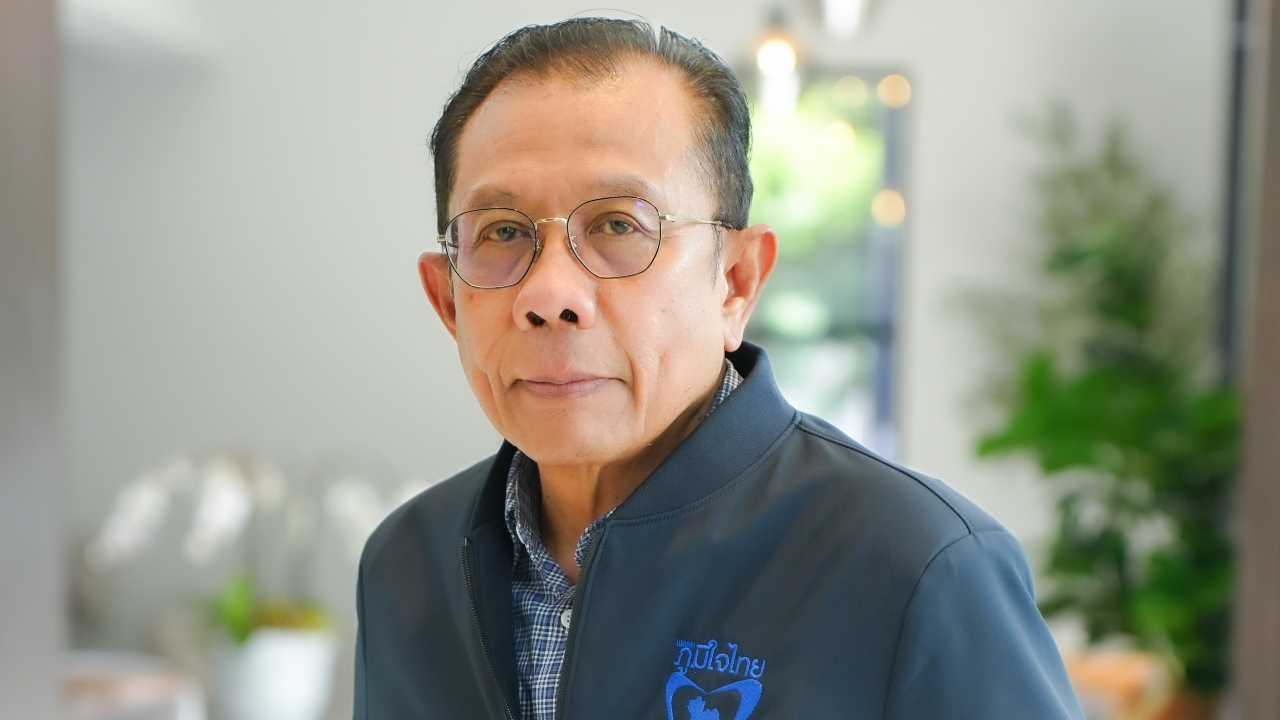
Supachai criticized Abhisit’s remarks on committee guidelines, stating that while government oversight is allowed, committee chairs must not exercise power arbitrarily. He emphasized that no one has privilege above the constitution.
On 4 Nov 2026, Supachai Jaisamut, party-list MP of the Bhumjaithai Party and second deputy chairman of the Committee on Law, Justice and Human Rights, and legal affairs chairman of Bhumjaithai, commented on Abhisit Vejjajiva’s interview. Abhisit, leader of the Democrat Party, criticized the operational guidelines set for all 35 standing committees, saying they might limit government oversight.
“Mr. Abhisit, government oversight must be possible, but committee chairs cannot exercise power arbitrarily.”
I have read Abhisit Vejjajiva’s interview on 3 Nov 2026 criticizing the operational guidelines of all 35 standing committees, set by the Speaker of the House, Sopon Sarum, claiming they may restrict government oversight and contradict the constitution’s intent.
I agree that the government must be subject to oversight, but I ask Abhisit if committee chairs who exercise power without respecting the constitution and parliamentary rules should also be subject to scrutiny?
I would like to cite the case of Rangsiman Rome, chairman of the Committee on Law, Justice and Human Rights, where I serve as second deputy chairman.
Over time, I have raised objections regarding the chairman’s conduct on several points, including:
First, setting agendas and inviting individuals or agencies without the committee’s consideration or resolution as required by proper procedure.
Second, bringing issues for consideration that may lie outside the committee’s jurisdiction or overlap with other committees’ responsibilities, as outlined in Section 129 of the constitution.
Third, actions that I believe involve the chairman exercising authority alone instead of collectively with the entire committee.
I have repeatedly raised these concerns and sent letters to the Speaker requesting constitutional and procedural review. This is not a government-opposition conflict but a matter of lawful authority. Section 129 grants the committee power to investigate facts, study matters, and summon persons or documents collectively—not individual chairperson authority.
The term “committee” refers to a body exercising power together through proper processes, not a single person who can decide on all matters alone.
Abhisit suggested that if a chairman wishes to act, they should merely inform the meeting and allow objections.
I ask: if objections are raised but the chairman proceeds without allowing the committee to jointly decide, what can the minority members do?
Democracy does not mean that an opposition chairman has power over other committee members, nor that government oversight can disregard legal procedures.
Requiring committee authority to be exercised by committee resolution where law requires is not a barrier to oversight but a guarantee that organizational power is exercised properly.
Certainly, there must be mechanisms to prevent the majority from abusing resolutions to block proper oversight, which the parliament should consider carefully.
I urge Abhisit to distinguish between "protecting legislative oversight powers" and "allowing committee chairs unchecked authority."
These two matters are not the same.
Government oversight must be fully possible under the constitution, but oversight should not become an excuse for those overseeing to be above the law themselves.
I affirm that I do not oppose government oversight; any government must be subject to it. However, those exercising oversight must accept scrutiny of their own powers, because in a democracy, no one—government, opposition, or committee chair—is above the constitution.”