

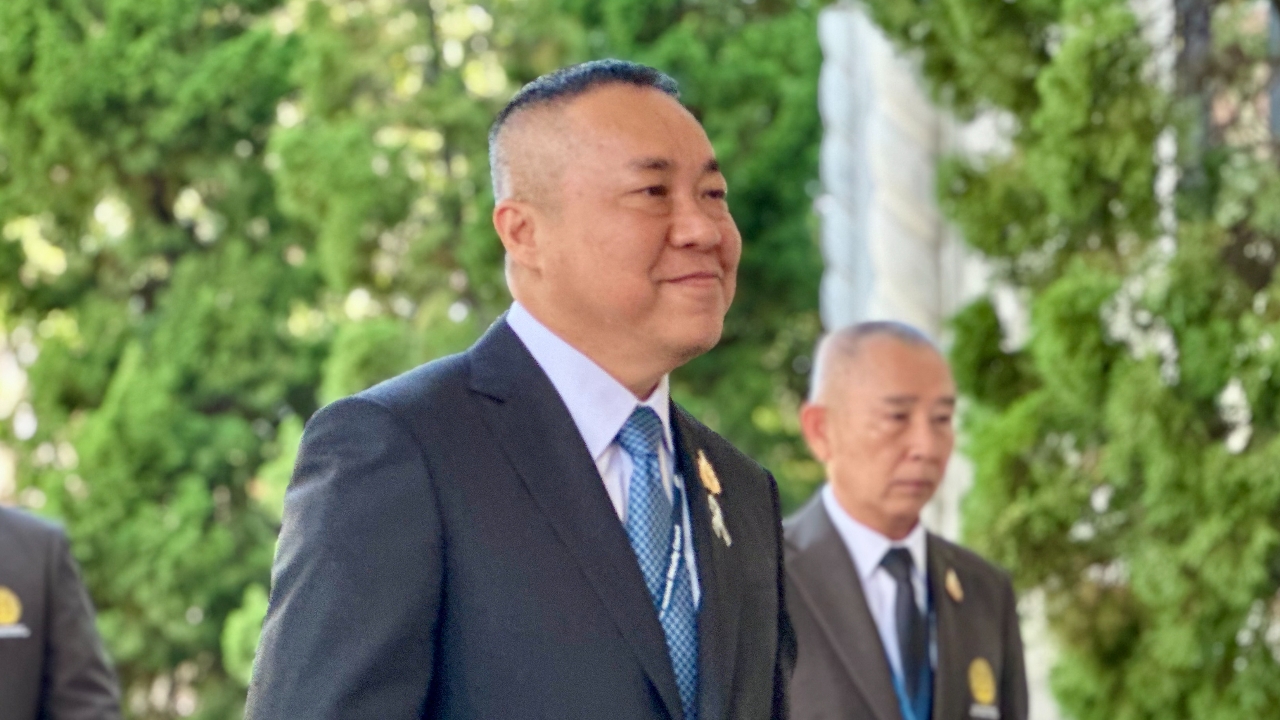
The National Security Council (NSC) has invited academics and agencies to discuss four scenarios to address the Middle East crisis. General Chaiphruek explained to the public that there is no need to hoard supplies and announced plans to establish an NSC operations center to monitor the situation, with consideration to propose a national food reserve.
At 12:35 PM on 4 Nov 2026 GMT+7. General Chaiphruek Duangpraphat, Secretary-General of the National Security Council (NSC). He spoke at the Government House after meeting with government agencies and academic representatives to review contingency plans for potential security problems arising from the Middle East. He said the NSC invited relevant agencies and professors from various universities to brainstorm ways to prepare for crises in different regions. Many professors described the current period as a "crisis layered upon crisis," but Thailand remains on the periphery of these crises. Therefore, the impacts differ from those experienced in Europe or the Middle East.
However, to avoid complacency, preparations and operational plans have been readied. Normally, Thailand and the NSC maintain national preparedness plans for crises, scaled from mild to severe. But due to volatility and the wide-reaching effects of conflicts in multiple areas, preparations have been expanded across all units. The NSC has drafted four scenarios covering possible developments and considerations to address each. Generally, all involved agencies already have their own plans, but today they were briefed on the NSC's scenarios to develop detailed responses accordingly.
General Chaiphruek continued, regarding the responsible organizations, the NSC will establish a National Security Council Operations Center (NSC OCC) to collaborate with academics from various universities and agencies to continuously monitor the situation and update plans to respond effectively as conditions evolve. For public alerts, the NSC has invited agencies such as the Department of Disaster Prevention and Mitigation and the Public Relations Department to prepare notifications. If necessary, alerts will be issued promptly to ensure the public receives accurate and appropriate information about the situation.
If the public wants information, they should rely on credible agencies. Government departments will gradually provide necessary updates so citizens can stay informed and prepare. Currently, this is still the preparatory phase for responsible agencies, including relevant private sectors, each readying their duties. Some areas may face minor crises, but plans are in place to prevent disruption to normal daily life.
When asked if the U.S. midterm election results, which indicate Donald Trump may lose, would ease the Middle East situation, General Chaiphruek said both outcomes are considered: the situation might improve or worsen. The NSC’s scenarios cover both possibilities.
When asked how to advise the public about possible stockpiling amid a crisis, General Chaiphruek replied, Although the global situation is a crisis layered upon crisis, with wars in several regions and two major conflict zones, these issues remain distant from Thailand. We are at least in the third ring of impact. Currently, preparations are focused on government agencies and related private sectors, with plans underway in areas like energy and food.
He gave the example of food supplies: the Ministry of Agriculture and Cooperatives has indicated rice stocks exceed consumption needs, and staples like chicken eggs and other consumer goods are sufficient. Some items, such as dairy products and cooking oils, may be slightly unbalanced, so the ministry plans to adjust and prepare to ensure no shortages occur if situations escalate. If citizens want to stock up, it should not be called hoarding. Families may store food as needed, but currently, it is not necessary to an extreme degree. The government and relevant agencies have food reserves and contingency plans to manage supplies.
Regarding questions about Thailand’s food security as an advantage in preparedness, General Chaiphruek said Thailand is known as the world’s kitchen and is a major agricultural exporter—a national strength. Agencies confirm readiness in this area. To enhance confidence, there may be a proposal to establish a national food reserve, which will take time to implement but is part of current planning.