

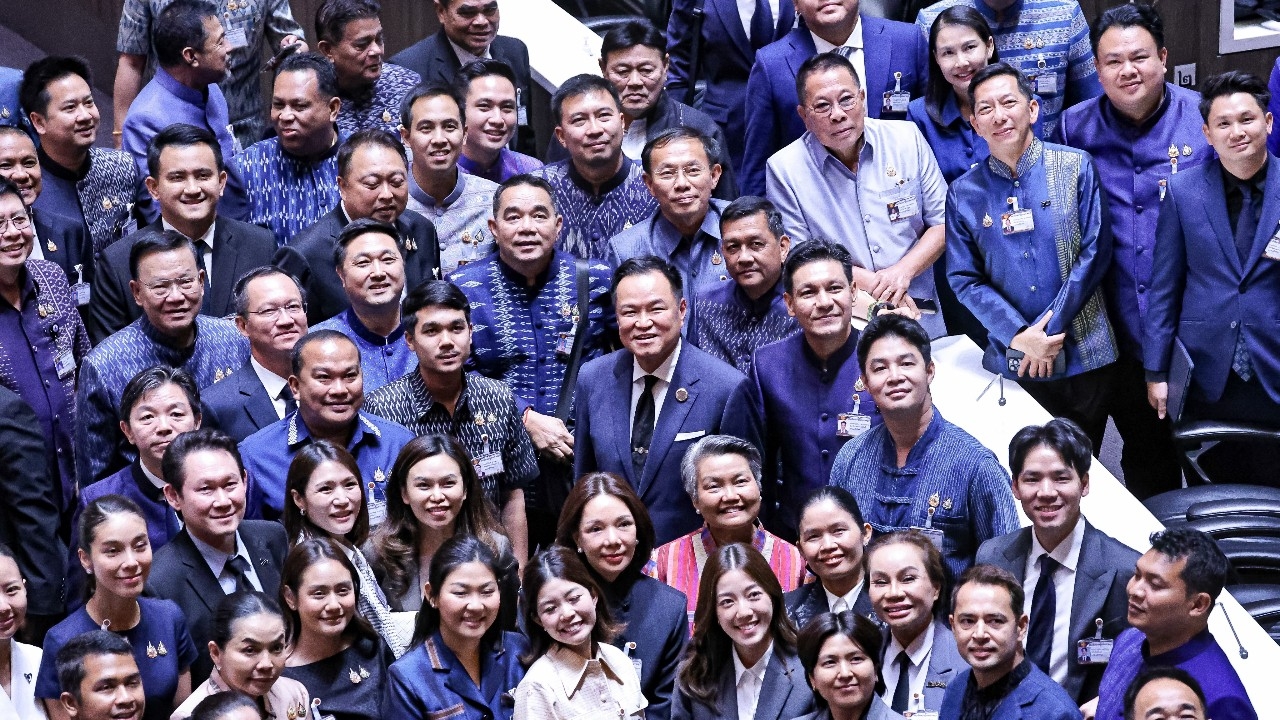
Bhumjaithai is aggressively pushing to amend the parliamentary meeting rules, with the proposal to be presented on 11 November 2026. The plan is to use majority vote to select the chairpersons of all committees, removing the previous system of allocating quotas based on the number of MPs, and to strip chairs of the unilateral power to summon individuals for explanations, requiring a majority vote instead to do so.
On 4 November 2026, reporters at the Parliament reported that at the House of Representatives meeting on 11 November 2026, an important agenda item will be the consideration of a draft amendment to the House meeting rules proposed by the Bhumjaithai Party. This amendment aims to address certain provisions that no longer fit the current issues faced in the House of Representatives, to ensure parliamentary operations are efficient and aligned with the current situation. The key proposed amendments are as follows.
1. Amendment regarding the increase or decrease in the number of standing committees under Rule 90, allowing the House meeting to decide on adjusting the number of committees as appropriate to changing circumstances, instead of the previous fixed number of 35 standing committees.
2. Amendment concerning the summoning of documents or individuals to explain matters before committees, requiring approval by at least half of all committee members. The chair must issue a signed document for this. If the person summoned is a government official, the committee chair must notify the Prime Minister and the minister overseeing that official’s agency, who are then responsible for instructing the official to provide the facts as requested by the committee, replacing the former rule where the chair only issued a letter.
3. For selecting committee chairs or vice-chairs, if only one candidate is nominated, that person is elected. If there are multiple candidates, a secret ballot is held; the candidate with the highest votes is elected. If there is a tie, a new vote is held. If the tie persists, selection is by drawing lots. This replaces the previous system where committee chair positions were allocated proportionally based on party membership in the House.
4. Parliamentary meetings shall be open to the public unless the Prime Minister, a minister, or more than half of the committee members request a closed meeting. In such cases, only those involved in the meeting and permitted by the chair may attend. This rule was not previously specified.
5. Live broadcasting of committee meetings must be approved by more than half of all committee members to proceed. This was not previously regulated.
6. The Prime Minister or ministers who are questioned must attend parliamentary sessions to respond personally, except in unavoidable circumstances. They may request to postpone responding or delegate another minister to answer, provided a written request is submitted to the House Speaker before or on the day of the meeting. The request may be submitted via electronic means according to parliamentary regulations. This amendment removes the previous requirement for the Prime Minister or ministers to specify when they would respond in case of postponement.