

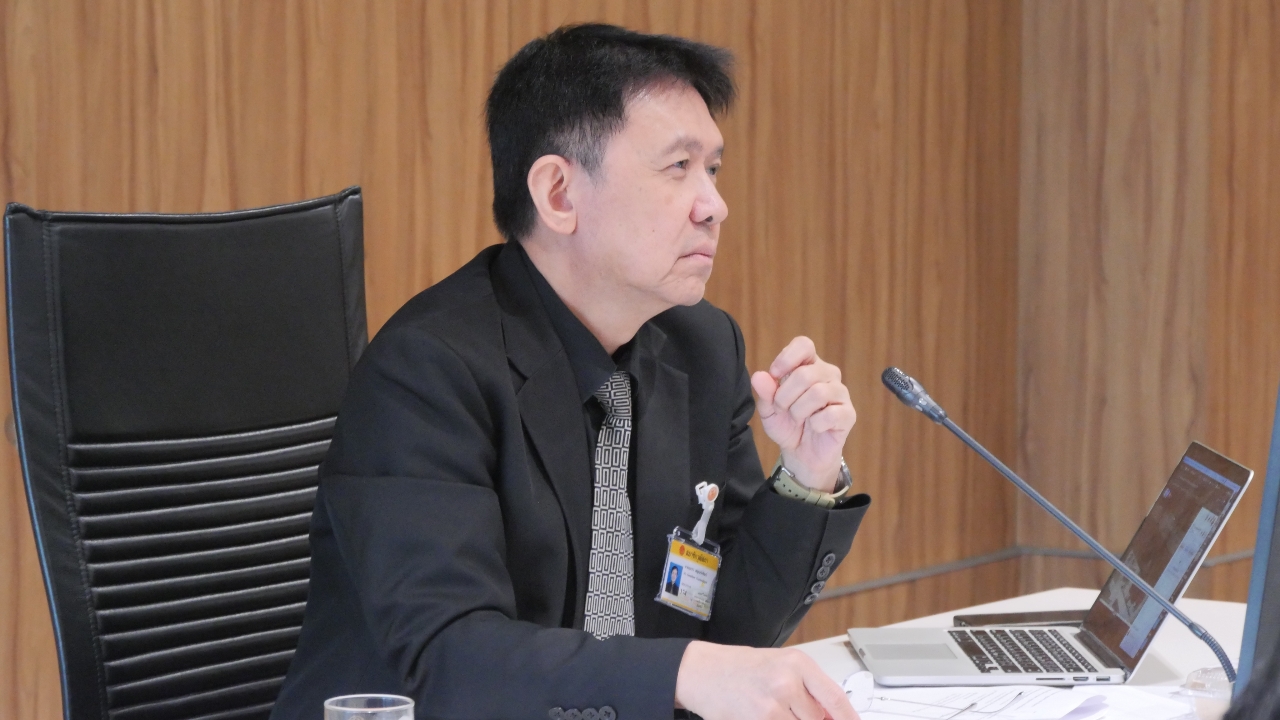
Senator Suntorn Phruetsapipat leads the Senate Consumer Protection Subcommittee in tackling the Prachinburi toxic crisis. Representatives from the "Strong Prachin" group presented evidence exposing oil stains flooding rice fields and illegal dumping of toxic waste.
On 5 Nov 2026, reporters from the Parliament building reported that on 4 Nov, Senator Suntorn Phruetsapipat, chairman of the Senate Consumer Protection Subcommittee under the Committee on Political Development, Public Participation, Human Rights, Freedoms and Consumer Protection, chaired a meeting to study contamination from oil stains and pollutants in agricultural areas of Prachinburi Province. The issue is causing a chain effect on the environment, public health, and food safety nationwide. The subcommittee invited relevant agencies, including the Pollution Control Department, Department of Agriculture, and Prachinburi Provincial Agriculture Office, to provide information and coordinate to investigate the facts thoroughly and urgently address the problems to protect farmers and consumers effectively.


During the meeting, representatives from the civic network "Strong Prachin" presented photographic and video evidence reflecting the environmental crisis occurring at multiple locations in the area, including:
The VOCs crisis and toxic landfill overflow: Measurements of volatile organic compounds (VOCs) showed levels exceeding safety standards and posing health risks. However, government agencies have yet to issue public warnings. The industrial waste landfill is flooded, filled to 100%, pushing toxic underground waste water—estimated at over 250,000 cubic meters—onto the surface. Toxic substances and heavy metals have surfaced, with oil stains and solvents spreading as iridescent films. The group urged urgent declaration of a pollution control zone.


Illegal dumping in green zoning areas: There is illegal disposal of chemicals and solvents in agricultural zones, especially in Nong Ki subdistrict, where red-colored wastewater from industrial zones flows into canals and local rice fields, as well as palm plantations near the industrial areas. When irrigation water is released into the plantations, it turns black, causing severe damage to crops.
Fake fertilizer from electronic waste: Electronic waste and wire scraps are shredded and mixed with chicken manure, marketed as "free soil" fertilizer applied to sugarcane and corn fields. Additionally, piles of gypsum/calcium sulfate waste claimed to be fertilizer were found, but with a highly acidic pH of 2.1, killing plants immediately. Worse, some contaminated areas have not been rehabilitated; instead, fields were plowed to plant corn directly on top.


Drone footage shows iridescent film covering rice fields—calls for urgent Pollution Control Department inspection: High-altitude drone images from 2 Oct 2026 reveal widespread oil and chemical stains forming rainbow-colored films over rice paddies. Wastewater from landfill overflow cascades outward like a waterfall. The group called on the Pollution Control Department and related agencies to urgently test contamination in the Prachinburi River, a primary source of drinking water for residents.

Reporters noted that during the Senate Consumer Protection Subcommittee meeting, members agreed this issue is not merely local but concerns national food security, as agricultural products are distributed countrywide. Senator Suntorn Phruetsapipat, as subcommittee chairman, plans to lead a field investigation in Prachinburi Province for an in-depth fact-finding mission.