

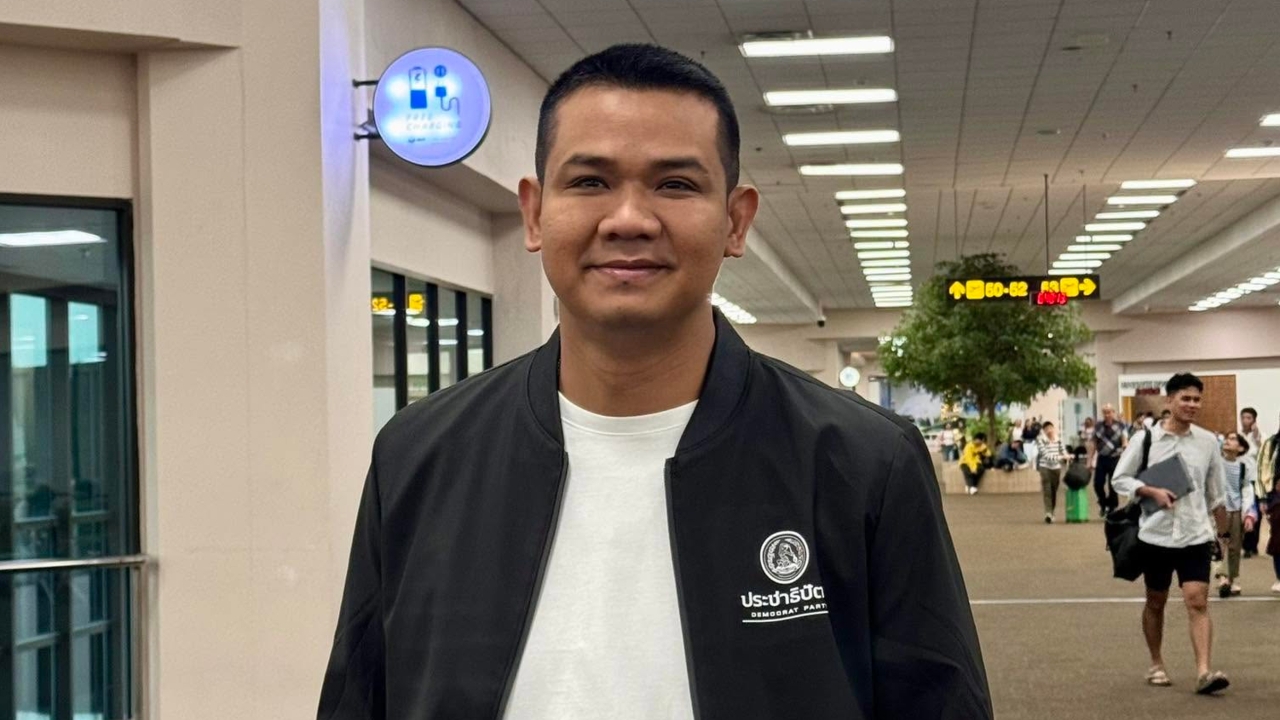
Chaiyana asserts he is not behind the NPP protest threatening to mobilize 1,000 vehicles to Government House, demanding fuel prices be cut by 10 baht per liter. He declares readiness to fulfill opposition duties by scrutinizing the government in parliament and standing alongside citizens facing hardship.
On 5 Nov 2026 GMT+7, Chaiyana Deddecho, a party-list member of parliament and deputy leader of the Democratic Party's southern region, spoke at the parliament building regarding Mano Khrueakaew, the headman of Krabi Noi subdistrict, Mueang district, Krabi province, who announced forming the People's Revolution Coalition to Protect the Land (NPP). Mano called for a gathering at Khuan Nong Hong intersection, Cha-uat district, Nakhon Si Thammarat province, before moving about 1,000 vehicles to Government House to demand the government address the cost of living crisis.
He noted that this movement had been inviting public participation for about a week and planned to begin from Khuan Nong Hong intersection since late last week. However, this week, he received calls from friends reporting that some government agencies had visited the area to question locals and investigate whether he was behind the movement, also attempting to check if his close associates had supported or coordinated crowd mobilization.
Chaiyana confirmed that public demands are a constitutional right and originate from citizens themselves, who are facing economic crises, including energy and agricultural product price hikes. As a people's representative, he stands with those suffering. He emphasized there is no need to investigate whether he is behind or supporting crowd organizing, as citizens have mobilized to demand the government fulfill its promises on solutions. Currently, protesters have clearly stated that upon arrival at Government House, they will demand a 10-baht per liter fuel price cut. He urged government agencies monitoring him to instead focus on serving the public.
When questioned about whether he was behind the protest, Chaiyana reiterated he was not. If he joins with Headman Mano, it would be as a fellow citizen suffering similarly, since this is a citizen-led gathering without political parties behind it. He believes not every issue should be politicized and that such investigations are outdated, as in the 5G era everyone can openly express their stance.
Meanwhile, Chaiyana questioned ruling party MPs on why, when citizens suffer and protest, they do not publicly comment or show support. He reaffirmed his role as an opposition MP to scrutinize the government in parliament and stand with suffering citizens.

Asked if he would visit the protesters at Government House to offer support, Chaiyana said to watch whether he will do so, but he confirmed support for all citizens traveling from the south and those in Bangkok exercising their rights. He reiterated that government agencies need not send personnel to contact local leaders or his associates, as citizens are currently enduring severe hardship.
Chaiyana compared that previously the prime minister said “I can't get richer,” but today citizens say, “I can't get poorer,” due to rising living costs and product prices. He gave the example that in the past, 1,000 baht could buy nearly 50 liters of fuel, whereas now it buys less than 25 liters. He urged the government to reconsider solutions, especially reducing fuel taxes so citizens can buy cheaper fuel, and requested the Commerce Ministry to assess if fuel price drops could translate into lower consumer goods prices.
When asked if this movement causes the government to fear protests and opposition activism, Chaiyana replied the government may be more afraid of its own shadow. Regarding why agencies focus investigations on him, he said that should be asked of the agencies, as he himself is surprised to receive calls on this matter.
Asked if such monitoring amounts to intimidation of his duties, Chaiyana said he does not yet view it as intimidation but sees it as a restriction on freedom. He affirmed that if necessary, he will fight on behalf of the people. He will continue his parliamentary role despite any methods or impacts faced, viewing the fight for citizens as his primary duty, likening citizens to masters whom he must serve.
Regarding how much this mass movement might destabilize the government, Chaiyana said it is interesting because it is a natural citizen and leader gathering without political party backing. Whether it affects government stability depends on whether the prime minister accepts the citizens' demands, especially the call to cut fuel prices by 10 baht per liter. Protesters have announced that upon arrival at Government House they will submit demands, and if the government cannot fulfill them, it must clearly explain its plans and timelines. If he were in government, he would seek negotiation for a joint solution.
In closing, Chaiyana warned the government not to use state power to restrict or block protesters from entering Bangkok, as this could be the last straw escalating the problem. He emphasized that state power should serve the people and enforce laws against wrongdoers, not be used against the citizens who hold democratic power.