

Pheu Thai MPs are preparing to urgently propose the establishment of a special committee to study chemical and industrial waste contamination problems, along with plans to restore and compensate affected residents.
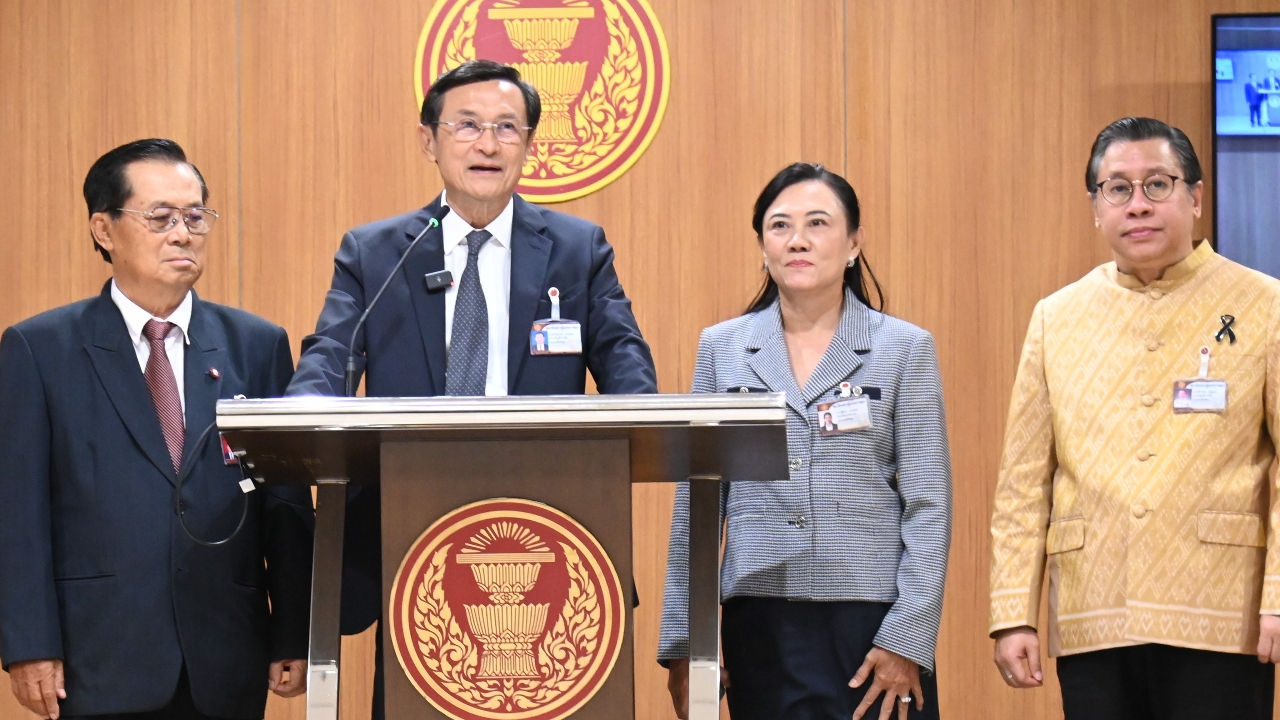
At 13:50 on 5 Nov 2026, Mr. Chaturon Chaisang, together with Mr. Jakrapob Penkha, Pheu Thai MPs, and their team, held a press conference at the Parliament building to announce plans to urgently propose forming a special committee to study chemical and industrial waste contamination problems and find ways to restore and compensate affected residents.
Mr. Chaturon said Pheu Thai has resolved to support an urgent verbal motion requesting the House of Representatives to establish a special committee to examine problems of residual or contaminated chemicals and industrial waste, including the impacts on the economy, society, public health, natural resources, and the environment. The committee will explore prevention, resolution, restoration, and compensation strategies for those affected by major floods in central and eastern regions. Industrial waste contamination has been found in the Prachinburi and Bang Pakong rivers, causing massive fish deaths and affecting about 270,000 rai of farmland in Prachinburi and Chachoengsao provinces. Water and soil quality tests are underway to assess agricultural safety and impacts on drinking water sources and water supply systems.
Additionally, abnormal heavy metal levels have been detected in some residents' bodies, raising health and quality-of-life concerns. The problem is not limited to these two provinces; complaints about waste sorting, landfilling, and recycling factories handling waste types 105 and 106 have been reported nationwide, totaling about 3,049 factories—especially around 1,500 in five eastern provinces. Among 80 inspected factories, 63 require improvements, and one was ordered to cease operations. As of 17 Sept, 61 illegal industrial waste dumping sites were found nationwide, highlighting the need for stricter supervision and law enforcement.

Moreover, the issue is linked to NCPO Order 4/2016, which previously exempted zoning regulations for certain businesses like recycling factories, power plants, and waste management enterprises. Although this order was revoked in 2025, concerns remain about the impact of locating factories near agricultural areas and water sources, increasing risks to people and the environment. Due to the problem involving multiple agencies and ministries, Pheu Thai agrees that MPs should co-sponsor a motion to establish a special committee to investigate causes, survey risky zones, review hazardous industrial waste management, and develop systematic environmental restoration and victim compensation plans.
The urgent verbal motion will be proposed at the House of Representatives meeting on 12 Nov 2026, alongside efforts to push previously submitted motions into consideration. The aim is for the House to approve the special committee's formation to accelerate problem-solving, ensure public safety, restore confidence among farmers and entrepreneurs, and strengthen the country's economic and investment trust.
Mr. Jakrapob added that Mr. Chaturon's urgent motion reflects issues arising from past management and law enforcement, especially during periods when Thai politics was not fully democratic. These have impacted the environment and people's quality of life up to the present. The motion to form a special committee will allow comprehensive study of the problems, covering not only toxic substances and industrial waste contamination via water flows but also structural, managerial, and legal issues from different eras, leading to systematic and sustainable solutions.
This urgent motion is significant both environmentally and politically, aiming to review past management approaches to prevent future impacts on people and natural resources.