

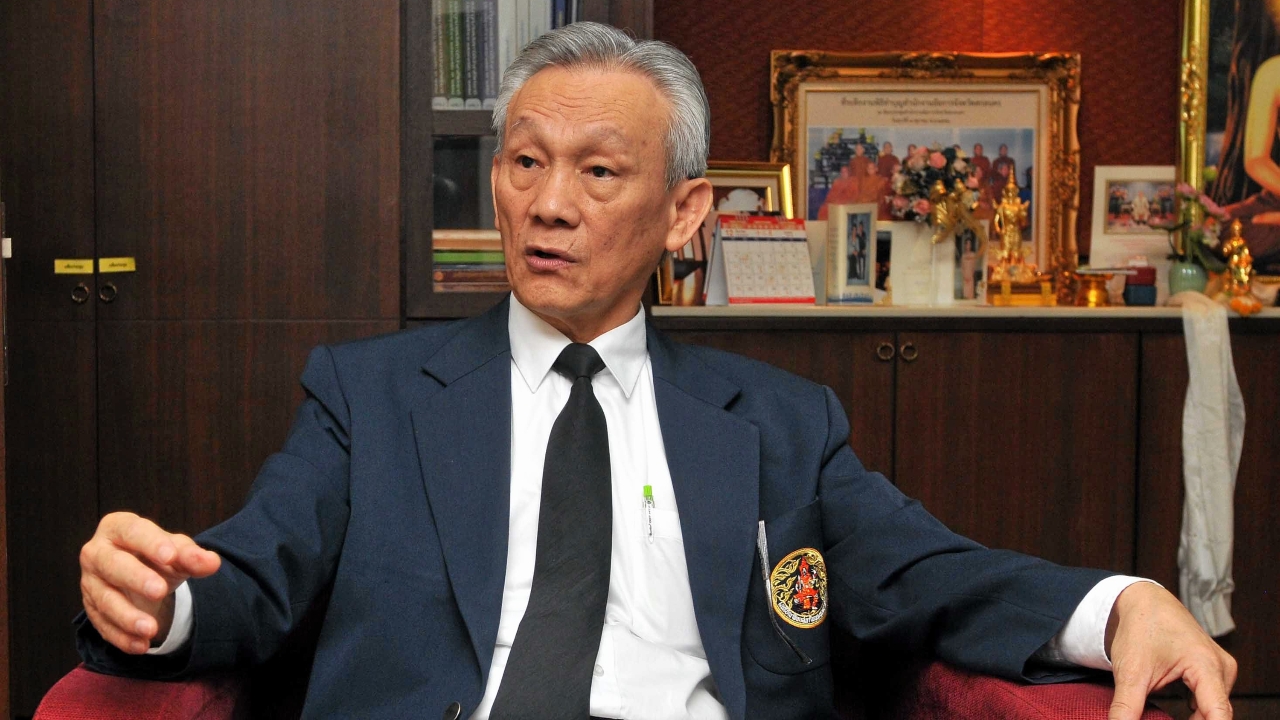
Former Constitutional Court judge Charan pointed out that the Election Commission's petition to the Constitutional Court to review the Supreme Court's acceptance of Senate candidate cases is procedurally incorrect. He warned that bypassing the separation of powers could severely disrupt legal standards.
On 5 Nov 2026 GMT+7, Special Professor Charan Phakdeethanakul, former Constitutional Court judge, commented on the news program "Inside Thailand" regarding the Election Commission's majority vote of 5 to 2 to petition the Constitutional Court. The petition seeks review of the Supreme Court's election case division's acceptance of three petitions involving five Senate candidate applicants, which the EC had previously dismissed on qualification grounds.
Special Professor Charan expressed confusion over the EC's petition, explaining that legally, the EC cannot request the Constitutional Court to examine the Supreme Court's authority.
According to the Thai constitutional system (1997, 2007, and 2017 Constitutions), it is clearly established that courts and constitutional bodies operate independently and separately. The Supreme Court, Constitutional Court, and Supreme Administrative Court are equal; none has authority over or can interfere with the powers of the others.
Regarding the EC's reliance on Article 210 paragraph one (2) of the Constitution to ask the Constitutional Court to rule on its own duties and powers, Special Professor Charan clarified that the 2018 Organic Act on Constitutional Court Procedures, Section 44, stipulates that cases accepted by the Constitutional Court must involve actual disputes. It cannot be used for uncertain or self-doubting issues or conflicts involving courts. Article 210 (2) is designed to resolve conflicts between independent agencies or between independent agencies and the Cabinet or Parliament only.
“In this case, there is no actual dispute involving the EC. It is merely a difference of opinion, with the EC believing the Supreme Court acted unconstitutionally. This does not qualify for Constitutional Court consideration,” the former Constitutional Court judge stated.
For the correct legal approach, if the EC believes the Supreme Court lacks authority to accept the case, Special Professor Charan advised the EC to file objections directly in the Supreme Court cases as a party with a stake. Then, the Supreme Court can refer constitutional questions to the Constitutional Court under Article 212 to determine whether the provisions or regulations it applies conflict with the Constitution..The Supreme Court must make the referral itself; the EC cannot petition the Constitutional Court directly.
Special Professor Charan further warned that allowing petitions to bypass institutional boundaries would create complications and severely impact legal precedents. It could undermine the courts' confidence in administering justice for the people and potentially destabilize the country's justice system. However, whether to accept the petition remains at the discretion of the Constitutional Court judges.