

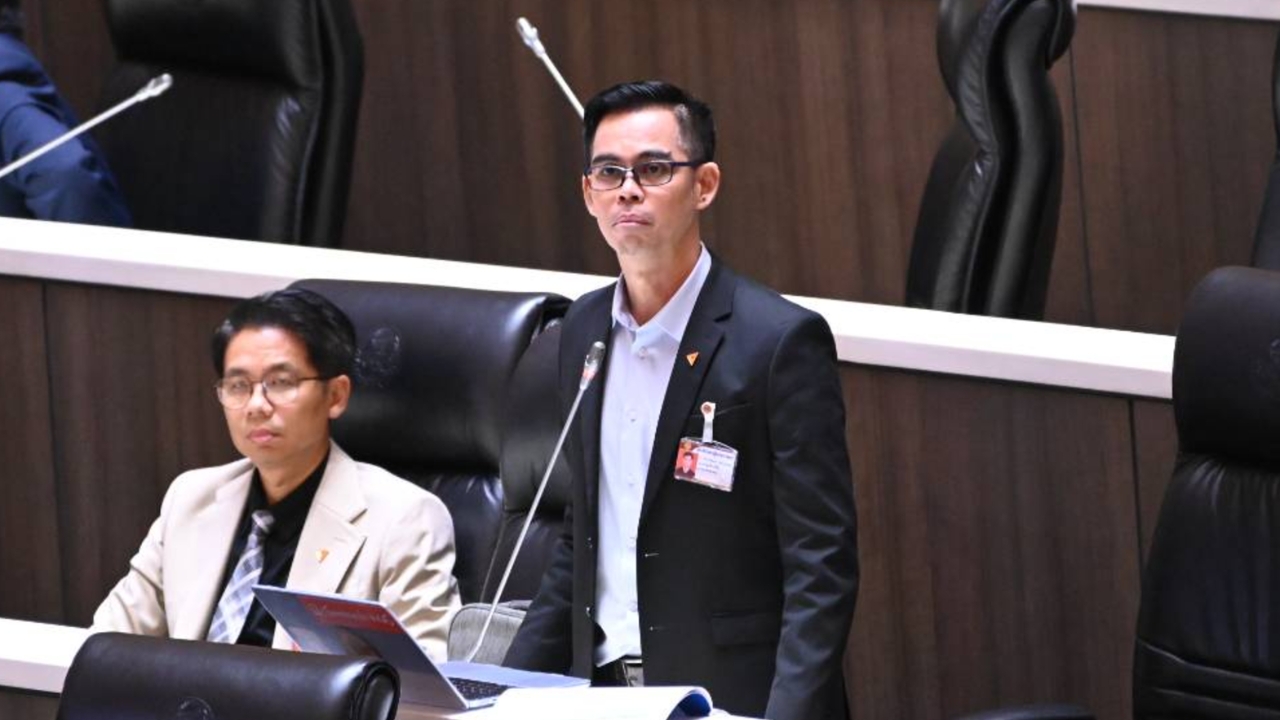
MP Kittipong from the Prachachon Party scrutinizes the report on the Enforced Disappearance Act, pointing out loopholes leading to a rise in torture in military camps. He demands the eradication of the culture of impunity and protectionism within the military.
5 Nov 2026 GMT+7 Mr. Kittipong Piyawanono, party-list MP of the Prachachon Party, participated in the debate acknowledging the report on the situation regarding torture, cruel, inhuman, or degrading treatment, enforced disappearances, and the annual report for 2023-2025. The focus was on torture and cases of conscript deaths within military camps, with two cases highlighted: conscripts Kittithorn Wiangbap and Woraprach Phadmasakun.
Mr. Kittipong praised the enforcement of the Prevention and Suppression of Torture and Enforced Disappearance Act, B.E. 2565 (2022), noting it is currently the only law allowing military personnel who commit offenses to be prosecuted in civilian courts. The cases of conscripts Kittithorn and Woraprach exemplify the pursuit of justice for lower-ranking soldiers’ families. However, despite this law, the number and trend of conscript deaths in camps continue to rise, reflecting unresolved structural problems.
Currently, six conscript death cases in military camps remain pending and under investigation, including three confirmed torture-related cases: 1. Conscript Phetcharat Kamlangying, whose death on 10 Nov 2025 in Prachinburi Province will mark one year with a justice forum planned; 2. Conscript Siriwat Jaidee; and 3. Conscript Woraprach Phadmasakun. Although courts have sentenced perpetrators, families remain dissatisfied and plan to use Section 42 to sue commanding officers. A major obstacle arises: when suing fellow conscripts, the camp cooperates fully, but cooperation and treatment of victims’ families markedly worsen when commanding officers face charges.
Additionally, three other cases remain disputed regarding whether they constitute torture: conscript Diamond (also known as Conscript Phruetsa Wimuttithamchai), conscript Rachen Yawamue, and the recent case of conscript Thitikorn Pongwankham in Nakhon Ratchasima. Mr. Kittipong recommends that any conscript death in camps should initially be presumed to result from torture, prompting detailed forensic investigation rather than prematurely concluding accidents or health issues.
At the same time, Mr. Kittipong highlighted five major structural problems and obstacles in enforcing laws within military camps, which the report lacks clear solutions for:
1. Court jurisdiction issues: For example, in the case of conscript Kittithorn, the defendant exercised the right to petition the Constitutional Court over jurisdiction, delaying proceedings in the Criminal Court for Corruption and Misconduct. Sustainable reform requires amending the Military Court Code to prevent offenders from exploiting legal loopholes to stall justice.
2. Access to evidence within military zones: The military is a security-controlled area, making it extremely difficult for lawyers and victims’ families to access evidence and CCTV footage. Many relatives have had to appeal to the Parliamentary Military Commission to exercise authority to summon documents and request agency explanations.
3. Culture of impunity and protectionism: The military's high unity aids security operations but, if used to protect comrades and conceal offenses, becomes an obstacle to justice.
4. Legal understanding among justice officials: Especially concerning the interpretation of torture elements by investigators and prosecutors. For instance, the case of conscript Siriwat still faces debate over charges. The government must urgently train justice officials to improve legal comprehension.
5. Violence from senior conscripts: Many fatal assaults are not directly by instructors or officers but stem from authoritarian hierarchies between senior and junior conscripts. The military has focused on addressing officers’ misconduct but lacks concrete measures to control and prevent violence from senior conscripts.
In conclusion, Mr. Kittipong called on the Ministry of Justice, the Department of Rights and Liberties Protection, and the Ministry of Defense to seriously improve joint operational guidelines. He hopes future annual reports will reflect proactive measures to stop losses and make military camps truly safe places for all citizens’ children.