

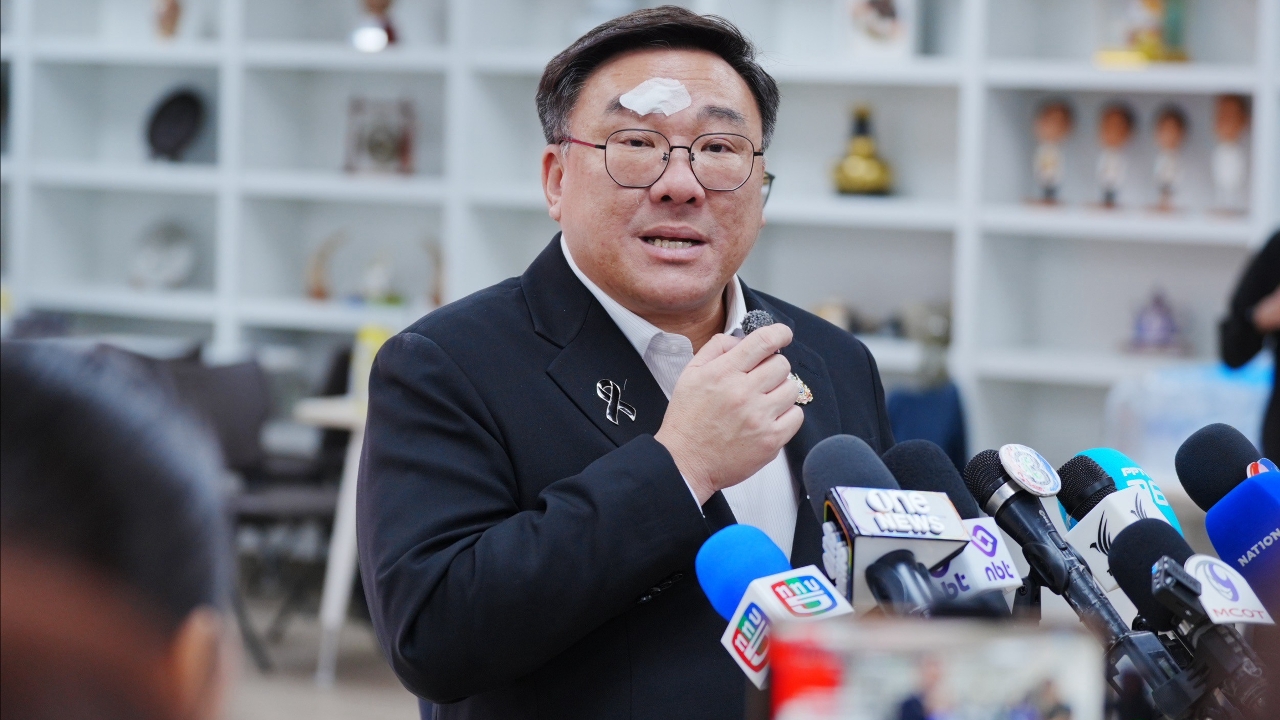
Chulapan revealed plans to propose five foreign labor management measures to support private sector demands, including MOU, U-turn policies, extending work permits for workers of three nationalities, and allowing over 800,000 workers with irregular status to continue working.
On 6 Nov 2026, Chulapan Amornwiwat, Minister of Labor, discussed the Foreign Workers Management Committee meeting, stating that the Ministry of Labor has explored multiple approaches to manage foreign workers in Thailand from various perspectives. Key agenda items and approved measures aim to reduce burdens on employers and workers and prevent labor shortages in the economy.
The first issue concerns the MOU U-turn measure, designed to alleviate burdens on employers and foreign workers. Normally, when a worker completes their contract period, for example two years, they must return to their home country and stay for 60 days before re-entering Thailand to work again. This creates gaps in labor supply. The Ministry has negotiated with home countries like Myanmar and Laos to allow workers to return only briefly to stamp their entry and exit before returning to work in Thailand without waiting the full 60 days, easing worker burdens and minimizing downtime, enabling the Thai private sector and economy to operate more smoothly.
The second issue involves two measures to address labor problems: extending work permits according to Cabinet resolutions dated 8 July 2025 and 2 Dec 2025, which would otherwise expire in Feb and March 2027, respectively, extending work duration until 3 Feb 2029. Another measure grants temporary permission for approximately 800,000 workers of three nationalities with irregular legal status to stay and work for another year. Both aim to ensure continuous employment, support employers needing foreign labor, and prevent disruption to private sector operations.
The third issue is expanding options to import workers from Sri Lanka, following the signing of a memorandum of understanding (MOU) between Thailand and Sri Lanka. This aims to provide employers with new labor sources to replace shortages. Implementation requires cooperation among relevant government agencies, including the Ministries of Labor, Interior, and Immigration authorities.
The fourth issue is a proposal from the Ministry of Interior to allow refugees fleeing conflict in Myanmar to enter the labor market. Details will be further considered to ensure full legal compliance. Initially, refugees may be permitted to work in designated areas without work permits, with the work period extended from one to two years. This reduces government care burdens and opens labor market opportunities. Working outside designated areas would require proper authorization.
The fifth issue facilitates foreigners entering Thailand to organize or participate in activities. Previously, organizing events such as concerts or international conferences like IMF and World Bank meetings involved foreigners serving as speakers or lecturers but still required work permits, imposing burdens on the private sector and event organizers. The proposal suggests exempting certain activities from work permit requirements, such as meetings, lectures, demonstrations, training, site visits, seminars, cultural performances, sports competitions, and other activities designated by the Cabinet.
However, these proposals have not yet been implemented as they are preliminary and introduced for discussion. All relevant agencies must review applicable laws and regulations within their jurisdictions before collectively reconsidering the measures at the next meeting to ensure comprehensive policies.