

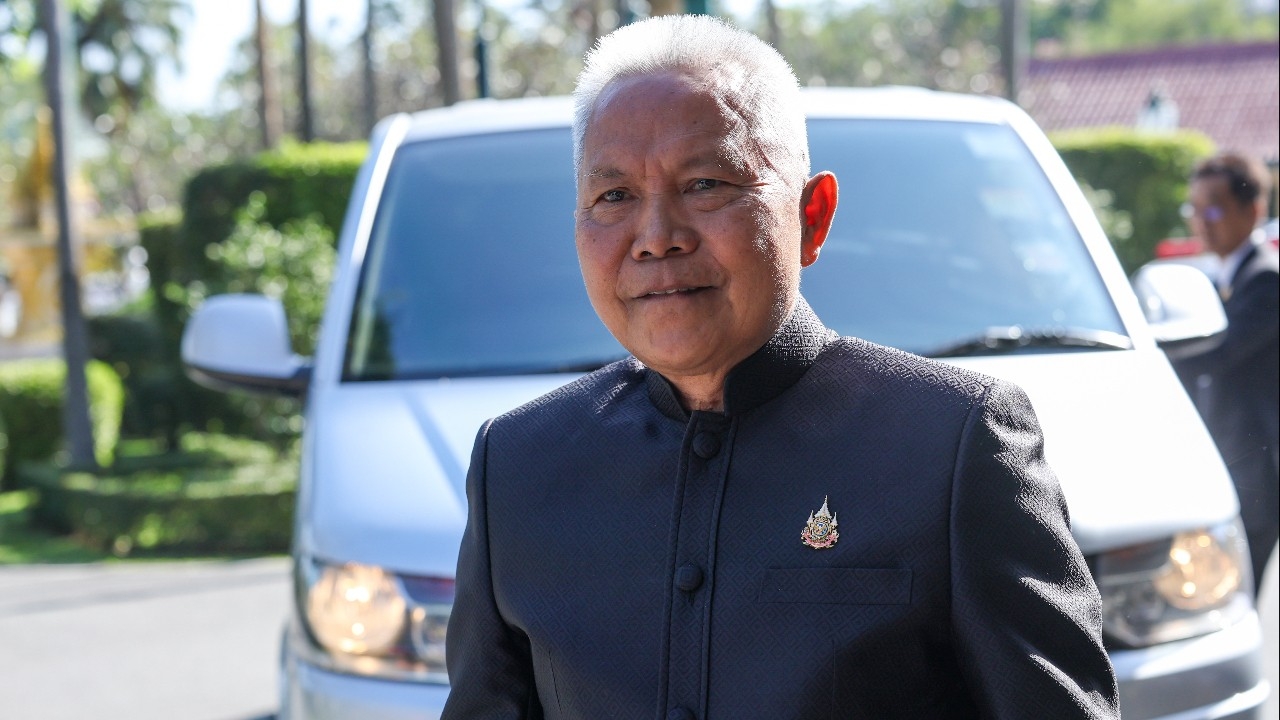
Sophon sent an open letter explaining the working approach of parliamentary committees, affirming adherence to the rule of law without restricting oversight powers over the executive branch, emphasizing that the committee's authority belongs to the "collective body," not to any single individual, and that it is not personal authority.
On 6 Nov 2026 GMT+7, Mr. Sophon Sarum, Speaker of the House of Representatives, issued an open letter to the public and media clarifying facts amid criticisms that the working approach of standing committees restricts executive oversight and amounts to authoritarian use of power, highlighting five key points.
1. This is not the establishment of new rules or regulations but a working approach already practiced by the majority of standing committees. It does not obstruct their duties or represent orders from the Speaker alone. The circulated working guidelines are not new rules set at my personal discretion but follow the 2019 Rules of Procedure of the House of Representatives, which most committees regularly observe. The initiative arose after complaints about committee performance and authority misuse. I convened all 35 committee chairpersons on 21 Oct 2026 GMT+7, where consensus was reached to adhere strictly to the 2017 Constitution of the Kingdom of Thailand and the 2019 Rules of Procedure, not to set new approaches by the Speaker’s discretion. The legal team of the Secretariat was tasked with summarizing a unified guideline for all committees.
2. The authority of committees is that of a "collective body," not personal power of any individual. Article 129 of the Constitution vests fact-finding, study, and the power to summon individuals or documents in the committee as a collective, not solely in the committee chairperson. Historically, most chairpersons have operated based on consultation, respecting all members’ views and acting on meeting resolutions, ensuring smooth operation and cooperation. Current conflicts in some committees stem not from the rules but from differing interpretations of constitutional and procedural authority, resolvable through collective deliberation.
Regarding disputes in the Committee on Law, Justice and Human Rights, it is necessary to clearly separate "meeting management authority" from "power to summon individuals or documents." The committee chair still manages meetings as before, but the power to summon requires the committee meeting’s resolution under legal criteria.
3. Following laws and procedures does not mean protecting the executive. Committees comprise government and opposition members jointly overseeing administration. As Speaker, I supervise to ensure committees function effectively under the same legal framework without bias. Setting guidelines based on the Constitution and procedures is not limiting authority or protecting the executive but ensuring legal, legitimate, and widely accepted executive oversight.
4. Coordination when issues overlap among committees is intended to enhance efficiency and reduce burdens on state agencies. The guideline for multiple committees examining related matters follows Article 90, paragraph 4 of the Rules of Procedure and related regulations effective since 2019. Without coordination, multiple committees calling the same agencies or officials on overlapping issues would overburden those agencies and disrupt their normal public service. Coordination does not reduce oversight power but maximizes fact-finding efficiency, fulfilling the intent of Article 129 of the Constitution.
5. Respecting meeting resolutions and abiding by the law is the heart of democracy, not authoritarianism.
Democracy under the rule of law does not permit individuals to exercise power at will but requires power to be exercised within constitutional and legal limits. The Speaker is accountable to the parliament and the public, not any political party, to maintain neutrality, independence, and the legislature’s dignity, enabling strong, lawful executive oversight.
Mr. Sophon also stated, "I decided to clarify through this open letter hoping that the public and all thoughtful citizens will consider the facts rationally. Throughout my work, I have consistently said that the core of democracy is consultation and open-minded discussion to reach consensus, not necessarily voting. However, if consensus cannot be reached after thorough discussion, decisions must be made by majority vote, respecting minority views, as is standard practice in all democratic countries both in government and parliamentary work. I sincerely hope this clarification fosters correct understanding and benefits society as a whole."
Additionally, Mr. Sophon posted about the 2019 Rules of Procedure on principles and methods for conducting inquiries or studies involving multiple committees, stating, "These rules are law enacted in 2019 and remain in force as no amendments have been made."