

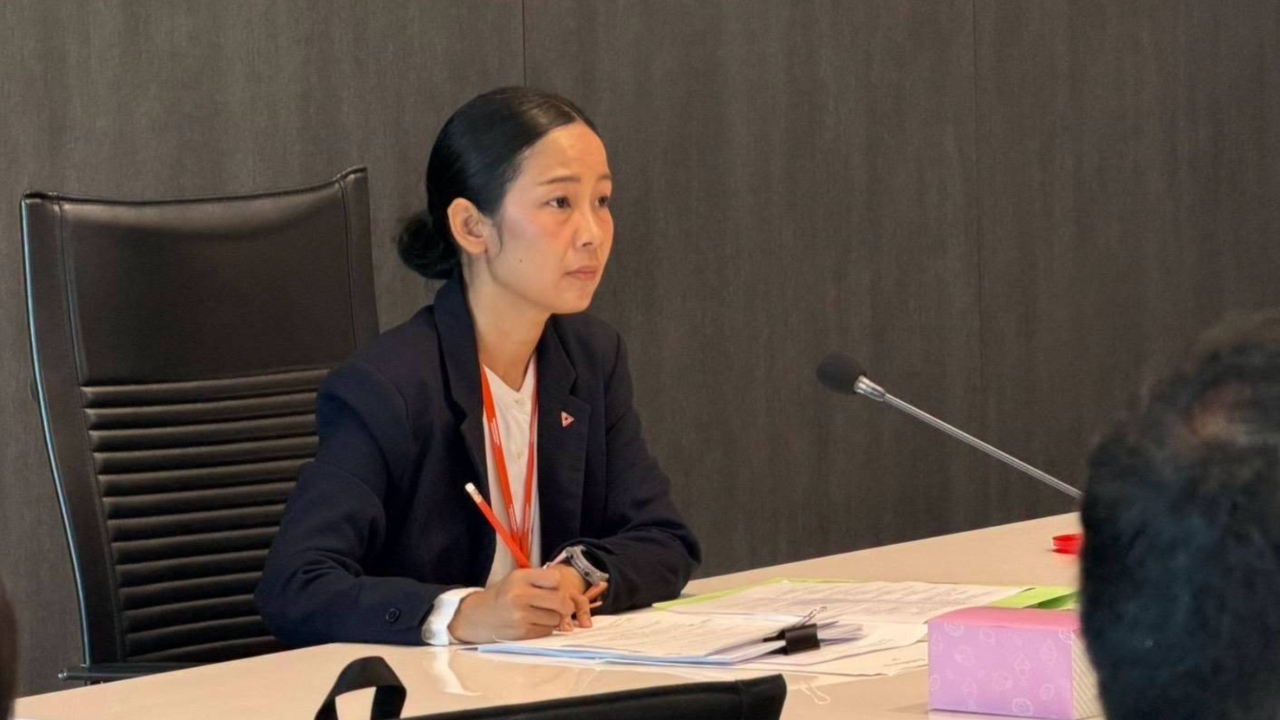
Sasinan outlined the criteria and submission channels for "amnesty for political cases," open until 31 January 2027, emphasizing that amnesty will be meaningful only if no one is left behind without support.
6 Nov 2026 GMT+7 Ms. Sasinan Thammanithinan, Member of Parliament for Bangkok from the People's Party, spoke about the progress of the amnesty process for offenses related to political protests or expressions. She said the Peacebuilding Society Enhancement Committee has officially announced the channels and methods for submitting amnesty applications for those prosecuted due to actions connected with political protests or expressions, arising from political conflicts or motivations from 1 January 2005 to 16 July 2025. Applications are open from today until 31 January 2027.
Eligibility criteria include those with cases related to political protests or expressions during this period, who may qualify for amnesty. Each case will be carefully reviewed according to legal conditions, since exceptions apply, such as offenses under Criminal Code Section 112 (lese-majeste), corruption or misconduct charges, offenses causing death or serious injury, and other legally specified crimes. The Peacebuilding Society Enhancement Committee will decide eligibility, while the Office of the Permanent Secretary to the Prime Minister's Office (OPM) serves as the receiving and coordinating agency.
Those wishing to apply for amnesty can submit applications through three main channels. They are:
1. In person at the Joint Service Center, Office of the Permanent Secretary to the Prime Minister's Office, former Office of the Civil Service Commission building, Phitsanulok Road, Dusit District, Bangkok.
2. By postal mail to P.O. Box 1111, Government House Post Office, Bangkok 10302, with no postage stamp required.
3. By email, sending application documents and evidence to saraban@opm.go.th.
The process involves four key steps: first, download the amnesty application form from the OPM website; then complete the form accurately with factual details, attaching required supporting documents such as identification card or proof of identity, charge reports, indictments, judgments (if any), and evidence of participation in protests or political expressions. Submit via one of the above channels, after which officials will contact applicants to coordinate further details.
Regarding concerns about detainees currently in prison, Ms. Sasinan explained that qualifying inmates can submit applications by mail from prison. Family members, relatives, or lawyers can help gather case documents and coordinate to ensure detainees fully access their rights. However, applicants should verify signature and proxy submission rules with the OPM before proceeding. She emphasized not to let detainees without family or legal support lose the opportunity to access their legal rights.
Ms. Sasinan also reminded that the most important understanding is that "submitting an application does not mean immediate release." It is only the beginning of the eligibility review process. After the committee approves eligibility, coordination will proceed according to legal procedures at each stage—investigation, prosecution, court, or for incarcerated individuals serving sentences—ensuring effective implementation of the amnesty law.
In conclusion, she urged the public and media to widely share this information, especially reaching those currently prosecuted, families of detainees, and legal teams. Amnesty will truly matter to society only if all eligible people can access the process equally, and no one is left behind simply because they do not know they have the right.