

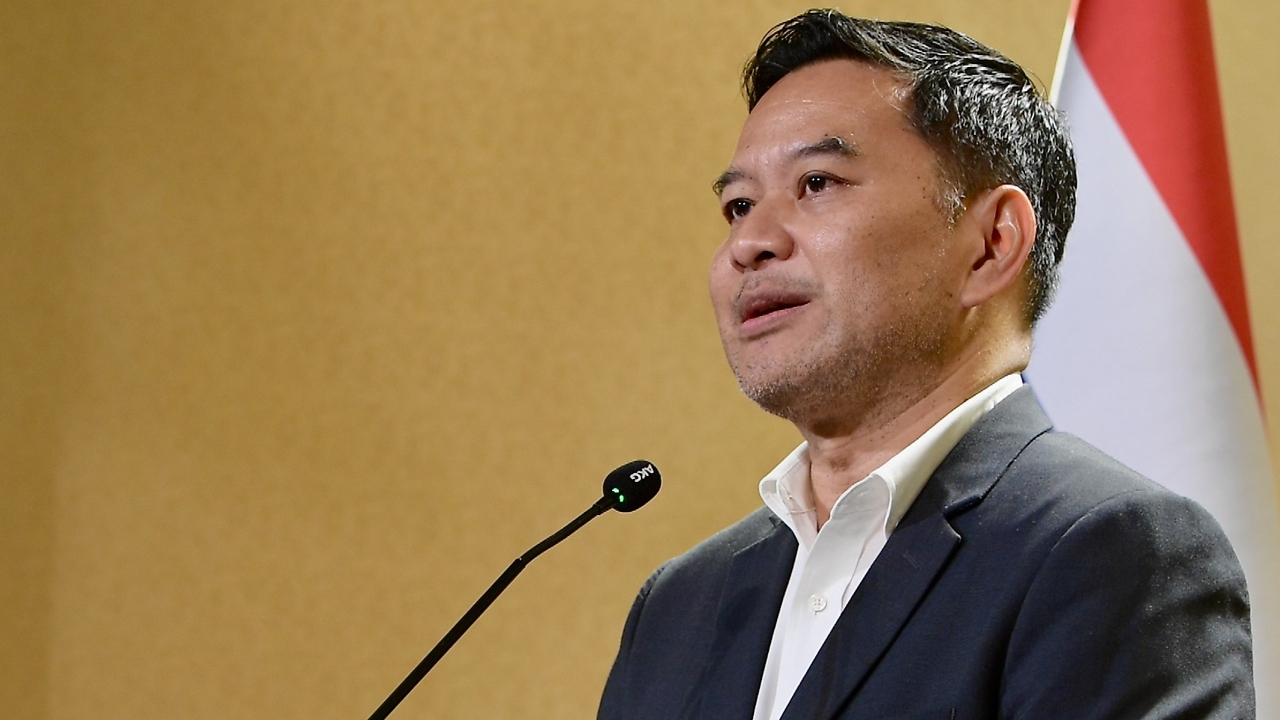
The government spokesperson refuted Rangsit, confirming the Prime Minister ordered the Director-General of the Department of Provincial Administration to provide explanations. However, due to flood relief duties in Prachinburi, documents were submitted instead. The spokesperson criticized the repeated use of the Summons Act as excessive and acting above the law, and criticized it as abusing legal authority.
At 14:30 on 6 Nov 2026 at Government House, Aekapop Pianpiset, spokesperson for the Prime Minister's Office, clarified the directives of Deputy Prime Minister and Minister of Interior Anutin Charnvirakul. He said the Minister had ordered state officials to attend a meeting with the parliamentary committee regarding MP Rangsit Rom, party list MP and deputy leader of the Prachachon Party, who chairs the Parliamentary Committee on Law, Justice, and Human Rights. Rangsit accused the Minister of Interior of failing to order the Director-General of the Department of Provincial Administration to provide explanations to the committee, leading to a vote.
Aekapop said that after fact-checking, the Committee on Law had sent a letter dated 30 Sep 2026 to the Minister of Interior requesting the Director-General of the Department of Provincial Administration to clarify or give opinions regarding local government recruitment for 2024-2026. On 1 Oct 2026, the Minister's Office informed the Director-General. Then, on 5 Oct 2026, the Director-General sent a letter to the committee stating he could not attend due to flood relief duties in Prachinburi but provided the requested Terms of Reference (TOR) regarding the local government recruitment examination.
Aekapop confirmed that the Minister of Interior clearly ordered the Director-General to provide explanations, with the Minister's Office head marking it as urgent. The Director-General submitted documents in lieu of attending the meeting. Such procedures are normal if the presenter cannot attend and information is incomplete; the committee can request additional documents as needed.
Aekapop raised three points of concern. First, the use of the Summons Act to compel the Director-General's attendance is typically reserved for cases lacking cooperation or necessity. The frequent or excessive use of this Act without considering appropriateness is questionable and may be an overreach.
Second, explanations have already been provided, so accusations of failure to explain or accept responsibility are incorrect. Furthermore, the committee consists of 15 members, requiring at least 8 for a quorum. Although a member resigned, the House reappointed a replacement earlier that same day, restoring the full 15 members. Claiming to await official notification from the House before acknowledging this is an unacceptable excuse.
Aekapop said the Law Committee's behavior violates legal principles and questioned whether the law is being used as a political tool to harass. He noted the problem does not arise from the government, Prime Minister, or officials refusing cooperation, but from the committee chair's attitude. He also learned that meetings were scheduled without informing all committee members, which media and the public should continue to monitor.
Finally, Aekapop suggested the opposition might be creating issues to overshadow government achievements, particularly as agricultural product prices like palm oil and rubber have risen to 20-year highs. It is also a period when major U.S. business delegations have come to discuss investment in Thailand, including Google's CEO discussing data center investments, which will create jobs and boost domestic product usage.
Aekapop concluded that the opposition may be acting out of dissatisfaction, behaving like petulant children, spreading false information, and misusing rules distortedly as tools for political harassment.