

Patrapong calls on the government to stop importing ore from neighboring countries after arsenic levels in the Sai River surged 28 times, affecting water supply, agriculture, and public health.
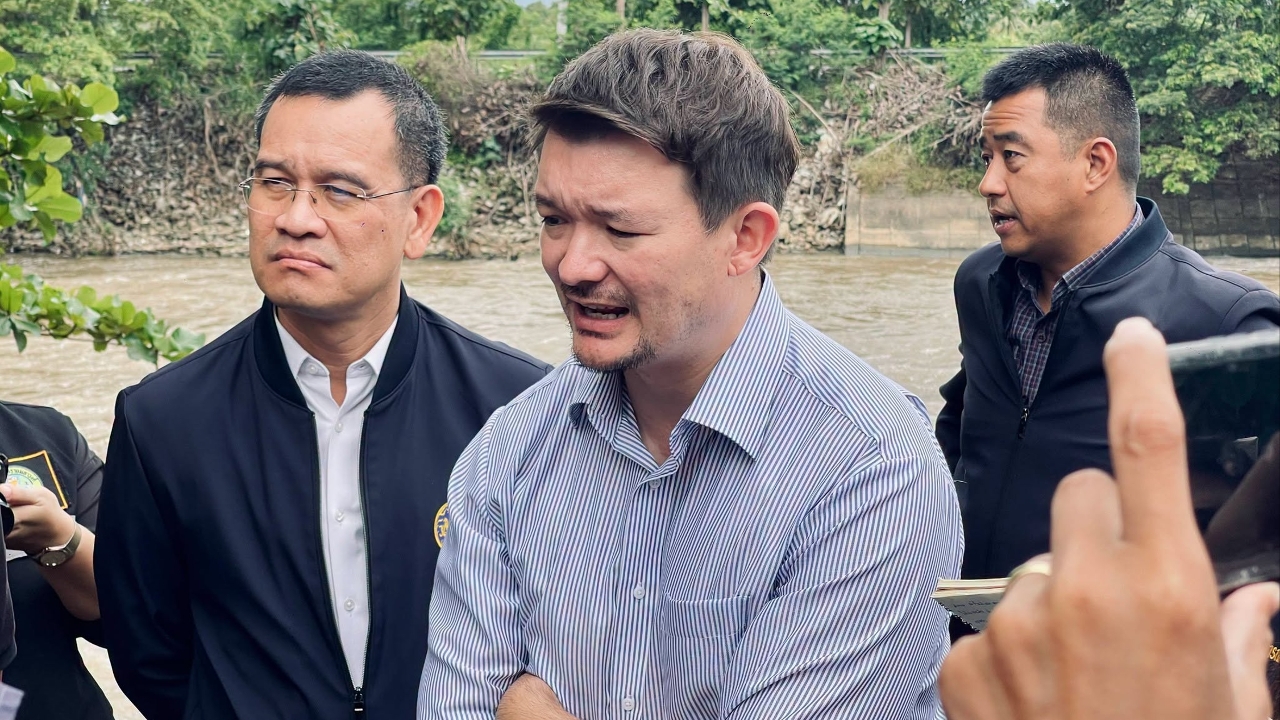
On 9 Nov 2026 GMT+7, Patrapong Lilaphat, Chiang Mai MP from the Prachachon Party, posted a video urging the government to seriously address the Sai River water crisis. He stated that residents in Mae Sai district, Chiang Rai province, are facing a severe tap water and environmental crisis. The Provincial Waterworks Authority (PWA) Mae Sai branch cannot operate water production because the raw water quality from the Sai River has deteriorated beyond the treatment system's capacity.
Patrapong further said that monitoring water quality over the past year and a half has consistently shown arsenic levels exceeding the standard. The latest test revealed arsenic concentrations more than 28 times above the limit. Additionally, turbidity in the raw water spiked beyond 10,000 NTU, whereas generally, turbidity at 50 NTU already makes the benthic animals unable to survive. The maximum capacity of the water treatment system is about 6,000 NTU, so the PWA cannot continue water production.
Beyond affecting drinking water, the Sai River is the primary water source for over 60,000 rai of agricultural land, especially rice fields. Recent random rice sample tests found arsenic contamination exceeding safety standards. This pollution is not confined to the environment and crops but is now clearly impacting public health.
“Urine tests for inorganic or toxic arsenic found many residents with arsenic levels exceeding safety limits, not only in Mae Sai district and the Kok River basin in Chiang Rai but also in other transboundary river basins such as the Salawin River in Mae Hong Son province, Mae Ai district in Chiang Mai province, and the Mekong River basin in the Northeast, including Loei, Bueng Kan, Nakhon Phanom, and Nong Khai provinces,” Patrapong said.
He explained that the source of this toxic contamination stems from mining activities in neighboring countries, where ore is still transported and imported through Thailand as a transit route to China. He called on the government to urgently address the root cause by stopping ore imports and halting Thailand’s role as a transit hub to protect water sources and public health promptly.